Soviets Used It to Support Cancer Care. 1,600 Studies. Zero US Trials. Why?
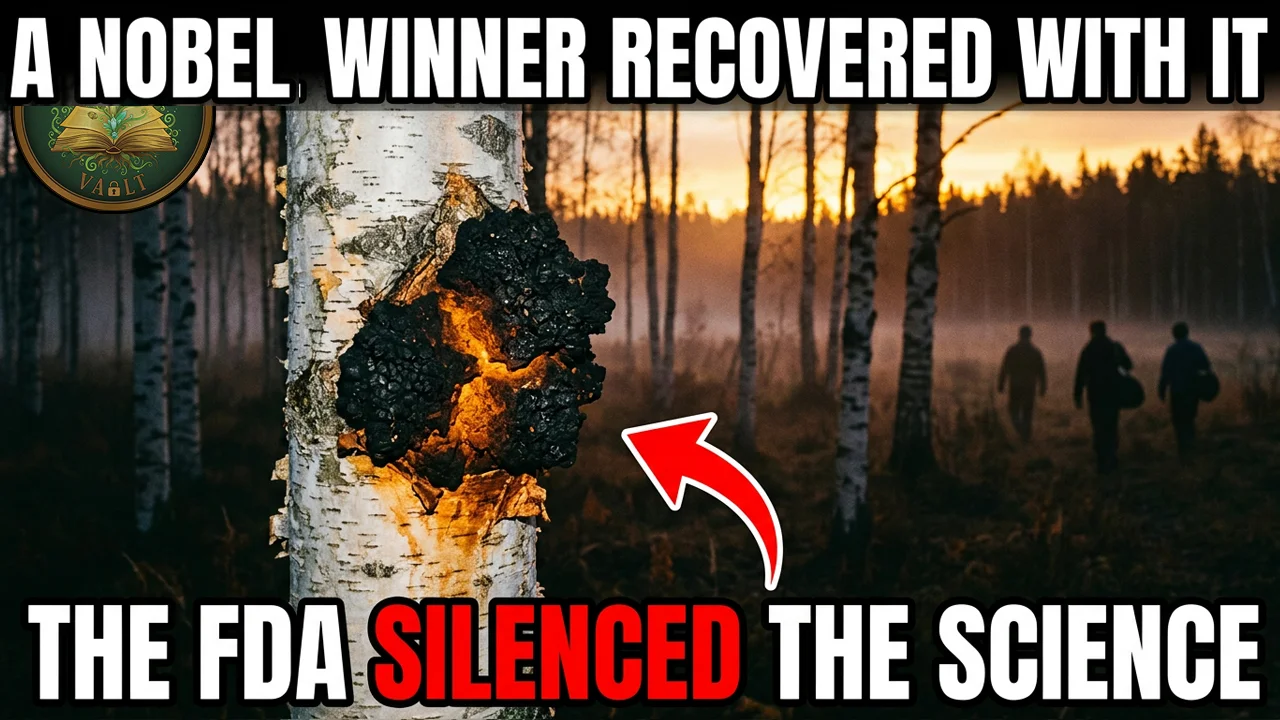
Table of Contents
- What is Chaga?
- Centuries of Siberian Medicine
- The Doctor, the Novelist, and the Ban
- What the Research Found
- Why Zero US Trials
- How to Harvest and Use Chaga
- FAQ
Recommended: Chaga Mushroom Chunks & Extract
View Chaga Chunks Options View Chaga Extract OptionsNote: Purchase wild-harvested chaga from birch-grown sources. Cultivated mycelium products differ chemically from wild birch conks. Chaga is high in oxalates; anyone with a history of kidney stones should consult a physician before regular use.
Affiliate links - supports our channel
What is Chaga?
A man survives Stalin's labor camps. He develops cancer. Years later he writes a novel in which a cancer patient dreams of curing himself with a black growth from birch trees. Soviet editors refuse to publish the book.
The ultimate irony? The USSR's own Ministry of Health had already approved that exact same remedy as an official pharmaceutical. It is still sold in Russia today.
Decades of laboratory research have followed. A 2016 mouse study reported tumors about 60% smaller. Researchers have identified compounds inside it that trigger programmed cell death in cancer cells in the laboratory. A 2024 cell study found it works synergistically with conventional breast cancer drugs.
But no randomized clinical trial in cancer patients has ever been published. The lab and animal results are promising. What is missing is the human evidence, and anyone willing to pay for it.
Centuries of Siberian Medicine
The Khanty People of Western Siberia
The archive opens in Western Siberia. A cold, birch-covered country the indigenous Khanty people have inhabited for thousands of years. They called it chaga. A black mass growing from the wounds of birch trees, hard as stone, burning bright orange inside. They brewed it as a dark tea and medicine. They did not ask whether it worked. They had watched it work for generations.
Centuries of Use
Russian folk medicine used chaga tea for stomach complaints, ulcers, and tumors. Russian peasants drank it in place of expensive tea. In North America, the Potawatomi used dried chaga as long-burning tinder. Centuries of use across some of the harshest climates on Earth.
But the moment that matters came after World War II, when Soviet scientists set out to test folk remedies systematically.
The Doctor, the Novelist, and the Ban
The Country Doctor Who Noticed
A country doctor named Sergei Maslennikov had noticed something in the villages he served. As the story is told, he could not remember seeing cancer among the peasants. They could not afford real tea. They brewed wild chaga instead, drinking it every day.
Maslennikov used chaga with his patients. Soviet researchers, including scientists at the Komarov Botanical Institute in Leningrad, studied its chemistry and effects.
In 1955, the Pharmacological Committee of the USSR Ministry of Health officially classified chaga as a medication. They standardized it into a liquid extract called Befungin. Soviet pharmacies sold it as a general tonic and for gastritis and stomach ulcers, and some clinics used it as supportive care for cancer patients. It is still sold in Russia today. 70 years of pharmaceutical use. And not one randomized trial in cancer patients.
Solzhenitsyn and Cancer Ward
Then came the novelist. Aleksandr Solzhenitsyn survived the Gulag, but developed cancer. He was treated with radiation in Tashkent in 1954. He later wrote Cancer Ward, a novel drawn from his own experience, in which a patient named Oleg Kostoglotov hears about Dr. Maslennikov, the villagers, and the chaga they drank.
Kostoglotov says he could imagine no greater joy than to walk into the woods, break the chaga from the birch, boil it over a fire, and get well like an animal.
Soviet editors refused to publish the book. It circulated in secret typescript and appeared abroad in 1968. Not because the medicine was wrong. Because the story of the Gulags was true. Solzhenitsyn won the Nobel Prize in Literature in 1970. Cancer Ward is now read in universities across the world. The chaga it describes has since been studied in a large laboratory literature. And no clinical trial in cancer patients has been published. Solzhenitsyn himself did not cure his cancer with chaga; he was treated with radiation.
What the Research Found
Not a Mushroom, But Something Stranger
Chaga is not technically a mushroom. It is a sclerotium, a dense mass of fungal tissue that forms inside the wounds of birch trees. It takes many years to grow large enough to harvest. What makes it unlike almost anything else in the natural world is what it absorbs from the birch itself.
Betulinic Acid: The Selective Cancer Killer
Birch bark contains betulin, the compound that gives white trees their color. Chaga contains betulin and smaller amounts of betulinic acid, a compound with a specific mechanism. It targets the power center of a cell, the mitochondrial membrane. In cancer cells in the laboratory, it forces a channel open, releasing proteins that trigger apoptosis. The cancer cell is forced to destroy itself. In cell studies, healthy cells were affected far less.
This selectivity has been reported in laboratory settings against lung, liver, colorectal, cervical, and breast cancer cells. It has not been tested in patients. A 2024 laboratory study by an Italian and Israeli team (University of Camerino, Migal-Galilee Research Institute), published in Biomolecules, found a chaga extract synergistic with the cancer drugs cisplatin and trastuzumab in breast cancer cell lines, including triple-negative breast cancer, the subtype with the worst prognosis.
Multiple Angles of Attack
Then there is inotodiol, a triterpene chaga makes itself. In the 1980s, Kirsti Kahlos and colleagues at the University of Helsinki isolated it and reported antitumor activity in animal tests. It works through a separate biological pathway from betulinic acid, giving the fungus more than one line of activity in the lab.
Add the beta-glucans, which stimulate macrophages and natural killer cells in laboratory studies. Add the melanin. The black crust is rich in melanin and related polyphenols, which give chaga tea its high antioxidant capacity in laboratory assays.
60% Tumor Reduction
In 2016, a Japanese team led by Satoru Arata published a peer-reviewed study in Heliyon. Mice drinking a chaga water extract grew tumors about 60% smaller than controls. They also had 25% fewer metastatic nodules. A striking result. In mice.
Why Zero US Trials
The Economics of Exclusion
So why has no one funded a human trial in America? The answer is not scientific. It is economic.
Taking a drug through FDA human clinical trials costs between $800 million and $2 billion. That investment only makes sense to a corporation if the resulting drug can be patented and sold as a monopoly. Chaga is a wild fungus. It cannot be synthesized in a lab to create a protectable molecule. You cannot own it.
FDA Warning Letter 513213
In 2017, the FDA made this dynamic explicit. They issued Warning Letter 513213 to a company called Healing Within Products and Services, which sold a "Siberian Chaga Mushroom Extract" online with claims about betulinic acid and the fight against malignant tumors. The letter was part of a sweep against more than a dozen companies selling products with cancer claims. Because the product was promoted to treat cancer without approval, the FDA classified the extract as an unapproved new drug.
The letter did not ban chaga. It is still sold legally in America as a dietary supplement. What it cannot be sold as, without proof, is a cancer treatment. And no one will pay for the proof.
How to Harvest and Use Chaga
Finding Wild Chaga
Chaga grows wild across the northern third of North America. In Maine, Minnesota, Wisconsin, Alaska, and throughout Canada, any mature birch forest can carry it. It looks like a black, burnt mass erupting from the white trunk of a birch. Hard as charcoal. Cut it open and it burns bright orange inside. That orange is what you are looking for.
Sustainable Harvesting
Harvest only from living trees. Look for a conk larger than a grapefruit. Anything smaller is too young, leave it. The fungus takes many years to reach that size. Take no more than about half of a conk and leave the base attached to the tree so the fungus can continue. Use a hatchet or a hand saw. Never force it off by hand or you damage the bark. Late fall through winter is the best time, when bare trees make it easier to spot.
Preparation
At home, break it into chunks with a hammer. Dry them at around 150 degrees Fahrenheit overnight. Dried chaga stores for years. Simmer 3 to 4 chunks per quart of water for about an hour. The water turns deep amber. It tastes earthy, slightly sweet, faintly of vanilla. Each set of chunks can be re-simmered 3 to 4 more times before it is spent.
If you cannot forage your own, purchase wild-harvested from birch-grown sources. Cultivated mycelium products differ chemically from wild conks and lack much of the birch-derived betulin.
Important Safety Note
Chaga is high in oxalates. Anyone with a history of kidney stones should consult a physician before drinking it regularly. That is not suppression. That is simple biology.
The Khanty people of Western Siberia watched a black wound on a white tree for centuries. They brewed it and lived. A country doctor noticed he could not remember seeing cancer among the villagers, and found the chaga in their cups. A Gulag survivor put it in a novel his own government refused to publish. Then decades of laboratory research described how its compounds work. And still, no one has paid for a single clinical trial of a wild fungus growing free in the forest.
The knowledge was never lost. It is growing in every mature birch forest in the North. What was lost was the permission to know about it. But that permission was never theirs to grant.
Frequently Asked Questions
What does research say about chaga and cancer?
Chaga has a large laboratory and animal research literature. The USSR Ministry of Health approved a chaga preparation (Befungin) as a medicine in 1955. Chaga contains betulin and smaller amounts of betulinic acid, which has shown anti-tumor properties in laboratory studies. No randomized clinical trial in cancer patients has been published.
What are the health benefits of chaga mushroom?
Chaga contains betulinic acid, beta-glucans for immune support, and melanin-rich polyphenols that give it high antioxidant capacity in laboratory assays. It has been used in Russian and Scandinavian folk medicine for centuries as an immune tonic, anti-inflammatory, and digestive aid.
How do you use chaga mushroom?
Chaga is typically consumed as a tea or extract. The mushroom grows on birch trees in cold climates. It must be harvested from living trees and can be dried and brewed. It is not eaten raw. Commercial extracts, powders, and tinctures are also available.
Explore More Medicinal Plants
Discover ancient healing plants backed by centuries of traditional use and modern science.
Browse Medicinal Plants Collection →