
It Rebuilds Dying Brain Cells. Why Is The World's Most Powerful Brain Food Ignored?
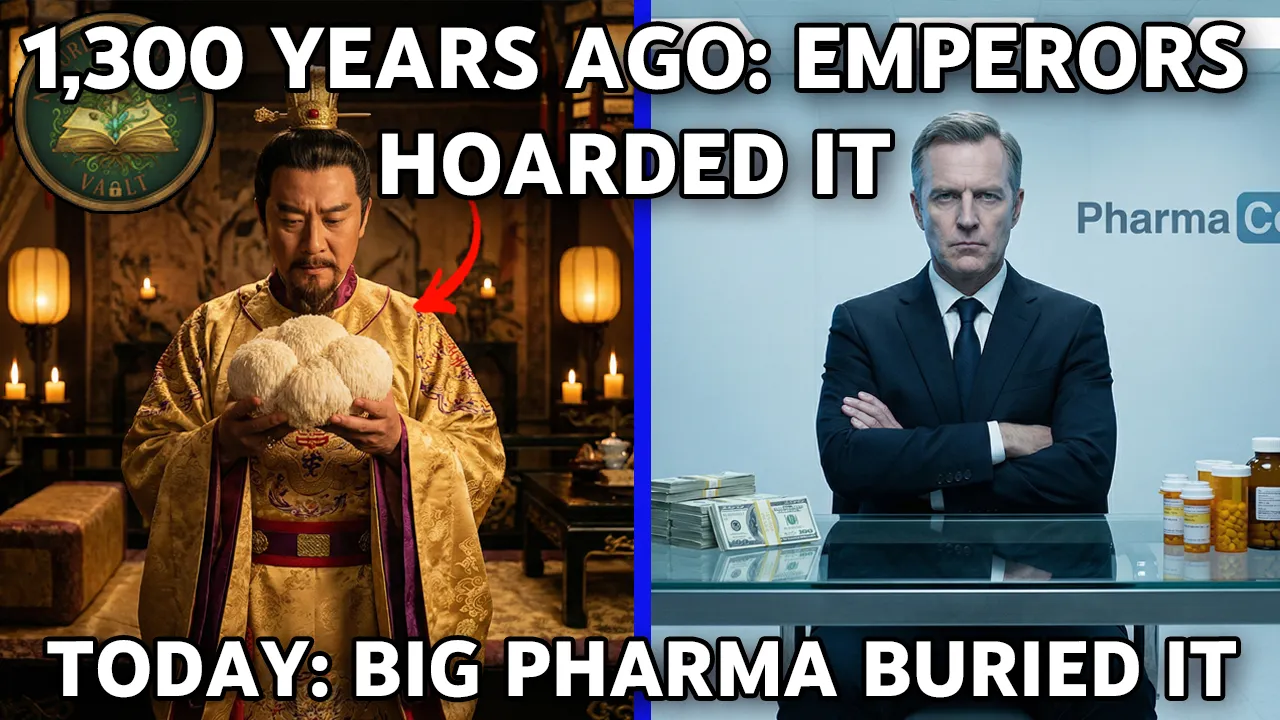
Table of Contents
- The Crisis of Cognitive Decline
- How Your Brain Dies
- 1,400 Years of Imperial Medicine
- The Science: Nerve Growth Factor
- Human Trials: The Proof
- The Patent Problem
- 40 Years of Failed Attempts
- The Supplement Industry's Secret
- Grow Your Own: The Perennial Solution
- The Choice
- FAQ
Recommended Product: Lion's Mane Growing Kit
View Growing Kit OptionsAffiliate link - supports our channel
The Crisis of Cognitive Decline
Your father can't remember your name.
He recognizes your face. He knows he should know you. But the word, the name he has called you for 40 years, is gone. He fumbles. He apologizes. The confusion in his eyes tells you everything.
6.9 million Americans are living this right now. By 2050, that number hits 13 million. Maybe it's your parent. Maybe it's your spouse. Or maybe you've started noticing the fog yourself.
Doctors offer pills like Donepezil. These drugs don't stop the decline. They barely even slow it. They are band-aids on a bullet wound. You watch your father fade anyway, one memory at a time, until he forgets he ever had a life.
Meanwhile, the pharmaceutical industry has spent 40 years and billions of dollars chasing a cure: gene therapy requiring brain surgery, experimental implants drilled directly into the skull, synthetic compounds that failed trial after trial.
But 1,400 years ago, in the mountains of Tang Dynasty China, imperial physicians were already treating cognitive decline using lion's mane mushroom (*Hericium erinaceus*). They didn't use surgery. They used a white cascading mushroom growing on oak trees.
They called it divine medicine, reserved for emperors. Commoners caught possessing it faced execution.
What did they know that we have forgotten?
How Your Brain Dies
Your brain contains 86 billion neurons. Every memory, every skill, every piece of who you are exists as a web of connections between these cells.
In Alzheimer's, those connections snap.
It starts in the hippocampus, the memory center. Neurons go silent. Protein tangles block signals. Amyloid plaques accumulate like rust on machinery.
- First, you forget where you put your keys
- Then conversations from yesterday
- Then your granddaughter's face
- Eventually, you forget you ever had a granddaughter
The medical term is neurodegeneration. The human term is erasure.
Your doctor prescribes Donepezil. It doesn't rebuild dying neurons. It doesn't clear the plaques. It doesn't restore lost connections.
Think of it like this: Your house is burning down and the fire department shows up with a fan to blow some of the smoke away. The house still burns. The fan just makes it slightly easier to breathe while you watch it collapse.
That is the best modern medicine offers. Symptom management. Acceptance of the inevitable.
But what if the neurons could be rebuilt? What if erasure could be reversed?
1,400 Years of Imperial Medicine
The Tang Dynasty - 618 AD
Inside the forbidden archives of the Tang dynasty, physicians maintained detailed records. Ginseng for vitality, Reishi for longevity, and a mushroom so powerful that possession by commoners was punishable by death.
They called it Houtou - the monkey head mushroom.
The texts are specific:
- Elderly officials experiencing memory loss were treated with it
- Scholars preparing for imperial examinations consumed it to sharpen mental clarity
For 13 centuries, this was not a folk remedy. It was imperial protocol.
The Yamabushi Monks of Japan
Deep in the mountains of Japan, Buddhist monks of the Yamabushi sect knew the secret too. They called it Yamabushitake, named after their own order.
Before meditation sessions lasting days, they brewed lion's mane into tea. They reported sharper focus and the ability to hold complex philosophical concepts without mental fatigue.
Europeans saw it as a curiosity. The East knew it was medicine.
The Science: Nerve Growth Factor
The 1994 Breakthrough
It wasn't until 1994 that we understood why. Hirokazu Kawagishi, a researcher at Shizuoka University, isolated strange molecules from lion's mane mycelium.
When he tested them on nerve cells, the results were shocking. The findings appeared in Tetrahedron Letters.
Two families of compounds - hericenones and erinacines - stimulated the production of Nerve Growth Factor (NGF).
What is NGF?
NGF is the protein your brain uses to build and maintain neurons:
- It promotes neuron survival
- It repairs damaged tissue
- In healthy young brains, it is abundant
- In aging brains, especially those with Alzheimer's, NGF levels collapse
Without it, connections die.
The Blood-Brain Barrier
Kawagishi found that erinacines did something most molecules cannot do: they crossed the blood-brain barrier.
Once inside, they triggered astrocyte cells to produce more NGF. Neurons responded immediately:
- They grew new branches
- They extended connections
- They formed fresh pathways
15 different erinacine compounds have since been identified. Erinacine A is the most potent. At concentrations of just 1 microgram per milliliter, it increased NGF secretion by over 60%.
This was not theory. This was measurable neuron regeneration.
Human Trials: The Proof
The 2008 Hokkaido Study
In 2008, researchers at Hokkaido University took this to human trials. They recruited patients aged 50 to 80 with mild cognitive impairment - the stage before full Alzheimer's.
- Half received lion's mane extract daily
- Half received placebo
After 16 weeks, the results appeared in Phytotherapy Research:
- Patients taking lion's mane showed significant improvements in cognitive function scores
- Memory improved
- Processing speed increased
But when they stopped taking the mushroom, the improvements vanished.
The monks weren't experiencing placebo. The emperors weren't relying on superstition. They were stimulating nerve growth factor.
They were regenerating neurons. They were doing in 618 AD what pharmaceutical companies are still trying to figure out in 2025.
The Patent Problem
If a mushroom can do this, why isn't every neurologist prescribing it?
The answer is simple: You can't patent a mushroom.
When the research hit major journals in the 1990s, pharmaceutical companies saw the potential:
- Alzheimer's affects 6.9 million Americans
- Global dementia cases exceed 55 million
- A treatment that actually regenerates dying neurons would be worth hundreds of billions
But lion's mane has been used in Traditional Chinese Medicine for 1,400 years:
- It grows wild throughout Asia, Europe, and North America
- Anyone can cultivate it
- No company can claim exclusive rights
So pharmaceutical companies did what they always do: They tried to recreate it synthetically.
40 Years of Failed Attempts
Gene Therapy (2001-2015)
Neuroscientist Mark Tuszynski at UC San Diego launched the first clinical trial - not with lion's mane, but with gene therapy.
The plan: Genetically modify patients' own cells to produce NGF, then surgically implant those cells directly into the brain.
Eight patients underwent the procedure. Neurosurgeons drilled into their skulls and injected modified fibroblasts into the basal forebrain.
Results (Nature Medicine, 2005):
- Brain scans showed increased metabolic activity
- Neurons responded to the implanted NGF
- Some patients showed slowed cognitive decline
- Cost per patient: over $100,000 plus full brain surgery
You can't give 6.9 million Americans brain surgery.
Viral Vector Delivery (2010-2018)
Pharmaceutical company Ceregene developed CERE-110, a viral vector designed to deliver NGF genes. It still required drilling into the skull.
The phase 2 trial: 49 patients, 24 months of tracking.
The trial failed.
Results published in 2018 showed no statistically significant improvement compared to placebo. The virus did not spread far enough.
Cost of the failed trial: over $30 million.
Encapsulated Cell Delivery (2016)
Swedish researchers implanted small devices into patients' brains that slowly released NGF over 6 months. Four patients underwent stereotactic brain surgery at Karolinska University Hospital.
The devices worked. NGF levels increased. But the procedure was deemed too intrusive and expensive to continue.
40 years. Billions of dollars. Multiple failed trials. All attempting to recreate what a mushroom does naturally so they could own the patent.
The Supplement Industry's Secret
Walk into any pharmacy and head to the brain health aisle - CVS, Walgreens, Walmart. The section stretches 20 feet.
Bottles promise enhanced memory, sharper focus, cognitive clarity.
Count how many contain lion's mane: maybe three. Buried on bottom shelves. No major marketing. No celebrity endorsements.
Now count the synthetic nootropics: Alpha Brain, Mind Lab Pro, Neuriva, Prevagen - dozens of brands, millions in advertising, premium shelf placement.
This is not an accident. It is economics.
- Global nootropics market: $4.6 billion in 2024
- Projected: $9.4 billion by 2031
- 82% of that market is synthetic compounds
A bottle of 60 capsules containing isolated Alpha-GPC costs $3 to manufacture. It retails for $39.99. The markup is 1,200%.
Lion's mane works through a symphony of compounds - 15 erinacines, beta-glucans, and polysaccharides working together. You cannot isolate one, patent it, and charge a premium.
The mushroom has to be used whole - which means no exclusivity, no patent protection, no monopoly pricing.
In 2023, the top five nootropic brands spent a combined $47 million on marketing. How much went to lion's mane research? Zero.
Grow Your Own: The Perennial Solution
This is the part they really hate.
One hardwood log - oak, maple, beech, or birch - properly inoculated with lion's mane spawn, produces mushrooms for 5 to 7 years.
A single log yields 10 to 15 pounds annually. Fresh lion's mane retails for $20 per pound. That's $200 worth of brain-regenerating medicine every year from a single log.
Your Total Investment
- $30 for spawn plugs
- $10 for beeswax
- One afternoon of work
The Process
- Drill holes in a diamond pattern around the log
- Insert spawn plugs containing lion's mane mycelium
- Seal with beeswax
- Stack logs in shade where they receive natural rainfall
- Wait 6 months to 2 years
- Harvest white cascading mushrooms with long flowing spines that taste like lobster when cooked fresh
The mushrooms fruit twice per year - spring and fall - for 5 to 7 years.
Compare the Economics
- Monthly supplement supply: $30-$45
- 12 months: $360-$540
- 7 years: $2,520-$3,780
Or spend $40 once and grow your own for 7 years.
This is the perennial model that terrifies subscription-based businesses: one-time investment, multi-year returns, no recurring revenue.
Pharmaceutical companies cannot profit from this. Supplement manufacturers cannot either. So they sell you pills instead.
The Choice
Your father is 72. Maybe he has five good years left. Maybe 10 if you're lucky.
He's in the early stages now. He forgets names sometimes, repeats stories, gets confused about what day it is. Your doctor says this is normal aging. Prescribes Donepezil. Warns you it only slows things down. Doesn't stop them. Doesn't reverse them.
There was something. There is something.
Buddhist monks in mountain monasteries knew it 1,400 years ago. Imperial physicians treating elderly officials understood it. Modern neuroscience validated it with peer-reviewed studies in major journals.
A mushroom that stimulates nerve growth factor. That regenerates dying neurons. That rebuilds the connections dementia destroys.
The science is irrefutable. The clinical trials show improvement. The mechanism is well understood: Erinacines cross the blood-brain barrier, trigger NGF production, and stimulate neuron growth.
But science doesn't drive industries. Profit does.
There's more profit in $30 million failed gene therapy trials than validating what emperors used for 13 centuries. More profit in lifetime subscriptions to synthetic pills than teaching people to grow mushrooms on logs.
The choice facing your father isn't medical. It's economic.
The treatment exists. The industry just makes more money if he never learns about it.
- You can keep paying $40 per month for capsules that might slow his decline
- You can wait for pharmaceutical companies to perfect brain surgery delivery systems
- You can watch him fade while researchers chase patents
- Or you can inoculate a log
The emperors chose the mushroom. The monks chose the mushroom. The neurons, when given nerve growth factor, choose regeneration.
The industry chose profit.
What will you choose for your father? What will you choose for your own future?
Frequently Asked Questions
Does lion's mane mushroom regenerate brain cells?
Lion's mane (Hericium erinaceus) stimulates production of nerve growth factor (NGF), the protein responsible for growing and repairing neurons. Multiple studies confirm it promotes neurogenesis and can improve memory and cognitive function.
What are the proven benefits of lion's mane?
Research shows lion's mane stimulates NGF production, improves memory and focus, supports nerve repair after injury, and may slow cognitive decline. It has been used in Chinese medicine for 1,400 years and was reserved for emperors.
How do you take lion's mane mushroom?
Lion's mane can be eaten fresh, dried, or taken as an extract or powder supplement. It has a mild, seafood-like flavor when cooked. For cognitive benefits, consistent daily use of extracts standardized for hericenones and erinacines is most common in studies.
Explore More Medicinal Plants
Discover ancient healing plants backed by centuries of traditional use and modern science.
Browse Medicinal Plants Collection →