The Seed Big Pharma Tried to Patent. Proven in 1,200 Studies. Why the Results Were Buried?
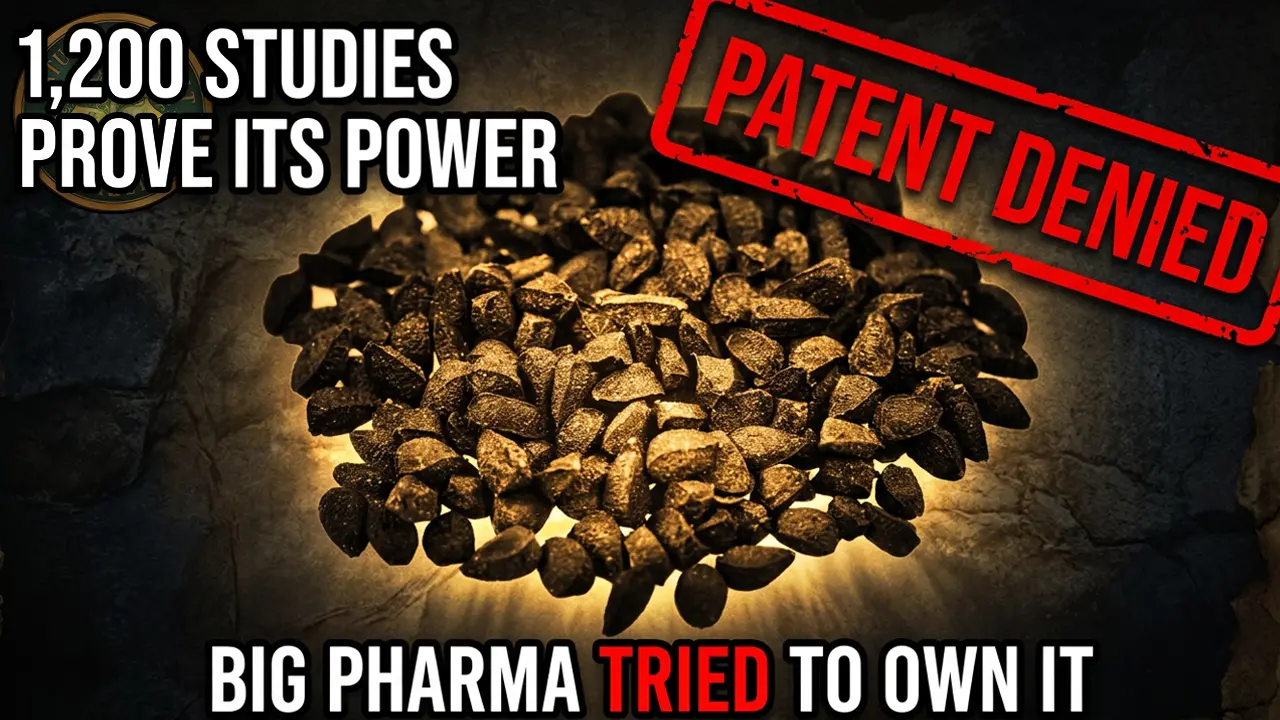
Table of Contents
Recommended: Black Cumin Seeds, Oil & Seeds for Planting
View Seeds Options View Oil Options View Seeds for PlantingAffiliate links - supports our channel
What is Black Seed?
There is a seed so heavily studied by modern science that it has generated more peer-reviewed research than most approved pharmaceutical drugs. Over 1,000 papers in the last six decades. Anti-cancer. Anti-diabetic. Antiviral. Anti-inflammatory.
Researchers have watched its active compound walk into cancer cells and dismantle them from the inside. They have watched blood sugar plummet in diabetic patients who simply ate a teaspoon of it daily. They have seen tumors shrink in studies where nothing else was tried.
Yet your doctor has almost certainly never mentioned it. Your oncologist does not prescribe it. Your pharmacist does not stock it beside the synthetic drugs that cost $800 a bottle.
This seed costs less than $10 a pound. It grows freely across North Africa, the Middle East, and South Asia. It does not require a prescription. It cannot be owned. And that, it turns out, is the entire problem.
This is Nigella sativa. Black Seed. And it was already ancient when Tutankhamun was born.
3,000 Years of Documented Use
Found in the Pharaoh's Tomb
The archive opens in 1922 in Egypt's Valley of the Kings. British archaeologist Howard Carter has spent years searching for the tomb of a forgotten pharaoh. On November 4th, a water boy's donkey kicks a stone step hidden under centuries of rubble. Three weeks later, Carter peers through a small hole in a sealed antechamber and whispers: "Wonderful things."
Among the thousands of golden objects retrieved from the tomb of King Tutankhamun, dead at 19, buried around 1323 BC, archaeobotanists found something unexpected. Not weapons. Not treasure. Seeds. Small, pitch-black, triangular seeds placed deliberately among the sacred objects meant to accompany the king into the afterlife. Seeds the pharaoh's own physicians used to heal the royal family.
The Ancient Record
Scientists have confirmed Nigella sativa was cultivated across the Near East since at least 2700 BC. A 3,600-year-old Hittite flask unearthed in Turkey in 2004 contained 180,000 of these seeds packed in honey at a temple site. The cargo of a 3,200-year-old Bronze Age shipwreck off the southern coast of Anatolia carried it in quantity. Civilization after civilization chose this exact seed as essential enough to preserve, trade, and bury with their dead.
In the first century AD, the Greek physician Dioscorides recorded that it treated headaches, nasal congestion, toothache, and intestinal worms. The Romans called it Greek Coriander and used it daily. Around 632 AD, the Prophet Muhammad spoke of it — one of the most authenticated collections in Islamic tradition records: the black seed is a cure for every disease except death.
Ibn Sina and The Canon of Medicine
In 980 AD, a boy named Ibn Sina was born near Bukhara in what is now Uzbekistan. He began studying medicine at 13. By 18 he was already a practicing physician. By the time he died at 57, he had written The Canon of Medicine, a 5-volume encyclopedia so comprehensive that European universities used it as their primary medical textbook until the 17th century.
Ibn Sina catalogued Black Seed's uses in explicit clinical detail. He understood dosage, preparation, and contraindication. He described principles that modern scientists would independently rediscover centuries later and call clinical trial design. Western medicine did not credit him for those principles. It simply adopted them. And as European empires rose and the Islamic world fell to colonization, a thousand years of accumulated clinical observation was quietly shelved.
The Patent Attempt They Lost
Nestlé's Filing
In 2009, Nestlé, the world's largest food and beverage corporation, filed international patent applications in countries across the globe. Their target was thymoquinone, the primary active compound found inside Black Seed. Nestlé's scientists had isolated the way thymoquinone interacts with opioid receptors in the body to reduce allergic reactions and filed for what is called a "composition of matter" patent — the most powerful legal tool in existence.
If granted, it would have allowed a Swiss corporation to sue any person or company using that natural formulation, for any purpose, without their permission. They attempted to privatize a seed used by 57 generations of healers. A compound that Egyptian researchers published on in 2000. That Iranian scientists had studied in 2004. That Pakistani physicians had documented for years.
The Rebuttal and Withdrawal
The Third World Network published a detailed rebuttal in 2012. Nestlé's claim of novelty, they wrote, vanishes quickly. The scientific literature on thymoquinone's action on opioid receptors predated their application entirely. A petition organized by the advocacy group Sum of Us gathered over 300,000 signatures. The patent was denied. Nestlé withdrew.
But the attempt revealed the exact mechanism that has kept Black Seed in the shadows of Western medicine for decades. A drug company spends an average of $1.3 billion to bring a new pharmaceutical to market. No corporation will ever spend that money on a natural compound they cannot legally own. Black Seed cannot be monopolized. So it sits, studied obsessively in laboratories from Egypt to California to Japan, validated in trial after trial, and absent from every clinical guideline your doctor follows.
The Legal Limbo
The FDA has classified Black Seed as Generally Recognized as Safe for use as a spice. That classification means it is safe to eat. It does not mean it can be legally marketed as medicine. That distinction is not scientific. It is entirely economic. To receive FDA approval for therapeutic use, a compound must complete Phase 3 clinical trials funded by a commercial sponsor with financial stake in the outcome. No commercial sponsor has ever funded large-scale thymoquinone trials. Not because the science is weak. Because the science points to a seed anyone can grow in the dirt.
More studied than most approved drugs. Too safe to harm. Too natural to own.
What the Studies Actually Found
Cancer Research
Thymoquinone, the compound making up 30 to 48% of Black Seed's essential oil, has been tested against breast cancer, lung cancer, colon cancer, prostate cancer, and leukemia cells. In each case, researchers documented apoptosis — the programmed self-destruction of malignant cells. The compound activates tumor suppressor protein p53 and inhibits the molecular pathways cancer uses to grow, spread, and resist treatment.
A 2023 review from UCLA confirmed anti-tumor activity in squamous cell carcinoma, with thymoquinone binding to cancer targets including MMP2, AKT, PTEN, and VEGFR2 at energy levels stronger than existing chemotherapy compounds. These are not fringe findings. They are peer-reviewed, published in indexed oncology journals, and cited by cancer researchers worldwide.
Diabetes and Metabolic Health
The diabetes data is just as documented. Clinical trials involving type-2 diabetics given 2 grams of Black Seed daily showed significant reductions in fasting blood glucose, HbA1c, total cholesterol, and LDL. No adverse effects were recorded in any of those trials. The mechanism is thymoquinone's inhibition of the liver enzyme HMG-CoA reductase — the exact same enzyme targeted by prescription statin drugs that generate billions in annual sales — achieved by a seed that costs pennies.
Immune Response and Inflammation
Black Seed inhibits COX-2, the same inflammatory enzyme pathway targeted by ibuprofen and the prescription anti-inflammatories that generate $15 billion a year in corporate sales. In a 2020 randomized controlled trial in Pakistan involving 313 COVID-19 patients, those receiving honey combined with Black Seed showed significantly better outcomes than the placebo group across both mild and severe disease.
A Phase 1 cancer trial of thymoquinone administered orally to 21 patients at doses up to 10mg per kilogram reported no side effects. None.
So it exists in legal limbo. More studied than most approved drugs. Too safe to harm. Too natural to own.
Growing and Using Your Own Supply
How to Grow It
Nigella sativa is a hardy annual producing delicate pale blue and white flowers. It tolerates poor soil and dry conditions. Sow seeds directly in early spring after last frost. Harvest the brown pods in late summer, break them open, and dry the seeds in shade. Two square meters of garden will produce enough seed to last a family an entire year.
The Documented Dose
The dose documented in clinical trials is 1 to 2 grams per day — roughly half a teaspoon of whole seeds. Grind them and stir into yogurt or bake into bread. Because heat partially degrades thymoquinone, cold-pressed unrefined Black Seed oil retains the highest therapeutic potency. The oil, taken at one teaspoon daily, is the form used in the majority of studies showing metabolic and immune benefit.
What Was Preserved
This is what 3,000 years of human medicine preserved and one century of pharmaceutical economics intentionally erased. A seed that falls from a flower in your garden. A medicine studied in over 1,000 peer-reviewed papers that your doctor will never prescribe. Not because it does not work. Because no one can profit from what grows freely in the earth.
King Tutankhamun knew. Ibn Sina knew. Millions of people across the ancient world knew. The seed did not change. The system did.
Explore More Medicinal Plants
Discover ancient healing plants backed by centuries of traditional use and modern science.
Browse Medicinal Plants Collection →