They Charge $1,200 For What This Wild Root Does For Free
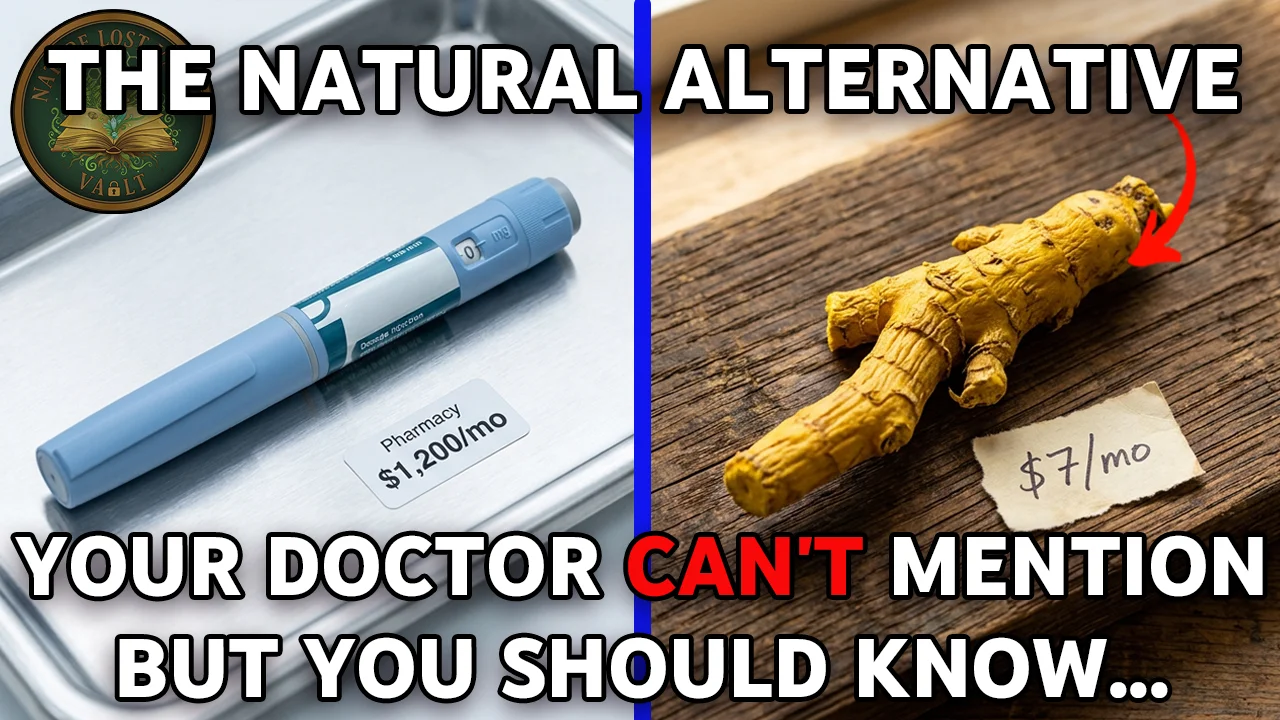
Table of Contents
Recommended: Barberry Root Bark, Seeds & Live Plants
View Root Bark Options View Seeds Options View Plant OptionsAffiliate links - supports our channel
What is Berberine?
There is a plant that grows in gardens across the temperate world, thorned and drought-hardy, overlooked by most gardeners who walk past it. When you split its root with a knife, what bleeds out is gold. Not metaphorically. The inner bark is brilliant yellow, almost fluorescent, the same color that physicians across three continents recognized for thousands of years as the mark of a medicine unlike any other.
For two millennia, that yellow root treated a condition the ancient texts describe with haunting precision: the patient who grows thin despite eating well, whose thirst no amount of water can satisfy, whose body wastes slowly from within. We now call it type 2 diabetes. Ancient physicians called it the wasting disease. And they were already treating it successfully long before the pharmaceutical industry existed.
Today, 537 million people worldwide are living with that same condition. The flagship pharmaceutical treatment costs up to $1,200 a month. Millions are on waiting lists. Millions more are rationing doses or going without.
The yellow root costs seven dollars.
You have almost certainly never heard about the yellow root. Not from your doctor. Not from your pharmacist. Not from any institution with a conference room and a research budget.
That absence is not an accident.
This is berberine. The compound they could not patent.
3,000 Years of Clinical Evidence
The Han Dynasty Archive
The archive opens in China, at the Han dynasty. A physician sits beside a patient who has grown thin despite eating well, whose eyes are clouded with thirst that will not break. The physician reaches for the dried root of Huang Lian. The golden thread. Ground to powder. Mixed with warm water.
The prescription is recorded in the Shennong Bencao Jing, the foundational text of Chinese medicine. For the patient whose thirst cannot be satisfied. For the patient whose body wastes from within. For the patient whose urine draws insects to the floor where it falls. The text specifies dosage, preparation, and duration of treatment. This is not folk wisdom preserved by accident. This is a clinical protocol, refined across centuries of observation, carried forward by generation after generation of physicians who watched it work.
The Same Discovery, Twice
Across the Himalayas, the same discovery was made independently. Ayurvedic physicians working from the Sushruta Samhita, one of the foundational texts of Indian medicine, documented a plant they called Daruharidra. Tree turmeric. They extracted the root bark. They noted the brilliant yellow pigment. They recorded results that matched precisely what physicians on the Yellow River had already documented thousands of miles away.
Two civilizations. Two independent archives. One molecule. Thousands of years before modern biochemistry had the tools to understand why.
The Hashtag That Woke Everyone Up
In 2022, the comparison no company wanted made went viral. Someone posted their berberine results next to their Ozempic prescription: $7 a month versus $1,200 a month. Then another person posted. Then thousands. The hashtag #NaturalOzempic accumulated over 100 million views. Millions of people discovered simultaneously what Han dynasty physicians had documented two millennia earlier.
The pharmaceutical industry's lawyers noticed.
What Modern Science Found
The Metabolic Master Switch
In 2006, researchers at the Shanghai Institute of Materia Medica published a study in the journal Diabetes. They had spent years mapping the cellular pathway through which berberine acts. What they found was not what anyone in the pharmaceutical world expected.
Berberine activates a protein called AMPK, the metabolic master switch. The same molecular target as metformin, the most widely prescribed diabetes drug in human history, taken daily by more than 200 million people worldwide. The same switch. Reached by a different molecular road. But the same destination.
Head-to-Head vs. Metformin
Two years later, Chinese researchers took this to a direct clinical test. They enrolled patients with newly diagnosed type 2 diabetes and divided them into two groups. Half received metformin. Half received berberine. For three months, both groups were monitored.
The results landed quietly. Berberine and metformin produced statistically equivalent reductions in fasting blood sugar, post-meal glucose, and HbA1c, the three-month average that determines whether diabetes is being controlled or progressing.
The study was replicated. Then replicated again. By 2012, researchers in Beijing had pooled data from 27 randomized clinical trials involving more than 2,500 patients. Berberine reduced HbA1c by an average of 0.9 percentage points. Metformin reduced it by 0.8. A compound costing pennies a day, performing identically to a compound generating billions in global pharmaceutical revenue.
Cholesterol, Statins, and Ozempic
A separate review of 16 clinical trials found berberine reduced LDL cholesterol and triglycerides at rates comparable to low-dose statin therapy. The global statin market is valued at over $19 billion annually. Berberine does not require a prescription to access.
Then there is the Ozempic comparison. Semaglutide works by triggering a hormone called GLP-1: reduced appetite, slower digestion, improved insulin response. The fastest-growing pharmaceutical product in history, with global sales exceeding $21 billion in 2023 alone.
Berberine does not mimic GLP-1. It stimulates your body to produce it naturally. Research has documented that berberine raises GLP-1 levels in patients with metabolic syndrome, contributing to reduced appetite and improved blood sugar control. The mechanism diverges. The downstream effects converge.
2,800 peer-reviewed studies. Three thousand years of documented use. And you have never heard of it from a doctor.
The Patent Wars and the Silence
Filing for What They Could Not Own
Patent attorneys are precise instruments. What a company files to own tells you exactly what it is afraid of losing. Between 2010 and 2022, pharmaceutical companies filed dozens of patent applications involving berberine: berberine combined with proprietary delivery systems, berberine in sustained-release capsules, berberine derivatives with minor molecular modifications designed to move the compound just far enough from its original structure to qualify as novel.
The molecule itself was untouchable. Three thousand years of documented use in the Chinese and Indian medical archives constitutes prior art, the legal term for knowledge that belongs to humanity, not to a filing cabinet. Patent offices rejected the applications. So they built fences around the edges. And when the fences failed, the regulatory machinery began.
Weaponizing the FDA Definition
The FDA enforces a foundational rule: if you claim that a natural plant extract treats, cures, or mitigates a disease, that extract legally becomes an unapproved new drug. Companies selling effective berberine formulations at clinical doses found themselves in legal grey zones, facing warning letters and regulatory liability that empties bank accounts and closes businesses.
You cannot ban a plant that humanity has used for three thousand years. So you weaponize the definition of a drug. You create massive legal liability for anyone selling the natural version at the dose that works. You price the pharmaceutical alternative at $1,200 a month. And you wait.
The Funded Silence
Berberine cannot fund a medical conference. It cannot pay for a pharmaceutical sales representative to visit a doctor's office with comparison charts and free samples. A compound costing pennies a day generates no margin for the systems that determine what enters the medical curriculum and what does not.
The silence is not accidental. The silence is funded.
Growing Your Own Supply
How to Use It
The clinical dose used across the majority of successful trials is 500 milligrams, three times daily, taken with meals. The most studied and most bioavailable form is berberine hydrochloride. Look for that specified on the label. A full month's supply at the clinical dose costs between $15 and $30 at most health food stores. Less than a single co-pay on most prescriptions.
Barberry: The Plant Most People Walk Past
If you want a supply that no regulatory agency can restrict, no pricing committee can inflate, and no supply chain disruption can interrupt, grow it.
Berberis vulgaris, barberry, is the plant most Americans walk past without recognizing. Thorned and drought-tolerant, cold-hardy to -30 degrees Fahrenheit, growing across most of the continental United States in zones 4 through 8, in poor soil where other plants fail. In autumn it carries small red berries. In spring, yellow flowers. And year-round, in the root bark and inner stem, the compound those Han dynasty physicians ground to powder two thousand years ago.
A single established shrub produces root material for decades and asks almost nothing from you. Plant it in a forgotten corner. Let it spread. What grows there cannot be owned, cannot be regulated, cannot be priced beyond your reach.
Oregon Grape and Goldenseal
Oregon grape is the shade-tolerant alternative, thriving under tree canopies where barberry struggles, spreading naturally into colonies that sustain themselves once established.
Goldenseal carries a higher concentration of berberine than either barberry or Oregon grape, but demands rich forest soil and patient cultivation. It is also listed as a species of conservation concern in several states due to decades of overharvesting. Grow it from cultivated nursery stock. Do not harvest from wild populations.
All three plants share one quality. They do not ask anything from the systems that have decided, quietly and profitably, that you do not need to know about them.
The Yellow Root Is Still Here
Modern science confirmed everything those ancient physicians already knew. Over 2,800 peer-reviewed studies validated the mechanism, the efficacy, and the safety. Pharmaceutical lawyers tried to patent it and failed. So they weaponized regulation, priced the alternative at $1,200 a month, and waited for most people to stop looking.
The yellow root is still here. Still growing in gardens where no one is watching. Still brilliant when you cut it open. Still bitter on the tongue. Still working, exactly as it worked when the first Han dynasty physician ground it into powder for a wasting patient and wrote down what he saw.
The knowledge is not lost. It is waiting.
Explore More Medicinal Plants
Discover ancient healing plants backed by centuries of traditional use and modern science.
Browse Medicinal Plants Collection →