The Nobel Prize Weed. Why Are We Warned Not to Use It?
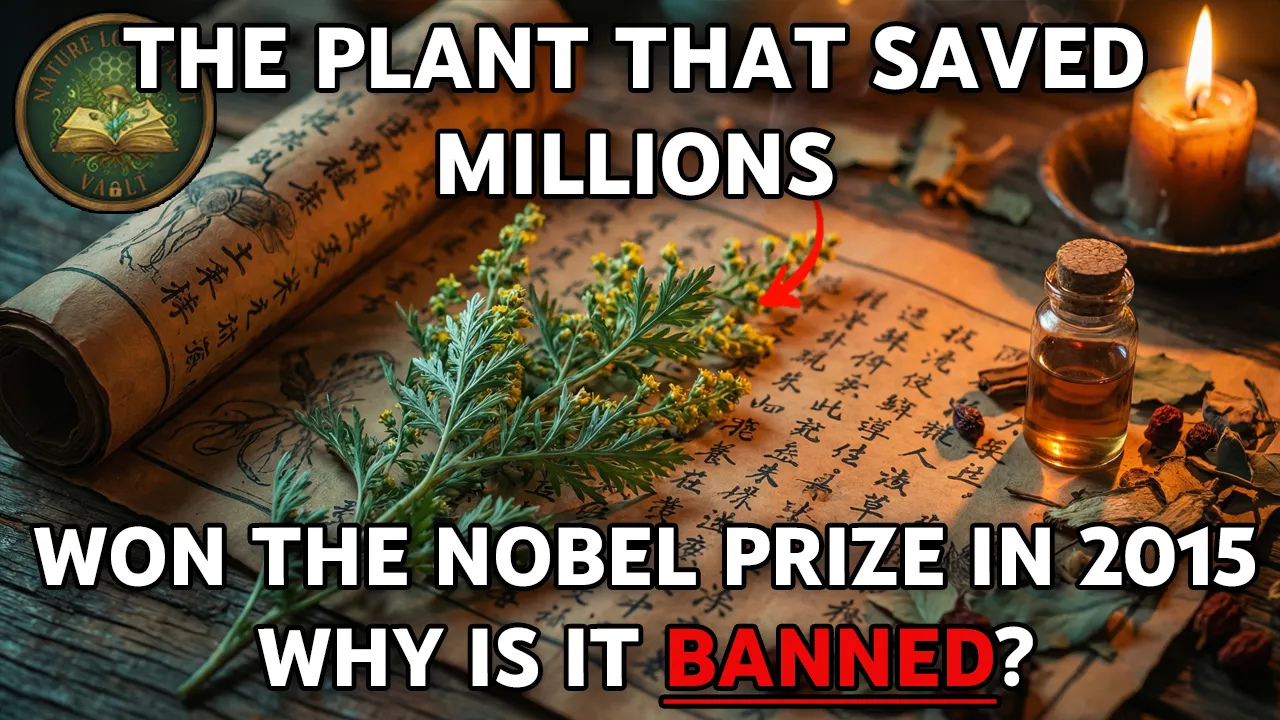
Table of Contents
- The Plant That Won a Nobel Prize
- 1,600 Years of Ancient Wisdom
- Project 523: The Secret Military Operation
- How Artemisinin Kills Malaria
- Follow the Money
- Beyond Malaria: Cancer & Parasites
- The Absinthe Myth
- Who Benefits From Your Ignorance?
- FAQ
Recommended Product: Wormwood Seeds
View Wormwood Seeds OptionsAffiliate link - supports our channel
The Plant That Won a Nobel Prize
Malaria has killed half of all humans who have ever lived.
In 1967, it was killing more soldiers in Vietnam than bullets. The world's most powerful armies were powerless against a microscopic parasite. Their drugs had failed. The resistance was spreading.
They needed a weapon that did not exist in modern science.
So the Chinese government did not look forward. They looked backward - into a forbidden archive from the year 340 AD.
What they found was a chemical bomb hidden inside a common garden plant. A plant that:
- Hunts cancer cells
- Obliterates parasites
- Cures fever in hours
And a plant that the pharmaceutical industry is terrified you will learn to grow.
They say it is dangerous to use the whole plant. They say you must buy the extracted pill.
But for 1,600 years, nobody told the emperors of China that.
1,600 Years of Ancient Wisdom
The Year 340 AD - Eastern Jin Dynasty
A scholar named Ge Hong is compiling an emergency medical handbook. He calls it Zhou Hou Bei Ji Fang - "Emergency Prescriptions Kept Up One's Sleeve."
Inside, he documents hundreds of remedies. But one stands out.
For intermittent fevers (what we now call malaria), he prescribes a specific plant. His instructions are oddly precise:
"Take a handful of Qing Hao, soak it in about half a gallon of water, wring out the juice, and drink it all."
But here is what makes the prescription remarkable: He never says to boil it.
For 16 centuries, that detail seemed insignificant. Then in 1971, it saved the world.
1596 - The Ming Dynasty
Li Shizhen, the most celebrated physician of the Ming Dynasty, includes Qing Hao in his Compendium of Materia Medica. He recommends tea made from it specifically for malaria.
The plant becomes foundational in Traditional Chinese Medicine - used not just for fever, but for expelling intestinal parasites.
They call it Wormwood. The name tells you what it does.
Project 523: The Secret Military Operation
The Vietnam Crisis
Fast forward to 1967. The Vietnam War is destroying armies on both sides - not just with combat, but with disease.
Malaria is killing thousands. In China alone: 30 million cases every year and 300,000 deaths.
The standard drugs are failing:
- Chloroquine fails
- Quinine fails
- The parasites have learned to resist
May 23rd, 1967
The Chinese government holds an emergency meeting in Beijing. They launch a secret military operation called Project 523 - named for that date.
Their mission: Find a cure before malaria decimates the military.
They screen over 240,000 compounds. Nothing works.
Enter Tu Youyou
In January 1969, they bring in Tu Youyou, a pharmaceutical chemist at the China Academy of Traditional Chinese Medicine.
Her assignment is nearly impossible: Review ancient medical texts and find something modern science missed.
She and her team:
- Screen over 2,000 traditional recipes
- Test 380 herbal extracts from about 200 different plants
- Most fail
One plant keeps appearing in the old texts: Artemisia annua - Sweet Wormwood.
The Breakthrough
Initial experiments are frustrating. They boil the wormwood according to conventional scientific methods. The results are inconsistent - it works one day, fails the next.
Tu Youyou is perplexed. The ancient texts clearly say this plant works. What are they missing?
Then she remembers Ge Hong's instructions from 340 AD: He never mentioned heat.
She realizes that boiling water might be destroying the active compound.
October 4th, 1971
Using a low-temperature ether extraction instead of boiling water, Tu Youyou successfully isolates a compound that shows 100% effectiveness against malaria in mice and monkeys.
But nobody knows if it is safe for humans.
In an act of remarkable courage, Tu Youyou and two colleagues volunteer to be the first test subjects. She later said: "As head of this research group, I had the responsibility."
They survived. Clinical trials followed. All 21 malaria patients in the first study recovered completely.
They named the compound Qinghaosu. The world now knows it as Artemisinin.
October 5th, 2015 - Stockholm, Sweden
Tu Youyou, now 84 years old, receives the Nobel Prize in Physiology or Medicine.
She is the first mainland Chinese scientist to win a Nobel Prize in a scientific category. She did it without a doctorate, without a medical degree, without training abroad - just ancient texts and persistence.
Her acceptance speech title: "Discovery of Artemisinin - A Gift from Traditional Chinese Medicine to the World."
How Artemisinin Kills Malaria
The Molecular Weapon
The secret lies in a molecular weapon hidden inside the leaves: an endoperoxide bridge - a rare chemical structure that reacts with iron.
The Mechanism
Malaria parasites survive by feasting on hemoglobin in your red blood cells. Because of this, they are loaded with iron.
When artemisinin enters the parasite:
- It reacts with that high iron concentration
- The endoperoxide bridge breaks apart
- It generates free radicals
- Essentially detonating a microscopic bomb inside the parasite
It kills them within hours - faster than any other antimalarial drug in history.
The Impact
According to World Health Organization estimates:
- Artemisinin-based drugs have reduced global malaria mortality by over 20%
- In Africa alone, more than 100,000 lives are saved every year
The Lasker Foundation calls it "arguably the most important pharmaceutical intervention in the last half century."
Follow the Money
The WHO's Official Position
Why does the World Health Organization discourage people from growing and using artemisia themselves?
Their official reasoning:
- Concerns about standardization
- Dosage variability
- Quality control
- The potential for developing drug resistance
It sounds reasonable... until you follow the money.
The Market Numbers
- Artemisinin pharmaceutical market: $75-96 million in 2024, projected $225-677 million by 2030
- Artemisinin-based combination therapy market: $362 million in 2024, projected $529 million by 2030
Major pharmaceutical giants like Sanofi have invested heavily in producing semi-synthetic artemisinin using genetically engineered yeast.
This centralizes production. It eliminates the small farmer. It ensures artemisinin remains under corporate control.
The Alternative
Compare that to the alternative:
- A packet of Artemisia annua seeds costs about $5 online
- The plant thrives in poor soil
- It requires minimal water
- It produces multiple harvests per year
One backyard garden could supply antimalarial tea for months.
If people in malaria-endemic regions simply grew artemisia in their gardens and made tea, they would not need to buy expensive pills from Novartis or Sanofi.
The WHO's position protects that infrastructure. It protects those profit margins.
Beyond Malaria: Cancer & Parasites
Cancer Cells and Iron
Since the early 1990s, researchers have discovered that the same mechanism that kills malaria parasites also targets cancer cells.
Remember the iron? Malaria parasites hoard iron. But cancer cells are even worse.
Cancer cells are metabolic hogs. They require 5 to 15 times more iron than normal cells to sustain their rapid growth and division.
They are essentially primed to explode.
Antiparasitic Properties
Studies confirm that Artemisia absinthium (Bitter Wormwood) and Artemisia annua both possess potent antiparasitic properties. They kill:
- Tapeworms
- Roundworms
- Pinworms
A 2017 study found Artemisia absinthium extract caused paralysis, death, and ultrastructural damage to Hymenolepis nana, a common human tapeworm.
The active compounds include thujone (in bitter wormwood) and various sesquiterpene lactones. These compounds interfere with the parasites' nervous systems, causing paralysis and eventual expulsion from the host body.
In developing countries where antiparasitic drugs like albendazole are expensive or unavailable, wormwood represents an accessible alternative. It grows readily, requires no pharmaceutical infrastructure, and has been used safely for millennia.
Yet again, major health organizations remain silent on wormwood's antiparasitic properties outside malaria.
The Absinthe Myth
The Green Fairy
The plant has a cousin, Artemisia absinthium, better known as the primary ingredient in Absinthe.
In the late 19th century, absinthe was the drink of Europe. Van Gogh drank it. Toulouse-Lautrec drank it. Oscar Wilde drank it. Ernest Hemingway drank it.
They called it "the green fairy."
It was also blamed for madness, violence, and moral collapse.
The 1905 Catalyst
A Swiss man named Jean Lanfray murdered his wife and two daughters in a drunken rage. The press focused on the two glasses of absinthe he had consumed before the killings.
They ignored that he had also drunk cognac, brandy, creme de menthe, wine, and beer. He was a chronic alcoholic who had been drinking since breakfast.
But the damage was done. Prohibitionists seized the moment. They claimed wormwood caused psychosis. They invented a condition called "absinthism."
By 1915, absinthe was banned across Europe and the United States.
The official reason was thujone, a compound in wormwood said to be a dangerous neurotoxin. The French wine industry, which had long viewed cheap absinthe as competition, actively lobbied for the ban.
The Truth Revealed
For a century, the prohibition held. Then in the 1990s, scientists actually tested vintage bottles of pre-ban absinthe.
They measured thujone content. The levels averaged 1.3 mg per liter - far below anything needed for psychoactive or toxic effects.
The madness was a myth.
The hallucinations were just extreme alcohol intoxication combined with adulterated cheap brands that added toxic substances like antimony and methanol.
Modern research confirms thujone at absinthe concentrations poses no more risk than any high-proof spirit.
The European Union lifted bans in 1998. The United States followed in 2007.
It was a trade war disguised as public health.
Who Benefits From Your Ignorance?
Where We Stand
We have a plant:
- Used safely for 1,600 years
- Validated by a Nobel Prize in 2015
- Proven to kill parasites faster than any drug on the market
- Showing massive potential against cancer cells
And yet, the authorities tell you it is dangerous to grow it in your garden. They tell you it is irresponsible to use the whole plant. They tell you that standardization is more important than access.
But standardization is just another word for centralization - for corporate control, for profit protection.
The Real Question
Is wormwood a miracle cure-all? No. Does it have limitations? Absolutely. Raw plant material does vary in artemisinin content based on growing conditions. And there are legitimate questions about optimal dosing.
But the question you have to ask is: Who benefits from you not knowing about it?
- Not people in malaria-endemic regions who lack pharmaceutical access
- Not cancer patients seeking affordable complementary therapies
- Not communities wanting healthcare self-sufficiency
The beneficiaries are pharmaceutical companies protecting their market share, regulatory agencies maintaining institutional control, and a medical-industrial complex that profits from complexity and centralization rather than from accessible, affordable plant medicines.
Self-Sufficiency Works
Organizations like Doctors Without Borders have successfully implemented artemisia-based treatment programs in sub-Saharan Africa, training local farmers to grow and process the plant according to standardized protocols.
These initiatives demonstrate that quality control and efficacy can be achieved without pharmaceutical industry involvement.
The difference: When communities grow their own medicine, they are no longer customers. They are self-sufficient.
The Math
- One packet of seeds costs $5
- One pharmaceutical prescription costs hundreds of dollars
- One log of growing data, one generation of knowledge passed down versus a lifetime of dependence on pills you cannot afford
Tu Youyou's Words
In 2015, Tu Youyou said in her Nobel acceptance speech:
"Artemisinin is a true gift from old Chinese medicine. But this is not the only instance in which the wisdom of Chinese medicine has borne fruit."
She was acknowledging something modern medicine consistently downplays: Ancient plant wisdom, tested across millennia of human use, often contains profound therapeutic value.
They can ban a bottle. They can discourage a tea.
But they cannot patent a weed.
Frequently Asked Questions
What is artemisinin from wormwood?
Artemisinin is a compound extracted from wormwood (Artemisia annua) that revolutionized malaria treatment. It won Tu Youyou the 2015 Nobel Prize in Medicine. She discovered it by studying a 1,600-year-old Chinese medical text that described how to extract the compound at low temperature.
Is wormwood a real medicinal plant?
Yes. Wormwood (Artemisia annua) is a real medicinal plant that produces artemisinin, the most effective anti-malarial drug ever discovered. It won the 2015 Nobel Prize in Medicine and is now the WHO-recommended frontline treatment for malaria worldwide.
Why is wormwood controversial?
Wormwood contains thujone, a compound that in high concentrations can be toxic. Absinthe, made from wormwood, was banned in many countries in the early 1900s. However, medicinal species like Artemisia annua (sweet wormwood) are distinct from Artemisia absinthium (absinthe wormwood).
Explore More Medicinal Plants
Discover ancient healing plants backed by centuries of traditional use and modern science.
Browse Medicinal Plants Collection →