
Heart Pine: The Lost Wood That Built America and Was Replaced on Purpose
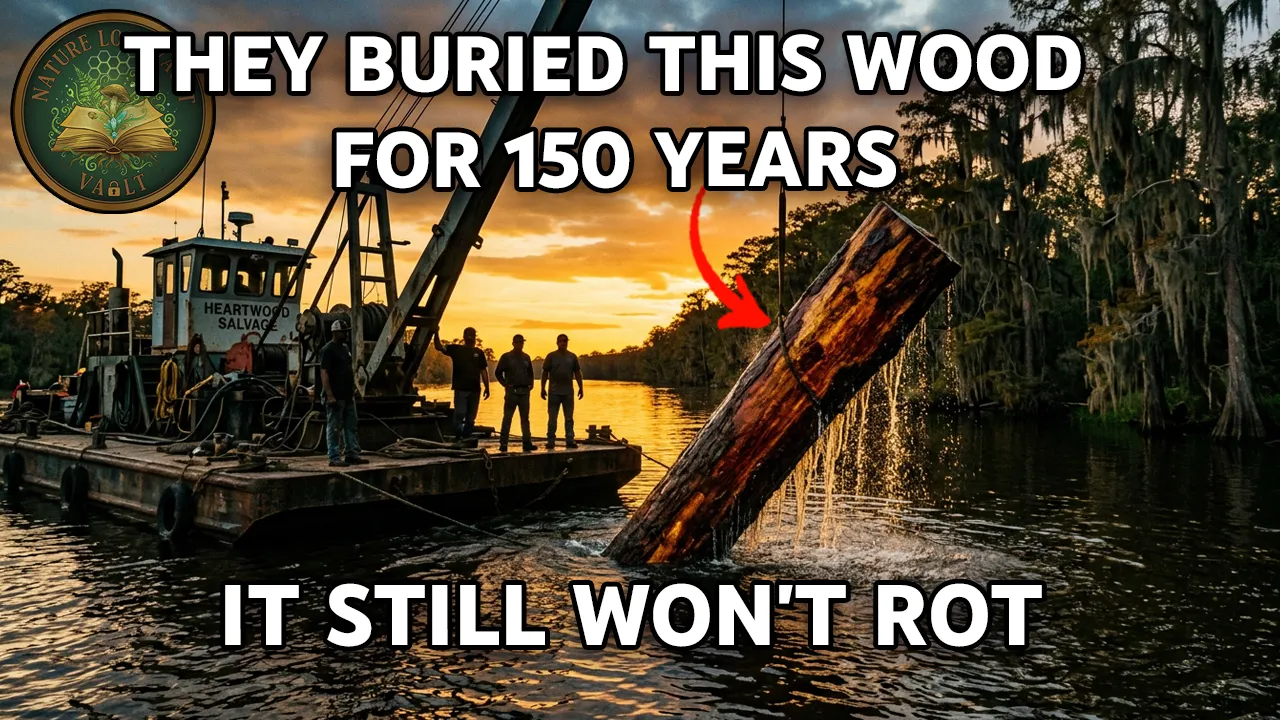

Table of Contents
90 Million Acres of Indestructible Wood
In 1607, English settlers stepped off their ships on the Virginia coast and looked up. Towering above them, stretching from the Atlantic coast to eastern Texas, stood the largest continuous forest on the North American continent. Longleaf pine. Column after column of trees rising 150 feet straight into the sky, four feet wide at the base, each one centuries old.
The settlers had never seen anything like it. Back in England, the great forests were gone. But here, the wood was everywhere. Longleaf pine was so straight, so tall, and so strong that the British crown immediately declared it property of the king. Royal surveyors walked the forests, identifying every tree wider than 24 inches and burning a broad arrow into its bark. Anyone who cut one without permission faced prosecution. The colonists responded by tarring and feathering the surveyors.
A Century to Build the Heartwood
A longleaf seedling spends its first seven years doing almost nothing visible. It sits at ground level looking like a clump of grass. But underground it is building, driving a taproot deep into the earth, storing energy, establishing an anchor that will hold for centuries. When the tree finally bolts upward, it grows fast and perfectly straight. No branches until the very crown. Then it slows down. One inch of diameter every 30 years.
That slowness is the secret. It takes an entire century for the tree to form its dense inner core, the heartwood. By the time it does, the wood is saturated with resin, the tree's own immune system. The timber becomes something closer to a mineral than ordinary wood. It scores 1,290 on the Janka hardness scale, harder than red oak. It does not rot. It does not warp. Insects cannot penetrate it. Water cannot permeate it.
Cut Out and Get Out
Then the railroads arrived. Rail lines pushed deep into untouched forest and logging crews followed. They built portable sawmill towns, cut around the clock, stripped the land bare, and moved on. The industry called it "cut out and get out." There was no plan for what came after. Ninety million acres of ancient forest were reduced to stumps in less than 40 years. By 1920, the original longleaf pine was functionally gone. Less than 2% of the original range remained.
The Deliberate Replacement
The timber companies had the mills, the rail lines, the crews, and the capital, but nothing left to cut. They had to replant, and they had a choice. They could plant longleaf pine, which would take a century to mature but produce the same incomparable wood. Or they could plant loblolly pine, a completely different species, fast-growing and harvestable in 25 years.
They chose loblolly. Across millions of acres of former longleaf range, they planted rows of fast, weak wood. Wood that warps when it dries. Wood that splits when it gets wet. Wood with almost no natural resin, no density, no real durability. In a financial system built around quarterly returns, the industry sacrificed quality to capture the market. Then they made sure every future carpenter grew up knowing only this wood and accepting warped framing as simply how wood behaves.
Dredged From Rivers, Salvaged From Ruins
When old textile mills, cotton gins, and warehouses are demolished across the South today, the workers pulling them apart find structural beams that look like they were milled last week. Perfectly straight, honey amber in color, nearly impossible to drill without a carbide bit. Reclaimers sell them for $15 a board foot, twelve times the price of what is at the lumberyard.
Salvage crews also drag river bottoms with sonar, hunting for longleaf logs that sank during the logging drives of the 1800s. The same resin that made heart pine impervious to rot made it impervious to submersion. Those logs have been sitting in the mud for 150 years without decaying. They get raised, milled, and sold to people restoring historic homes. The wood that built the country is now so rare it has to be dredged from riverbeds.
Planting for People Not Yet Born
Conservation groups have begun replanting longleaf across the Southeast. They know the timeline with no illusions. A tree planted today will not produce true heart pine for 100 years. The people planting them will not live to harvest them. But that is exactly the point.
The industry chose not to wait. We are still paying for that choice. Every time a new floor warps, every time a beam bows, every time someone nails together wood that will not outlast the mortgage on the house it frames, the knowledge of what wood can be is not lost. It is standing in a few quiet groves, sitting on the bottom of old rivers, and slowly growing in the dark beneath the soil.
Explore More Building & Construction
Discover forgotten techniques that built civilizations for millennia.
Browse Collection →