
Jujube (Ziziphus jujuba): The Drought-Proof Chinese Date Tree Frank Meyer Shipped to America in 1908, That Almost Nobody Planted
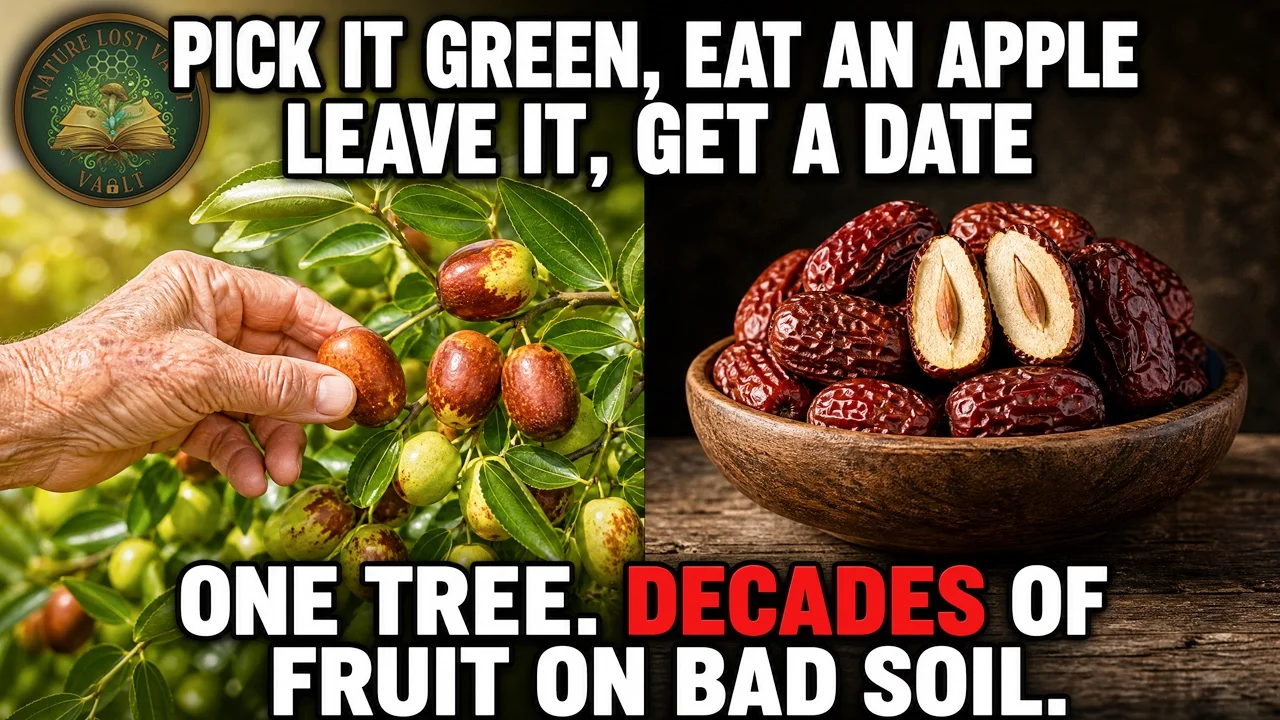
Table of Contents
- What is Jujube?
- 4,000 Years in China, Two Crates in Chico, and Frank Meyer
- Why It Is Nearly the Perfect Low-Care Fruit Tree
- Why It Stays Buried: It Arrived Late to a Table Already Set
- How to Eat Jujube (Fresh, Dried, Tea & Paste)
- How to Source Jujube (Grafted Trees, Seeds & Dried Fruit)
- Frequently Asked Questions
Recommended Products:
Jujube Tree Dried Jujube Dates Jujube Seeds
Planting tip: for reliable fruit, buy a grafted tree of a named cultivar such as 'Li' or 'Lang'. Seedlings vary widely in fruit quality and can take years longer to bear.
Affiliate links - support our channel
What is Jujube?
In the winter of 1908, two wooden crates arrived at a United States plant station in Chico, California. Inside were bundles of bare cuttings shipped from the mountains of northern China by a man who had walked thousands of miles to find them. What he packed into those crates was one of the finest fruit trees on Earth.
Eat its fruit fresh in early autumn and it snaps between your teeth like a small, crisp apple, sweet with a little tartness. Leave the same fruit on the branch a few more weeks and it wrinkles, darkens and turns chewy and rich, closer to a date than anything else in your kitchen. One tree, two completely different foods, decided only by when you pick.
It had fed people in China for more than four thousand years. It shrugs off drought, survives winters that crack an apple tree, and its fresh fruit carries more vitamin C than an orange. America was handed the whole thing, rooted and ready to plant. Almost nobody planted it. The tree is the jujube (Ziziphus jujuba).
| Metric | Value |
|---|---|
| Scientific name | Ziziphus jujuba Mill. |
| Family | Rhamnaceae (buckthorn family) |
| Common names | Jujube, Chinese date, red date; hong zao, da zao |
| Native range | Northern China |
| Cultivated in China | More than 4,000 years; hundreds of named cultivars |
| Fruit, fresh | Crisp, apple-like; picked half to fully brown in early autumn |
| Fruit, dried | Wrinkled, dark red, chewy and date-like; keeps about a year |
| Vitamin C, fresh | About 69 mg per 100 g (orange: about 53 mg, USDA) |
| Introduced to the US | 1908, Chico, California plant introduction station |
| Introduced by | Frank Meyer, USDA explorer under David Fairchild |
| Meyer cultivars | 'Li' (large, best fresh) and 'Lang' (best dried) |
| Frank Meyer's death | 1918, Yangtze River, aged 42 |
| Modern champion | Roger Meyer, California grower, 1990s onward |
| Cold hardiness | About -20 F dormant (zones roughly 5 to 9) |
| Heat and drought | Thrives in hot, dry summers once established |
| Soil | Poor, clay, alkaline and moderately salty soils; needs drainage |
| Pests | Few serious pests in most of North America; no spraying needed |
| Thorns | Yes, on most cultivars; deer tend to avoid it |
| Size | 15 to 25 ft; easy to keep small |
| Years to fruit | 2 to 3 years from a grafted tree |
| Pollination | Many cultivars partly self-fertile; two cultivars improve yield |
| Propagation | Grafted named cultivars; remove rootstock suckers |
| Why it never caught on | US fruit system built around the apple; no market, no buyers |
4,000 Years in China, Two Crates in Chico, and Frank Meyer
The Red Date of Northern China
Along dry hillsides in northern China, farmers were tending jujube more than four thousand years ago. They called the dried fruit hong zao, the red date, or da zao, the big date, and it ran through the middle of daily life: in the kitchen, in the medicine chest, and on the wedding table, where a handful of red fruits stood for children and good fortune. Over the centuries Chinese growers selected hundreds of named cultivars, some no bigger than a grape, some the size of a small plum. Fresh fruit sold crisp by the basket in autumn; dried fruit went into soups, teas and sweet pastes the rest of the year.
Frank Meyer, the Explorer Who Walked China
Frank Meyer was an agricultural explorer for the US Department of Agriculture, working under David Fairchild, whose office existed to search the world for useful plants America did not yet have. Meyer crossed China mostly on foot and sent home soybeans, wild pears, flowering trees and much more. Among the jujubes, he singled out two cultivars and named them 'Li', large and round and best eaten fresh, and 'Lang', smaller and better dried. In 1908 they reached the plant introduction station at Chico.
1918: The Champion Is Lost
Meyer never saw what became of them. In 1918, on another expedition, he went into the Yangtze River and did not come out. He was 42. The jujube had lost the one man in American agriculture who truly understood what it was.
Why It Is Nearly the Perfect Low-Care Fruit Tree
On paper, this tree should have swept across the country. Set a jujube in the worst corner of your yard, the dry patch where nothing wants to live, and it settles right in.
- Heat and sun: it wants hot summers and full sun and asks for little else.
- Hard soil: it fruits in poor, clay, alkaline and moderately salty soils that turn other trees yellow, as long as water drains.
- Drought: deep roots carry established trees through dry spells that would finish a peach tree.
- Cold: dormant trees take winter cold to about -20°F, and late leaf-out lets them dodge spring frosts.
- Pests: the insects that hollow out American orchards largely ignore it, so no spray schedule is needed. Its thorns tend to discourage deer.
- Size and speed: small enough to pick from the ground, and grafted trees fruit within two or three years.
- Storage: fruit dried on the branch keeps for about a year in a jar, the trick that fed Chinese villages through winter.
Fresh jujubes carry about 69 mg of vitamin C per 100 g (USDA), more than an orange at about 53 mg, plus fiber and potassium. For an older grower who wants real food without spraying, hauling water or babying anything, it is about as close to a perfect tree as exists.
Why It Stays Buried: It Arrived Late to a Table Already Set
Nobody Outlawed It. Nobody Had To.
By 1908 America already had its fruit, and its fruit was the apple. Around it the country had built an entire machine: rail lines, cold storage, nursery catalogs, county fairs and a hundred million people who knew exactly what to do with one. The peach, plum and pear fit the same machine. The jujube fit none of it.
Few Americans had ever seen one. Fresh jujubes did not ride the rails across the country the way apples could, and dried jujubes had to compete with dates and raisins, which already had their own valleys, farms and fortunes. No grocer asked for it, so no farmer planted an acre of a fruit he could not sell. After Meyer's death, the USDA's attention swung toward wheat, corn and the big staple crops. 'Li' and 'Lang' did not disappear. They sat in a few research collections and test plots, fruiting every autumn while the country walked past.
The turn:
The thing that stopped the jujube was never a fault in the tree. It arrived late to a table that had already been set. A century later, as summers run hotter and water scarcer across the West and South, a tree that fruits through heat, drought and salty ground looks built for exactly the future we are walking into.
The 1990s Revival
In the 1990s California grower Roger Meyer, no relation to Frank, fell hard for the tree. He tracked down old cultivars, brought in dozens more from China and put jujubes into the hands of backyard growers. A network of homesteaders, permaculture growers and rare-fruit enthusiasts formed around it, and extension trials in Texas and the desert Southwest reported the same thing: reliable crops, year after year, on ground that breaks an ordinary orchard. You can still order 'Li' and 'Lang' under the names Frank Meyer gave them.
How to Eat Jujube (Fresh, Dried, Tea & Paste)
1. Fresh, Like an Apple
Pick in early autumn when the skin is half to fully reddish-brown and the flesh is still crisp and white. Eat them whole, around the single hard pit. They keep a week or two in the fridge.
2. Dried, Like a Date
Leave the fruit on the tree until it wrinkles and turns dark red, or dry picked fruit in a sunny, airy spot or a dehydrator at about 135°F (57°C). Store dried jujubes in a sealed jar; they keep for about a year.
3. Red Date Tea and Soups
Slit or slice 5 to 8 dried jujubes and simmer them in 4 cups of water for 20 to 30 minutes, alone or with ginger or goji berries. In Chinese kitchens dried red dates also go into chicken soups, congee and rice dishes for a gentle sweetness.
4. Jujube Paste and Baking
Simmer dried, pitted jujubes until soft and mash or blend into a dark, sweet paste for buns, mooncakes and pastries, or chop them into breads and granola like dates.
Honest Notes
- Dried fruit is concentrated sugar. Like dates and raisins, dried jujubes are high in sugar and calories; fresh ones are much lighter.
- Watch the pit. Each fruit has a single hard, pointed stone.
- Medicinal claims are traditional. Red dates are used in Chinese medicine for calm and digestion, but clinical evidence is limited. Enjoy it as a fruit.
How to Source Jujube (Grafted Trees, Seeds & Dried Fruit)
1. Plant a Grafted Tree (The Best Route)
- Choose named cultivars. 'Li' (large, best fresh) and 'Lang' (best dried) are Frank Meyer's originals. 'Sugar Cane', 'Honey Jar', 'Shanxi Li' and 'Sherwood' are popular modern choices.
- Site: full sun, the hotter the better, well-drained soil. Hardy in roughly USDA zones 5 to 9.
- Pollination: many cultivars are partly self-fertile, but two different cultivars nearby usually give bigger crops.
- Care: water the first two summers while roots establish; after that, little or no irrigation in most climates. No spraying needed.
- Suckers: grafted trees can send up shoots from the rootstock. Cut them off at the base, or they will crowd the tree with inferior, very thorny growth.
2. Grow From Seed (Slower, Variable)
Seed-grown jujubes vary widely in fruit size and quality and can take several years longer to bear. Crack or scarify the hard pit and cold-stratify the seed for 60 to 90 days before sowing. Seedlings make good rootstock or hedges; for fruit, a grafted tree is far more reliable.
3. Buy Fresh or Dried Fruit
Fresh jujubes show up from late summer to fall at Asian groceries and farmers markets, especially in California, Texas and the Southwest. Dried red dates are sold year-round in Asian markets and online.
Frequently Asked Questions
What is a jujube and what does it taste like?
Jujube (Ziziphus jujuba) is a small, thorny deciduous fruit tree from northern China, also called the Chinese date or red date. Its fruit changes completely depending on when you pick it:
- Fresh (early autumn): when the skin is half to fully brown, the flesh is crisp and white, like a small, sweet apple with a little tartness.
- Dried (left on the branch): a few weeks later the fruit wrinkles and turns dark red, chewy and rich, much like a date.
In China, where it has been grown for more than 4,000 years, the dried fruit is called hong zao (red date) or da zao (big date) and is used in soups, teas, sweets and traditional medicine.
How did the jujube come to America?
USDA agricultural explorer Frank Meyer, working for David Fairchild's plant introduction program, crossed China largely on foot and sent home thousands of plants. In 1908 he shipped jujube cuttings to the federal plant introduction station at Chico, California, including the two cultivars he named 'Li' (large and round, best fresh) and 'Lang' (best dried).
Meyer drowned in the Yangtze River in 1918 at 42. The jujubes stayed in a few research collections for decades until California grower Roger Meyer (no relation) brought in dozens more cultivars in the 1990s and spread them to home growers. Li and Lang are still sold today.
Why did jujubes never catch on in the United States?
Not because anything was wrong with the tree. By 1908 America's fruit system was already built around the apple: rail shipping, cold storage, nursery catalogs and grocers all knew it, and the peach, pear and plum fit the same system. The jujube fit none of it. Few Americans had seen one, fresh fruit did not ship well across the country, and the dried fruit had to compete with dates and raisins, which already had established industries. With no buyers, farmers had no reason to plant it, and after Frank Meyer's death the USDA's attention moved to staple crops.
How hardy is the jujube tree, and how do you grow it?
It is one of the toughest fruit trees you can plant:
- Heat and drought: thrives in hot summers; deep roots ride out dry spells once established.
- Soil: tolerates poor, clay, alkaline and moderately salty soils. It needs good drainage.
- Cold: dormant trees take about -20 F (USDA zones roughly 5 to 9). It leafs out late, so spring frosts rarely hurt it.
- Pests: few serious pests in most of North America; no spray schedule needed.
- Size and speed: usually 15 to 25 feet, easy to keep smaller; fruits in 2 to 3 years from a grafted tree.
Plant in full sun, the hotter the better. Many cultivars are partly self-fertile, but planting two different cultivars usually improves the crop. Buy grafted trees of named cultivars: seedlings vary widely, and suckers from the rootstock should be cut off.
Is jujube good for you?
Fresh jujubes are a good source of vitamin C, about 69 mg per 100 g by USDA figures, more than an orange (about 53 mg). They also provide fiber, potassium and antioxidant compounds. Dried jujubes are much more concentrated in sugar and calories, like any dried fruit.
In traditional Chinese medicine the dried red date is used as a calming, nourishing food, often in teas and soups. Laboratory and small clinical studies have explored its effects on sleep and digestion, but the evidence is limited, so treat it as a nutritious fruit rather than a medicine.
Explore More Perennial Foods
Discover perennial food plants that outperform anything the supermarket sells.
Browse Perennial Foods Collection →