
Autumn Olive (Elaeagnus umbellata): The Shrub the Government Planted by the Million, Then Paid to Destroy, Whose Berries Carry Up to 17 Times the Lycopene of a Tomato
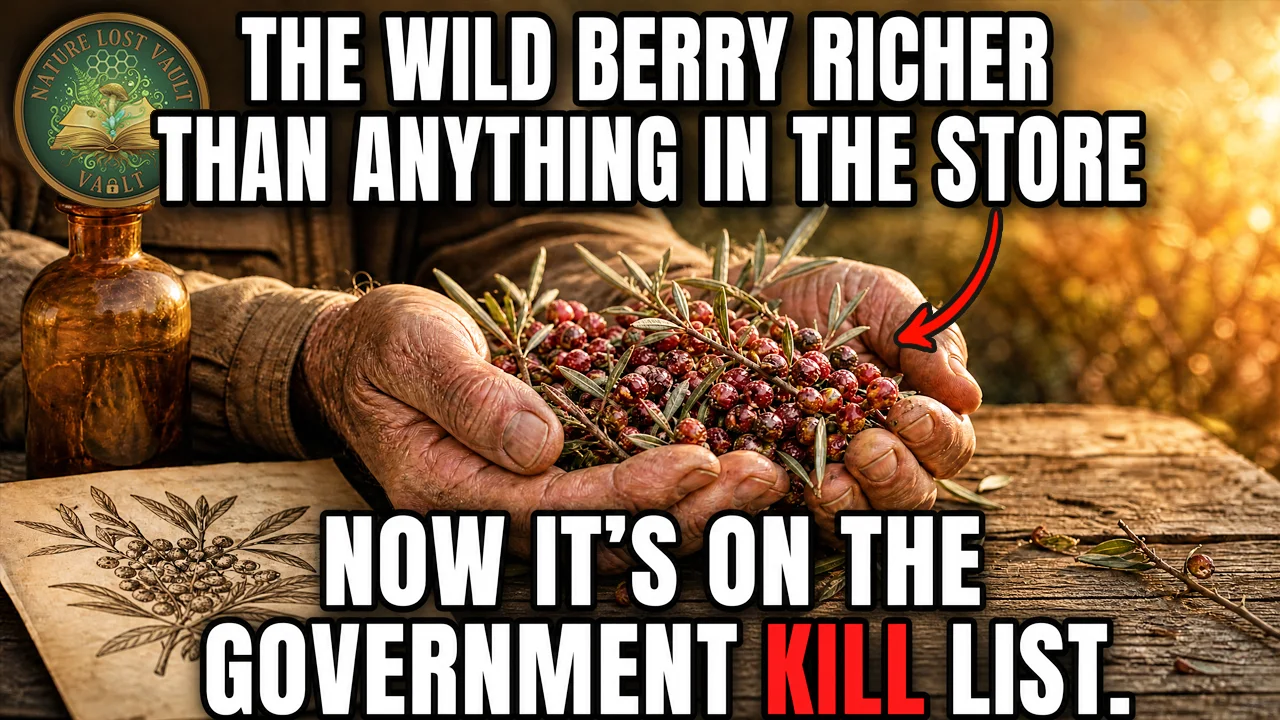
Table of Contents
- What is Autumn Olive?
- From the Dust Bowl to the Strip Mines: How the Government Spread It
- Nitrogen-Fixing Roots & the USDA Lycopene Discovery
- Why It Stays Buried: Hero One Decade, Invasive the Next
- How to Eat Autumn Olive (Sauce, Jam, Fruit Leather & Fresh)
- How to Source Autumn Olive (Harvest Responsibly, Check Before You Plant)
- Frequently Asked Questions
Recommended Products:
Autumn Olive Plant Autumn Olive Seeds
Before you plant: autumn olive is listed as invasive in many US states and some regulate its sale. Check your state's invasive plant list first. In most of the East and Midwest, harvesting existing shrubs is the better route.
Affiliate links - support our channel
What is Autumn Olive?
For forty years, your government paid people to plant it. Trucks rolled down county roads with saplings by the thousand, handed out to farmers, road crews and the men rebuilding land that mining had torn apart. Then, within the last twenty years or so, the same agencies began paying people to tear it out, with chainsaws, herbicide and cost-share checks.
Almost no one mentioned the strangest part. The berries left to rot on those cut branches carry many times the lycopene of a ripe tomato, in some samples about seventeen times as much.
The plant is autumn olive (Elaeagnus umbellata). It is not an olive at all. It came from the hills of China, Japan and Korea around 1830 as an ornamental curiosity. Its narrow silver-green leaves shimmer like fish scales in the wind, its small cream flowers fill a spring evening with a scent between honey and almond, and by October it hangs heavy with clusters of speckled crimson fruit.
| Metric | Value |
|---|---|
| Scientific name | Elaeagnus umbellata Thunb. |
| Family | Elaeagnaceae (oleaster family, with sea buckthorn) |
| Common names | Autumn olive, autumnberry, umbellata oleaster |
| Native range | China, Japan, Korea and the Himalaya |
| Introduced to the US | About 1830, as an ornamental |
| Leaves | Narrow, silver-green above, silvery scales below |
| Flowers | Small, cream-yellow, fragrant, in spring |
| Fruit | Small red berries speckled with silver dots, one soft seed each |
| Ripens | October to November; tartness mellows after frost |
| Nitrogen fixation | Yes, via Frankia bacteria in root nodules |
| Promoted by | Soil Conservation Service (now NRCS) and state nurseries |
| Main period of promotion | 1950s to 1970s |
| Uses promoted | Windbreaks, wildlife cover, highway banks, strip-mine reclamation |
| Government variety | 'Cardinal', released 1963 for heavy fruiting |
| Current status | Listed as invasive in many eastern and central states |
| Removal funding | Cost-share programs for cutting and stump treatment |
| Key lycopene research | Ingrid Fordham et al., USDA Appalachian Fruit Research Station, West Virginia |
| Lycopene vs tomato | Many times higher; about 17x in some samples |
| Other compounds | Other carotenoids, vitamin C, phenolic antioxidants |
| Flavor | Tart, like wild cranberry crossed with red currant |
| Traditional uses | Sauce for meat, jam, fruit leather |
| Yield | A mature shrub can carry many pounds of fruit |
| Look-alike relative | Russian olive (E. angustifolia): yellowish, mealy fruit, longer silver leaves |
From the Dust Bowl to the Strip Mines: How the Government Spread It
An Agency Built to Stop the Ground From Bleeding
After the Dust Bowl, millions of acres had blown away or washed into rivers. The government created the Soil Conservation Service (today the Natural Resources Conservation Service) with one job: hold the soil. Its agents searched for plants that could take hold where nothing else would, on strip-mine spoil, raw road cuts and exhausted fields.
The Shrub That Fertilizes Itself
Autumn olive could do something few shrubs can. Colonies of Frankia bacteria in its root nodules pull nitrogen out of the air and feed it into the soil. The plant thrives on worn-out ground and leaves that ground richer than it found it.
1950s to 1970s: Given Away by the Truckload
Through the 1950s, 1960s and into the 1970s, the Soil Conservation Service and state conservation nurseries raised autumn olive by the million and distributed it cheaply or free. Agents recommended it for windbreaks, wildlife cover, interstate highway banks and the reclamation of coal-mined land across Appalachia. In 1963, government plant breeders released an improved variety named 'Cardinal', selected for heavy crops of berries so wildlife would have more to eat. For a generation, planting it was something you did for the land.
Nitrogen-Fixing Roots & the USDA Lycopene Discovery
Too Good at Its Job
It worked better than anyone planned. Birds ate the berries and scattered the seeds along fence lines, pastures and woodland edges for miles. The same trait that made it a hero, feeding itself on the worst dirt in the county, let it take root where other plants could not. Within a few decades the shrub was growing everywhere, with no help from anyone.
Measuring the Berry Everyone Wanted Gone
In the early 2000s, researchers at the USDA's Appalachian Fruit Research Station in Kearneysville, West Virginia, decided to measure what was inside the fruit. The work was led by Ingrid Fordham. Lycopene is the red carotenoid that colors tomatoes and one of the most studied dietary antioxidants. Everyone assumed the tomato was its richest common source.
The berries told a different story. Ripe autumn olive fruit carried lycopene at many times the level of fresh tomatoes, in some samples about 17 times as much, gram for gram. The pigment is most concentrated in fully ripe fruit, alongside other carotenoids, vitamin C and phenolic compounds. A shrub marked for the chainsaw turned out to be one of the richest wild sources of lycopene anyone had measured.
Levels vary between shrubs and with ripeness, so treat 17 times as the top of the range. And because lycopene is fat-soluble, cooked preparations eaten with a little fat make it easier to absorb.
Why It Stays Buried: Hero One Decade, Invasive the Next
The Label Changed
A plant that spreads on its own, costs nothing and asks no permission does not fit neatly into a managed landscape. The shrub conservation agents once called a gift was reclassified as invasive and now appears on invasive plant lists across much of the eastern and central United States. Some of the same agencies that bred and shipped it now publish guides on how to kill it.
Money in Planting, Then Money in Removing
An invasive designation does more than change a name. It opens grant money, creates contracts for removal crews, and turns a free shrub into a budget line. Cost-share programs today help landowners cut it down and paint the stumps with herbicide: public money spent to remove what public money once spent to spread.
The fair version:
Autumn olive really does crowd out native plants, and managing it is reasonable. But there is a wide gap between managing a plant and pretending it is worthless. That gap is where the loss lives: tons of lycopene-rich fruit left to rot on field edges, cut and sprayed as trash.
How to Eat Autumn Olive (Sauce, Jam, Fruit Leather & Fresh)
Left on the branch until soft and deep red, the fruit turns bright and tart, a little like a wild cranberry crossed with a red currant. Country families have cooked it down for generations.
1. Harvest
Ripe in October and November, long after the garden is done. Wait until the berries are soft and fully red; underripe fruit is harshly astringent. A hard frost mellows them, which is why old-timers waited. Hold a bucket under a loaded branch, cup it in your hand and pull toward you so the ripe berries rain down by the hundred.
2. Fresh
Eat them by the handful. Each berry has one small, soft seed that you can spit out or chew.
3. Sauce and Puree
Simmer berries with a splash of water for 5 to 10 minutes, then press through a food mill or sieve to remove the seeds. Sweeten lightly and serve as a ruby sauce with pork, game or turkey, the way cranberry sauce is used. The puree can separate into a red layer and clear juice; just stir it back together.
4. Jam and Fruit Leather
Cook the seedless puree with sugar into jam, or spread it thin and dry it at about 135°F (57°C) into fruit leather that keeps for months. Both hold the color and much of the carotenoid content.
Honest Notes
- Never pick from sprayed shrubs. Roadside and field-edge autumn olive is a common herbicide target. Pick only where you know the treatment history.
- Know the plant. Autumn olive berries are red with silver specks. Russian olive (Elaeagnus angustifolia) has longer, narrower silver leaves and dry, yellowish fruit.
- Do not help it spread. Do not compost whole berries or dump seeds in the wild.
How to Source Autumn Olive (Harvest Responsibly, Check Before You Plant)
1. Harvest What Already Grows (The Best Route)
Somewhere near you, most likely, there is a hedgerow of autumn olive that a government program once paid to put in the ground. Look along old windbreaks, reclaimed mine land, highway margins, abandoned pastures and woodland edges across Appalachia, the Ohio Valley and the Midwest. Picking heavily before birds disperse the seed even helps limit its spread. Always ask permission on private land.
2. Planting: Check Your State First
In most of the eastern and central United States, autumn olive is invasive, and several states regulate or prohibit its sale. Check your state's invasive or noxious plant list before buying plants or seed. If it is legal and you are outside its invasive range, plant it away from wild land and harvest it clean every year.
Frequently Asked Questions
What is autumn olive, and is it related to olives?
No. Autumn olive (Elaeagnus umbellata) is not an olive at all. It belongs to the oleaster family (Elaeagnaceae), the same family as sea buckthorn. It is a large, thorny shrub from China, Japan and Korea with narrow leaves that are silver-green on top and silvery underneath, small fragrant cream-yellow flowers in spring, and clusters of small red berries flecked with silver dots in autumn.
It was brought to the United States around 1830 as an ornamental, and from the 1950s onward the Soil Conservation Service promoted it widely for erosion control, windbreaks and wildlife food.
Are autumn olive berries really higher in lycopene than tomatoes?
Yes, by a wide margin. In the early 2000s USDA researchers led by Ingrid Fordham at the Appalachian Fruit Research Station in Kearneysville, West Virginia, analyzed ripe autumn olive fruit. Lycopene, the red carotenoid that gives tomatoes their color, came in at many times the typical level in fresh tomatoes, and in some samples about 17 times as much, gram for gram.
Lycopene levels vary by plant and ripeness, so treat 17 times as the top of the range rather than a guarantee. Lycopene is fat-soluble, so cooked preparations eaten with a little fat make it easier to absorb.
Why did the government plant autumn olive and then pay to remove it?
After the Dust Bowl, the Soil Conservation Service looked for plants that could hold bare, damaged ground. Autumn olive fit: bacteria in its root nodules fix nitrogen from the air, so it grows on strip-mine spoil, road cuts and worn-out fields. From the 1950s through the 1970s state nurseries raised and distributed it for windbreaks, wildlife cover, highway banks and Appalachian mine reclamation, and in 1963 government breeders released the heavy-fruiting variety 'Cardinal'.
Birds spread the seed far beyond where it was planted, and it began crowding out native vegetation. Today it is listed as invasive in many states, and conservation cost-share programs help landowners remove it. The plant did not change. The goals did.
How do you harvest and eat autumn olive berries?
- Wait for full ripeness. The berries ripen in October and November. Pick them when they are deep red and soft; unripe fruit is very astringent. A frost mellows the tartness.
- Harvest by the branch. Hold a bucket under a loaded branch, cup it in your hand and pull toward you so the ripe berries drop in.
- Remove the seeds. Each berry has a small, soft seed. For sauce, jam or fruit leather, simmer the berries briefly and press them through a food mill or sieve.
- Use the pulp. Cook it into a tart ruby sauce for meat, jam, fruit leather, or blend it into smoothies. The pulp sometimes separates into a red layer and clear juice; just stir it back together.
Only pick from shrubs that have not been sprayed. Roadside and field-edge autumn olive is a frequent target of herbicide treatment.
Should I plant autumn olive?
In most of the eastern and central United States, no. It spreads aggressively by bird-dropped seed, and several states regulate or prohibit its sale. Check your state's invasive or noxious plant list before buying plants or seed.
The better route is to harvest what already grows. Abandoned reclamation sites, old windbreaks and field edges across Appalachia and the Midwest are often loaded with fruit. Picking heavily before birds spread the seed even helps limit its spread. If you are outside its invasive range and it is legal where you live, plant it away from wild land and pick it clean each year.
Explore More Perennial Foods
Discover perennial food plants that outperform anything the supermarket sells.
Browse Perennial Foods Collection →