
Plant Once, 500 lbs a Year. The Superfruit Emperors Died For. Banned in 60 American Cities.
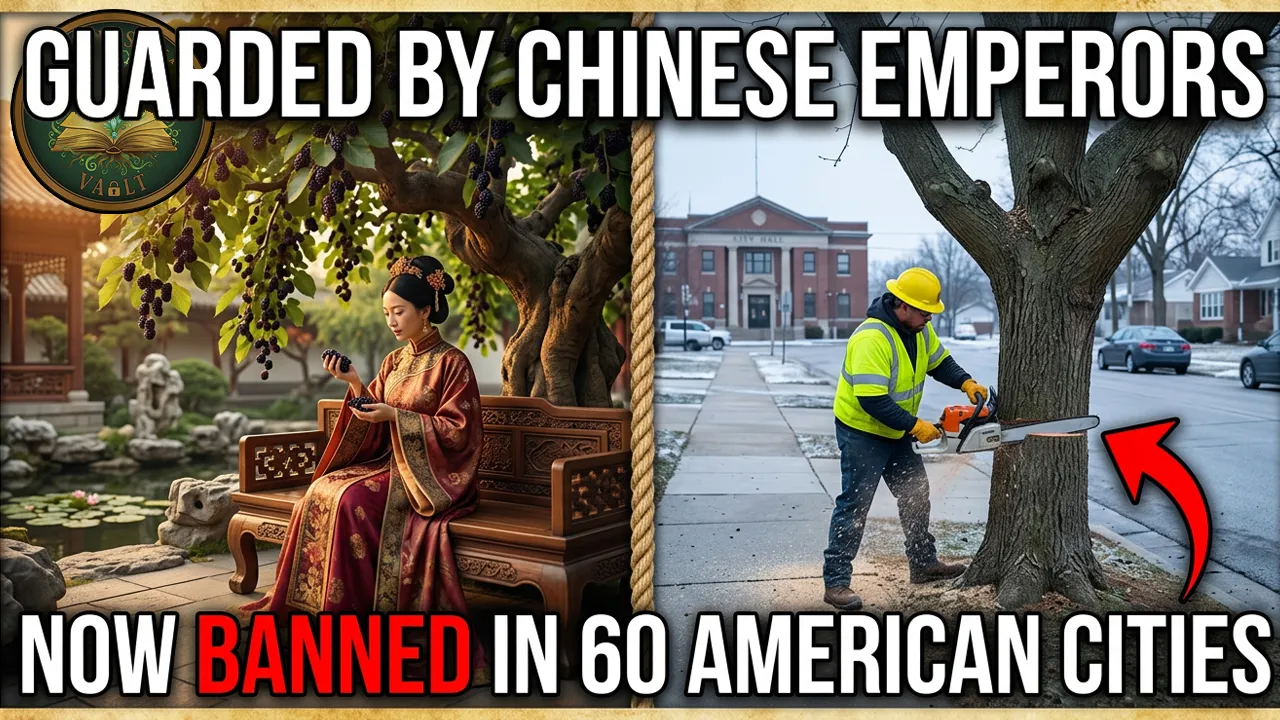
Table of Contents
The Secret of Silk
Around 2,700 BCE, legend holds that an empress named Leizu was sitting beneath a tree when a small cocoon fell into her hot tea. She watched the filament unwind in the water. Continuous, impossibly fine, it shone in the light. The tree was the white mulberry, Morus alba. Raising silkworms on its leaves became the foundation of Chinese silk, which paid tribute, wages and taxes. The secret stayed in China for centuries. This tree was not just a crop. It was the currency of human civilization.
From Byzantium to the American Colonies
Around 553 to 554 CE, under the Byzantine emperor Justinian I, monks smuggled silkworm eggs out of Central Asia to Constantinople. Greeks and Romans already grew the black mulberry for its fruit. Between 1607 and 1609, King James I urged English landowners to plant mulberries by the thousand so England could make its own silk, but England planted mostly black mulberries, and silkworms prefer the white. The Virginia colony promoted mulberries and silk for decades; in the 1650s Edward Digges brought two Armenian silk experts to his plantation near Yorktown, but by 1656 the Assembly had lost interest.
A Metabolic Medicine Growing Free in Backyards
Fresh mulberries carry about 36 mg of vitamin C and 1.85 mg of iron per 100 grams, more than six times the iron of blueberries. The dominant bioactive compounds are anthocyanins, resveratrol, rutin, and chlorogenic acid. In laboratory and animal research, these compounds show antioxidant and anti-inflammatory activity; human trials on the fruit itself remain few.
DNJ: The Leaf That Blunts Blood Sugar
Mulberry leaves contain a rare compound called 1-deoxynojirimycin (DNJ). It inhibits the gut enzymes that break carbohydrates down into glucose, slowing the sugar spike after a meal. In 2017, researchers from the University of Southampton and Oxford Brookes University published a randomized, double-blind crossover trial in PLOS ONE: in 37 healthy adults, a standardized mulberry leaf extract cut the rise in blood glucose and insulin after a 50 gram sugar drink. Later trials in Asia and Europe have reported similar drops with mulberry leaf preparations.
The Bans That Outlawed Free Food
From the 1950s to the 1970s, cities across the American Southwest planted cloned "fruitless" male white mulberries as street trees. Male trees produce no fruit: clean, fast, convenient. The problem is that male mulberry trees are prolific pollen producers. Their stamens fling pollen at about half the speed of sound, which a 2006 Caltech study filmed as the fastest known movement in the plant kingdom. Allergy and asthma complaints rose.
The logical solution would have been to replace male trees with female fruit-bearing mulberries, which produce zero pollen. Instead, beginning in the 1980s, several desert cities, among them Tucson, Las Vegas and El Paso, passed pollen-control ordinances restricting the sale or planting of mulberry trees. El Paso's city code devotes a whole chapter, 9.10, to mulberry trees. Not just male trees. Any mulberry. In a region where food insecurity and diabetes rates are among the highest in the country, cities chose to eliminate the one tree that grows without permission, produces without cost, and eliminates the need for a grocery store.
The Pollen Crisis They Engineered
Note exactly what the bans accomplished. They outlawed the female trees. They criminalized a food system that would have given every urban household access to decades of free fruit, free medicine, and free nutrition. The commercial berry industry did not object. Blueberries command $5 a pint at retail. A mulberry tree drops its fruit whether you pay for it or not.
Plant a Female Mulberry This Spring
You can order a grafted fruit-bearing female mulberry from specialty nurseries for under $30. A grafted tree begins producing within 2 to 3 years. It needs no fertilizer, no irrigation, no annual seed purchase. The berries can be eaten fresh, dried, pressed into juice, or fermented into wine. The leaves can be brewed into tea, the preparation trials have linked to smaller after-meal blood sugar rises. Every part of the tree is edible. Every part is medicine.
The tree does not care about the laws. It will produce anyway. If you have 25 square feet of ground, plant a female mulberry this spring. Come back in 3 years with a basket and with the knowledge that you are doing what Roman legions did across a continent.
Explore More Perennial Foods
Discover trees and perennials that produce food for generations.
Browse Perennial Foods Collection →