
Hardy Kiwi (Actinidia arguta): The Skin-and-All Kiwiberry That Yields 100 Pounds Per Vine and Sets Fruit Through -25°F Winters - Kept Off American Shelves Only Because It Cannot Sit in a Warehouse
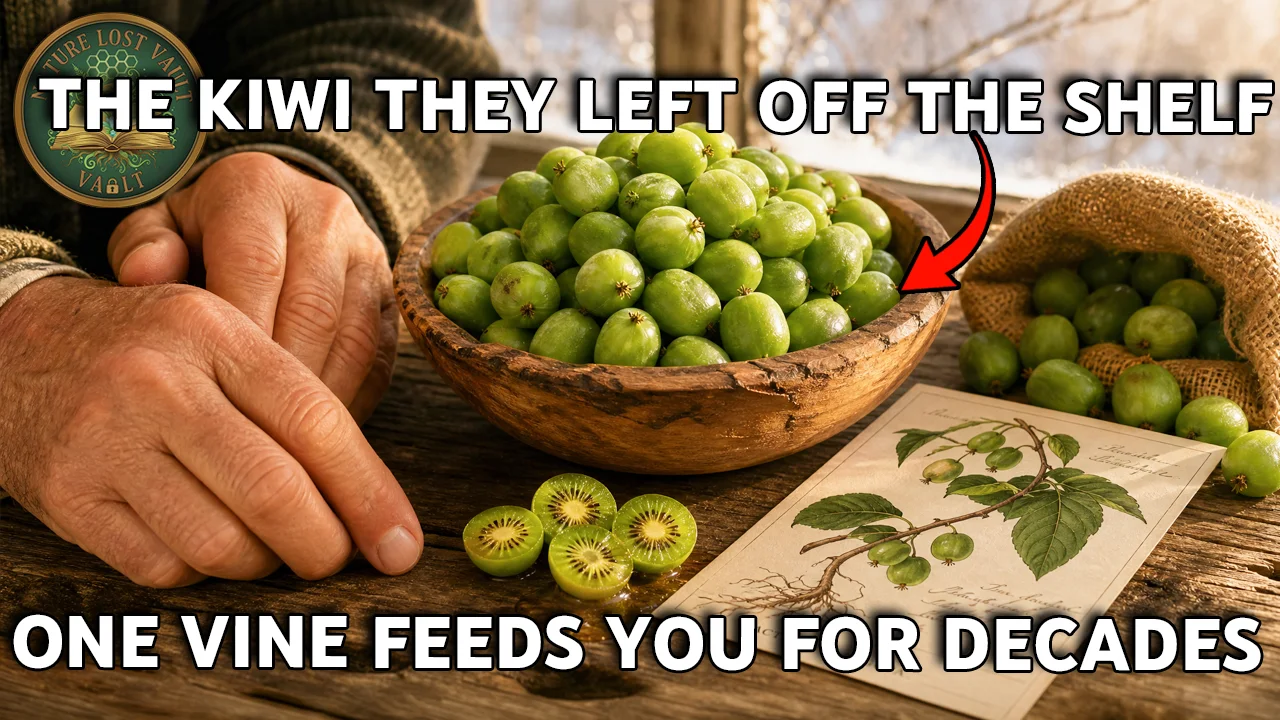
Table of Contents
- What is Hardy Kiwi?
- From the Cold Forests of the Russian Far East, Korea & Japan to Oregon's Late-1990s Commercial Plantings
- Cold Hardiness, 100-Pound Yields, Vitamin C & the Dioecious Male / Female Pollination Rule
- Why It Stays Buried: Warehouse Durability, Not a Villain in a Boardroom
- How to Eat Hardy Kiwi (Fresh, Jam, Juice & Dried)
- How to Source Hardy Kiwi (Grow It Yourself: Female Cultivars, Male Pollinator & Trellis)
- Frequently Asked Questions
Recommended Products:
Hardy Kiwi Vine (Live Plant) Hardy Kiwi Seeds
Planting note: Hardy kiwi is dioecious - female vines fruit, males pollinate. One male covers 5-7 females. Buy sexed nursery plants where possible; seed-grown vines do not reveal their sex until they first flower at year 3-4. Popular cultivar combos: 'Ananasnaya' (female) + 'Meader Male' pollinator, or 'Issai' (partially self-fertile).
Affiliate links - support our channel
What is Hardy Kiwi?
Picture a fruit that tastes like a ripe kiwi folded into honey, one you can pop in your mouth whole because there is no fuzzy skin to peel. A fruit so tough it shrugs off a winter that would kill an entire orange grove. A fruit where one backyard vine, in a good autumn, can drop up to 100 pounds of it, year after year, for decades.
Everything about it says this should be stacked in every produce aisle in America. And yet you have almost certainly never once seen it for sale. Not because it is rare, and not because it is hard to grow. It stays off your shelf because of one quiet decision your grocery store makes long before the fruit ever reaches a truck.
The fruit is the hardy kiwi. The little ones, grape-sized and thin-skinned, are called kiwiberries, and the plant behind them carries the name Actinidia arguta. Its famous fuzzy cousin (Actinidia deliciosa) is a completely different species, bred for a thick hairy jacket that survives a long ocean voyage. The kiwiberry strips away everything inconvenient: no fur, no peeling, no knife, no cutting board. You eat the whole thing skin and all, straight from your palm.
| Metric | Value |
|---|---|
| Scientific name | Actinidia arguta (Siebold & Zucc.) Planch. ex Miq. |
| Family | Actinidiaceae |
| Common names | Hardy kiwi, kiwiberry, cocktail kiwi, baby kiwi, Siberian gooseberry |
| Supermarket-kiwi cousin | Actinidia deliciosa (fuzzy brown fruit - different species) |
| Native range | Russian Far East, Korea, Japan, northern China |
| USDA hardiness | Zones 4-8 (some cultivars zone 3) |
| Fruiting cold tolerance | Sets fruit through winters down to -25°F |
| Dormant vine cold tolerance | Past -40°F in its native range |
| Growth rate | Up to 20 feet of new growth per season on a mature vine |
| Mature yield (female vine) | 50 lbs average; up to 100 lbs in a strong season |
| Productive lifespan | Decades on the same roots |
| Sex system | Dioecious - male and female on separate vines |
| Pollination ratio | One male pollinates 5-7 females |
| Popular female cultivars | 'Ananasnaya,' 'Ken's Red,' 'Dumbarton Oaks,' 'Geneva' |
| Popular male pollinators | 'Meader Male' (UNH selection), '74-49 Male' (Cornell) |
| Self-fertile option | 'Issai' (Japan) - partially self-fertile; better with male nearby |
| Harvest window | Early October in most temperate regions |
| Ripening pattern | In waves over several weeks - not one clean commercial harvest |
| Fresh shelf life | 1-2 weeks refrigerated (why supermarkets refuse to stock it) |
| First US commercial planting | Oregon, late 1990s |
| Other US commercial regions | Washington, central Pennsylvania (small-farm fresh markets) |
| Government breeding program | South Korea - National Institute of Forest Science |
| Nutrition highlight | Rich in vitamin C (skin and all - no discarded peel) |
From the Cold Forests of the Russian Far East, Korea & Japan to Oregon's Late-1990s Commercial Plantings
Native to the Cold Forests of East Asia
This is not some tropical treasure that needs a greenhouse and a prayer. Actinidia arguta comes from the cold forests of the Russian Far East, of Korea, of Japan and northern China - places where the snow sits deep and the growing season is short. The vine climbs through those woods like a green rope, and the small green fruit hangs in heavy clusters, sweet and smooth and ready to eat straight off the branch.
1900s Western Introductions
Botanists carried it west more than a hundred years ago. Gardeners fell for it. And then, somehow, the rest of us forgot it existed. The vine kept growing on private lots and in botanical collections, while the fuzzy cousin from New Zealand cornered every produce shelf in the country.
Late 1990s Oregon: The First Real US Commercial Plantings
The kiwiberry finally re-emerged as a serious American crop in the late 1990s, when the first real commercial plantings went into the ground in Oregon. Small farms have followed in Washington and central Pennsylvania, selling the fruit fresh at local farmers markets the same week it comes off the vine - because that is the only way a fruit this delicate can travel. In South Korea, the National Institute of Forest Science now breeds new kiwiberry varieties as a serious high-value crop, treating the plant we forgot as an asset worth investing in. The fruit is coming back, but it is coming back on its own terms - to local markets and backyards rather than freight trucks.
Cold Hardiness, 100-Pound Yields, Vitamin C & the Dioecious Male / Female Pollination Rule
Cold Tolerance: -25°F Fruiting, Past -40°F Dormant
This is where the plant stops being charming and starts being astonishing. A ripe kiwiberry vine will set fruit through winters that hit -25°F. The vine itself, dormant and bare, endures far colder than that in its native range, temperatures that plunge past -40°F. Half of this country writes off homegrown fruit because the winters feel too brutal for anything worth eating. Apple growers lose whole orchards to a single hard freeze, and citrus is a fantasy anywhere north of the Deep South. Yet this vine sat in Siberian forests the entire time, quietly outlasting the cold that defeats almost everything else we try to plant. It is not a fragile southern import begging for mercy. It is a northern survivor that happens to make dessert.
Yield: 50-100 Pounds per Female Vine, for Decades
A mature female vine can produce up to 100 pounds of fruit in a strong season, and even an average year lands around 50 pounds. That is not a tomato plant you baby all summer. This is a woody vine that can add up to 20 feet of growth in a single season, then keep bearing for decades on the same roots.
The Dioecious Detail: Males, Females & the One-in-Seven Rule
There is one detail the catalogs tuck into the fine print, and you need it before you plant. Hardy kiwi vines come in males and females (they are dioecious), and it is the female that fruits. You must set a male beside her to pollinate the crop. One male will pollinate 5-7 females, so a single companion plant can cover a whole row.
Popular female cultivars for home gardens include 'Ananasnaya' (also spelled 'Anna,' the most widely-grown pineapple-flavored variety, cold-hardy to zone 4), 'Ken's Red,' 'Dumbarton Oaks,' and 'Geneva'. Standard male pollinators: 'Meader Male' (an Elwyn Meader University of New Hampshire selection, the classic Ananasnaya partner) and '74-49 Male' (Cornell). If your space is tight, the Japanese cultivar 'Issai' is partially self-fertile - it will set some fruit alone, but produces much more heavily with a male pollinator nearby.
Nutrition: Vitamin C, Skin and All
The berries are rich in vitamin C (up to 430 mg per 100 g in some cultivars, against about 93 mg for the green supermarket kiwi, though levels vary widely by cultivar) - and you eat the whole fruit skin and all, the thin skin where much of a fruit's fiber and polyphenols sits, instead of peeling it off and throwing it away. Bite into a kiwiberry and you get mostly sweetness with a bright, almost tropical edge, a kiwi with the sourness dialed out.
Why It Stays Buried: Warehouse Durability, Not a Villain in a Boardroom
The Real Reason: Supply Chain Physics
If this fruit is this good and this tough, why has the modern food system left it out entirely? The answer is not a villain in a boardroom. It is something colder and more ordinary than that. A ripe kiwiberry is soft, thin-skinned, and short-lived. It bruises if you look at it wrong, and it does not all ripen at once, so a single vine gives you fruit in waves rather than one clean commercial harvest.
To a national grocery chain, that combination is a nightmare. The fruit cannot survive the days of trucking, warehousing, and shelf time that a modern supply chain demands. So the produce system did what it always does. It chose the fruit that ships.
The Fuzzy Cousin Won on Durability, Not on Taste
The fuzzy cousin - Actinidia deliciosa - with its leathery hide and long shelf life, got renamed "kiwi," marketed, and sent around the planet from New Zealand and Italy. The sweeter, hardier, skin-and-all berry was left behind, not for lacking anything you would want, but for the one thing a warehouse wants and it could never offer: durability.
The mechanism, in one sentence:
That single corporate preference quietly decided what two or three generations of Americans would even think a kiwi was. The berry did not fail on taste, on nutrition, or on toughness. It simply could not sit in a box long enough to be sold to you, so you were handed the leathery one instead and told that was the whole family. You were never offered a choice. The choice was made for you at the loading dock.
The Same Gate That Shut It Out of the Store Opens for the Home Grower
The gate that keeps it out of the store is the very same gate that hands it straight to anyone willing to grow it. The first commercial US plantings went into Oregon in the late 1990s. Small farms have followed in Washington and central Pennsylvania, selling the fruit fresh at markets the same week it comes off the vine. In South Korea, the National Institute of Forest Science now breeds new kiwiberry varieties as a serious high-value crop. The vine never needed saving. It needed a person with a patch of ground who understood that the best fruit is sometimes the one too honest to survive a warehouse.
How to Eat Hardy Kiwi (Fresh, Jam, Juice & Dried)
The best use is the simplest one - pop them in your mouth whole, straight off the vine. But when your vine drops 50 to 100 pounds in a single autumn, you will need a few more ideas. Four traditional preparations.
1. Fresh (The Main Event)
Ripe berries eat like grapes. Pick by the handful as they soften - a gentle squeeze tells you when. Firm ones finish sweetening on your kitchen counter over 3-5 days. Toss them into fruit salads, drop them on cereal, freeze them for smoothies, or just eat them out of hand.
2. Jam & Preserves
The high pectin content of unripe berries (mixed with ripe ones) makes a beautiful bright-green jam. Simmer 4 cups halved kiwiberries + 3 cups sugar + 1/4 cup lemon juice for 20-30 minutes until it coats a spoon. Fill sterilized jars and water-bath process 10 minutes for shelf-stable storage.
3. Bright-Green Juice
A bright-green kiwiberry juice keeps far longer than the fresh berry ever could. Blend the berries with a small amount of water, strain through a fine sieve, sweeten to taste. Freeze into ice cubes for cocktails and lemonades, or pour into ice-pop molds for a summer treat.
4. Dried Kiwiberries
Sliced in half and dried in a dehydrator at 135°F for 8-12 hours, kiwiberries make an intensely sweet, chewy snack that keeps for months. Store in sealed jars out of direct light.
Honest Notes
- Kiwiberries contain actinidain (a proteolytic enzyme, same as its fuzzy cousin). A small number of people are allergic. Introduce cautiously if you are already sensitive to fresh pineapple, papaya, or supermarket kiwi.
- Do not eat unripe kiwiberries in quantity - the high enzyme content can cause mouth irritation. Ripe ones (soft and sweet) are fine.
- Cats are attracted to hardy kiwi vines (the wood contains actinidine, related to the compound in catnip). Protect young vines from cats and outdoor cats will scratch bark. A wire cage around a young trunk usually solves this.
- Fresh berries keep only 1-2 weeks refrigerated - plan to eat, preserve, or freeze within the harvest window.
How to Source Hardy Kiwi (Grow It Yourself: Female Cultivars, Male Pollinator & Trellis)
You will almost never find kiwiberries in an American grocery store. Occasionally in early October you may spot small plastic clamshells labeled "cocktail kiwi" or "kiwiberry" at Whole Foods or Trader Joe's, at a premium. The reliable route is to grow your own. Two paths.
1. Grow Your Own (The Primary Route)
Site. Full sun (6+ hours). Well-drained soil, pH 5.0-7.5. Protection from late spring frosts (south or east-facing slope, or an area shielded from cold late-spring winds).
Planting window. Spring OR early autumn. Early October is ideal for fall planting - the vine roots into cooling soil for the year ahead. Space vines 10-15 feet apart along a strong trellis.
Cultivar selection - CRITICAL. Hardy kiwi is dioecious. You need one female + one male, or a self-fertile female alone (with lower yields).
- Female cultivars (bearers):
- 'Ananasnaya' ('Anna') - the most widely-grown home cultivar. Pineapple-scented, prolific, zone 4 hardy.
- 'Ken's Red' - red-blushed fruit, distinctive flavor.
- 'Dumbarton Oaks' - large fruit for the species.
- 'Geneva' - early-ripening.
- Male pollinators (non-bearing):
- 'Meader Male' - University of New Hampshire selection by Elwyn Meader. Standard partner for Ananasnaya.
- '74-49 Male' - Cornell selection.
- Self-fertile option:
- 'Issai' (Japan) - partially self-fertile. Sets some fruit alone; produces much more with a male nearby. Ideal for space-limited yards.
Trellis - non-negotiable. Mature vines add up to 20 feet of growth in a single season and will crush a light structure. Use a T-bar or overhead-arm trellis in 4x4 posts, at least 6 feet tall, with heavy-gauge wire. Commercial growers use the same trellis style as wine grapes but heavier.
Pollination geometry. One male per 5-7 females. Plant the male within 30 feet of the females. Both must be flowering simultaneously (all Actinidia arguta cultivars flower together, so this is usually automatic).
Patience. Years 1-3 the vine puts its energy into roots and wood, not fruit. Serious harvests start year 4-5. Peak yields hit around year 8-10 and continue for decades.
Pests & care. Few serious pests in a home garden. No spray schedule needed. Water deeply in the first two years while roots establish; mature vines are drought-tolerant. Protect young trunks from cats with a wire cage (cats are attracted to the vine as they are to catnip).
2. Grow From Seed (Slower, Cheaper, With a Catch)
Kiwiberry seeds germinate readily after 60-90 days of cold stratification at 40°F. The catch is that a seed-grown vine does not reveal its sex until it first flowers - typically year 3-4. If you draw all males (or all females), you have wasted years. Plant 5-10 seedlings and thin to a balanced male-to-female ratio once they flower. This is a much slower route than buying a sexed nursery vine, but it works if you enjoy the process and want to grow multiple vines for the cost of a coffee.
3. Buy Fresh at a Local Market (When You Can)
Small farms in Oregon, Washington, and central Pennsylvania sell kiwiberries fresh at farmers markets in early October. Whole Foods and Trader Joe's occasionally stock them in small plastic clamshells during the same window. Because the fruit does not travel well, availability is regional and short. If you find them, buy generously - they freeze well.
Frequently Asked Questions
What is a hardy kiwi / kiwiberry, and how is it different from a supermarket kiwi?
Hardy kiwi is a completely different species from the supermarket kiwi. The fuzzy brown kiwi in the produce aisle is Actinidia deliciosa, bred for a thick hairy jacket that survives a long ocean voyage from New Zealand or Italy. Hardy kiwi is Actinidia arguta - a related but distinct species native to the cold forests of the Russian Far East, Korea, Japan, and northern China.
Its fruit is called a kiwiberry, and it strips away everything inconvenient about its famous cousin: no fur, no peeling, no knife, no cutting board. Grape-sized, thin-skinned, smooth and green, you eat the whole thing skin and all, straight from your palm. That single trait matters if your hands are not as young as they used to be. The flavor lands somewhere between a ripe kiwi and honey, mostly sweetness with a bright, almost tropical edge. Rich in vitamin C. Gardeners who have tasted both will often tell you the kiwiberry is sweeter and brighter than the fruit you have been paying for your whole life.
How cold-hardy is a hardy kiwi vine, and how much fruit does it produce?
Astonishingly hardy for a fruit that tastes tropical. A ripe kiwiberry vine will set fruit through winters that hit -25°F. The vine itself, dormant and bare, endures far colder than that in its native Siberian and northern Chinese range - temperatures that plunge past -40°F. Half of this country writes off homegrown fruit because the winters feel too brutal for anything worth eating, and this vine sat in Siberian forests the entire time, quietly outlasting the cold that defeats almost everything else.
On yield: a mature female vine produces up to 100 pounds of fruit in a strong season, and even an average year lands around 50 pounds. It is a woody vine that can add up to 20 feet of new growth in a single season, then keep bearing on the same roots for decades. USDA hardiness zone 4 (some cultivars zone 3) through zone 8.
Do you need a male AND female plant to grow hardy kiwi? Which cultivars are best?
Yes - this is the detail catalogs tuck into the fine print. Hardy kiwi is dioecious: individual vines are either male or female, and only females produce fruit. You need one male vine planted nearby to pollinate the crop. One male pollinates 5-7 females, so a single companion plant covers a whole row.
Recommended cultivars for a home garden:
- Females: 'Ananasnaya' (also spelled 'Anna,' the most widely-grown pineapple-flavored variety, cold-hardy to zone 4, prolific bearer); 'Ken's Red' (red-blushed fruit); 'Dumbarton Oaks' (large fruit); 'Geneva' (early ripening).
- Males: 'Meader Male' (Elwyn Meader's University of New Hampshire selection, standard pollinator paired with Ananasnaya); '74-49 Male' (Cornell selection).
- Self-fertile option: 'Issai' is a partially self-fertile cultivar from Japan; it will set some fruit alone but produces much more heavily with a male pollinator nearby.
Buy from a nursery that guarantees the sex of the plant - kiwiberry seedlings from generic seed do not show their sex until they first flower at year 3-4, which is too long to wait if you drew the wrong plant.
How do you grow and harvest hardy kiwi in a backyard?
The vine asks for very little of the fussing that most fruit demands.
- Site. Full sun (6+ hours), well-drained soil, protection from late spring frosts.
- Planting. Spring or early autumn. Space vines 10-15 feet apart along a strong trellis.
- Trellis. Non-negotiable. A mature vine adds up to 20 feet of growth in a season. Use a T-bar or overhead-arm trellis in 4x4 posts, at least 6 feet tall, with heavy-gauge wire.
- Pollination. One male per 5-7 females, planted within 30 feet.
- Patience. Years 1-3 build roots and wood. Serious harvests start year 4-5, peak year 8-10.
- Pests. Few serious pests. No spray schedule needed. Deer and cats can be a problem (cats are attracted to the vine like catnip - protect young vines with a cage or fence).
- Harvest. Early October. Berries ripen in WAVES over several weeks. Pick by the handful as they soften; firm ones finish sweetening on the counter over 3-5 days.
- Storage. Fresh berries keep 1-2 weeks refrigerated. Whatever you cannot eat becomes jam, preserves, dried fruit, or juice.
Why is hardy kiwi never in grocery stores if it is this good?
The answer is not a villain in a boardroom. It is something colder and more ordinary: supply chain durability.
A ripe kiwiberry is soft, thin-skinned, and short-lived. It bruises if you look at it wrong, and it does not all ripen at once, so a single vine gives fruit in waves rather than one clean commercial harvest. To a national grocery chain, that combination is a nightmare. The fruit cannot survive the days of trucking, warehousing, and shelf time that a modern supply chain demands.
So the produce system did what it always does. It chose the fruit that ships. The fuzzy cousin (Actinidia deliciosa), with its leathery hide and long shelf life, got renamed "kiwi," marketed, and sent around the planet from New Zealand and Italy. The sweeter, hardier, skin-and-all berry was left behind - not for lacking anything you would want, but for the one thing a warehouse wants and it could never offer: durability.
The same gate that keeps it out of the store hands it straight to anyone willing to grow it. The first real commercial plantings in the United States went into the ground in Oregon in the late 1990s. Small farms have followed in Washington and central Pennsylvania. In South Korea, the National Institute of Forest Science now breeds new kiwiberry varieties as a serious high-value crop. The vine never needed saving. It needed a person with a patch of ground who understood that the best fruit is sometimes the one too honest to survive a warehouse.
Explore More Perennial Foods
Discover perennial fruit and food plants that outperform anything the supermarket sells.
Browse Perennial Foods Collection →