
Yacon (Smallanthus sonchifolius): The Honey-Sweet Andean Root Whose Sugar Is Mostly Fiber, Kept Off American Shelves Because It Cannot Ship, Store or Be Patented
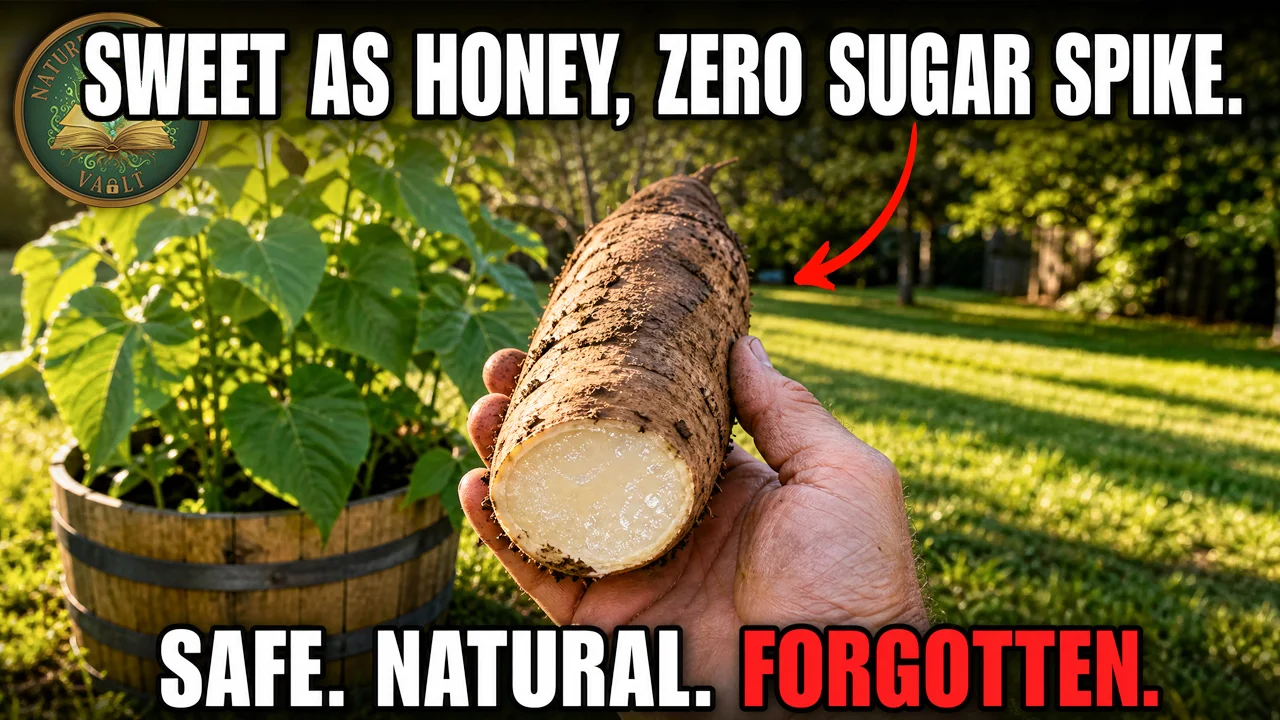
Table of Contents
- What is Yacon?
- From Pre-Inca Valleys and Moche Pottery to Japan and the Lima Seed Bank
- Fructooligosaccharides, Sun-Curing & the 2009 Clinical Nutrition Trial
- Why It Stays Buried: A Root the Food System Could Not Ship, Store or Own
- How to Eat Yacon (Raw, Slaw, Juice & Syrup)
- How to Source Yacon (Grow It in a Pot, Buy Syrup or Powder)
- Frequently Asked Questions
Recommended Products:
Yacon Syrup Yacon Extract Powder
Note: Yacon's fiber ferments in the gut. Start with a teaspoon of syrup or a few slices of root and build up slowly; large amounts can cause bloating or loose stools. If you take diabetes medication, talk to your clinician before using yacon regularly.
Affiliate links - support our channel
What is Yacon?
Slice it like an apple and it snaps clean, running with juice, sweet enough that children in the Andes once ate it straight from the ground like candy. It tastes like a pear crossed with honey. And here is the part that should not make sense: most of that sweetness does not behave like sugar in your body.
The people who grew it understood this five centuries before anyone could explain why. Their empire fell. Their mountain roads became ruins. But the sweet root outlived all of it. So why has almost no one in America ever tasted it?
The root is yacon (Smallanthus sonchifolius), a relative of the sunflower from the eastern valleys of the Andes. The Inca called it llacon. It stores most of its sweetness as fructooligosaccharides (FOS), a fiber your body cannot fully digest, which makes it taste like dessert while acting more like a vegetable.
| Metric | Value |
|---|---|
| Scientific name | Smallanthus sonchifolius (Poepp.) H. Rob. |
| Family | Asteraceae (sunflower family) |
| Common names | Yacon, llacon (Quechua), Peruvian ground apple |
| Native range | Eastern valleys of the Andes, Colombia to northern Argentina |
| Cultivated since | Before the Inca; tuber forms on Moche pottery are often identified as yacon |
| Grown alongside | Potato and oca in Andean gardens |
| Traditional role | Eaten fresh as fruit and thirst-quencher, not a stored staple |
| Water content of root | Roughly 85-90% |
| Main stored carbohydrate | Fructooligosaccharides (FOS), largely indigestible |
| FOS share of dry matter | Commonly reported around 40-70%, varying by variety and storage |
| Gut effect | Prebiotic: fermented by beneficial colon bacteria |
| Sun-curing | Several days in the sun converts part of the FOS to free sugars (sweeter root) |
| Key clinical trial | Genta et al., Clinical Nutrition, 2009 |
| Trial participants | Obese premenopausal women, about 120 days, yacon syrup vs placebo |
| Trial outcomes | Lower body weight, waist circumference and fasting insulin |
| Japan | Sold as syrup and tea since the 1980s |
| Conservation | Varieties held at the International Potato Center (CIP), Lima |
| Root colors | White, yellow-gold and purplish forms |
| Propagation | From crowns (reddish knobs at the stalk base), not the edible roots |
| Container size | About 15 gallons, or a half barrel |
| Harvest | Autumn, after the first light frost |
| Yield | Up to about 10 lbs of roots per plant |
| Why not in US stores | Watery, bruises, poor storage and shipping, cannot be patented |
From Pre-Inca Valleys and Moche Pottery to Japan and the Lima Seed Bank
Grown Below the Frost Line, Before the Inca
The archive opens high in the eastern valleys of the Peruvian Andes, where the cold mountain air begins to soften and the frost thins out. In the warm folds of land below the frost line, farmers pressed knobby brown crowns into the earth and waited. Long before the Inca raised a single stone of their empire, the people of these valleys were already growing this crop. Painted pots of the Moche culture, shaped more than a thousand years ago, carry long tuber forms that archaeologists often identify as yacon. The Inca later grew it beside the potato and the oca, and called it llacon.
A Fruit, Not a Staple
To the Andean farmer, yacon was never a staple like the potato. It was closer to fruit. You did not boil it or pack it away for winter. You dug it, laid it in the sun for a few days until it sweetened, and ate it fresh, crisp and cooling, on the long walk between fields. Because the root is mostly water, travelers carried it to quench their thirst on dry mountain trails, and families still bring it out at dry-season festivals, sliced and shared like a treat. Spanish chroniclers of the 1500s described it with plain puzzlement: a root that tasted like fruit, unlike anything growing in Europe.
Kept Alive in Remote Valleys
The colonists never took to it. It did not fit their idea of a crop and did not survive the voyage across the Atlantic, so it stayed where it began, kept alive by Andean families who would not stop growing what their grandparents had grown. Botanists have since cataloged many distinct kinds, with roots that run white, gold and faintly purple. The International Potato Center (CIP) in Lima conserves those varieties today, treating a plant the modern grocery store waved off as something worth protecting.
Fructooligosaccharides, Sun-Curing & the 2009 Clinical Nutrition Trial
Sweet Without Being Sugar
Most sweet plants store their energy as sugar or starch, which your body breaks down fast and sends into your bloodstream. Yacon does something stranger. It holds most of its sweetness as fructooligosaccharides, short chains of fructose that human digestive enzymes cannot split. Your tongue tastes the sweetness, but the fiber slips past the small intestine mostly untouched, so the sugar rush never arrives. It behaves less like sugar and more like the fiber in a vegetable that happens to taste like dessert.
Why Sun-Curing Works
The old Andean habit of sun-curing was real chemistry. A freshly dug root is only mildly sweet. Left in the sun for several days, part of the FOS breaks down into free sugars, and the root grows noticeably sweeter. The trade-off: a well-cured root carries a little less fiber and a little more ordinary sugar than a fresh one.
A Prebiotic Before the Word Existed
Because FOS reaches the colon intact, the bacteria living there ferment it. That makes yacon what scientists now call a prebiotic, a food for beneficial gut microbes. The Andeans were eating a gut-health food centuries before the term appeared on a supermarket label.
2009: The Clinical Nutrition Trial
The proof caught up slowly. In 2009, Genta and colleagues published a double-blind, placebo-controlled trial in the journal Clinical Nutrition. Obese premenopausal women took yacon syrup, made by boiling the root juice down to a dark molasses, every day for about four months. Compared with placebo, they showed lower body weight, a smaller waist and lower fasting insulin. It was one study in one group of people, so it points in a promising direction rather than settling the question, but a sweet syrup tied in a controlled trial to the opposite of what sweet syrups usually do is worth noticing.
Japan Noticed First
Since the 1980s, Japanese growers have sold yacon syrup and yacon tea as an everyday health food, and New Zealand growers have exported it under its Andean name. The root the Inca treasured was rediscovered one country at a time, while it stayed a stranger in the nation with the biggest sweet tooth on earth.
Why It Stays Buried: A Root the Food System Could Not Ship, Store or Own
Built Wrong for the Supply Chain
The reason is not a secret meeting in a back room. Yacon lost because of how it is built. The American food system rewards a crop you can harvest by machine, ship across a continent and stack in a warehouse for months without it changing. Potatoes and corn can do that. Yacon cannot. The water that makes it refreshing is also its weakness: once dug, it bruises and softens and does not survive long truck rides or a winter in storage. On a spreadsheet built around shelf life and yield per acre, a sweet, watery root that must be eaten fresh looks like a problem, not a product.
The Sweetener Aisle Was Already Owned
By the time yacon might have reached American kitchens, the sweetener aisle was full of cheap cane sugar and corn syrup, backed by factories and subsidies. And you cannot patent a root any gardener can grow from a scrap of the last one. There was no fortune waiting for whoever introduced it, so no one with money bothered to try.
The turn:
No one decided to make yacon disappear. The system simply had no slot for a sweet crop it could not ship, could not store and could not own. The very traits that made yacon worthless to industry make it perfect for you. You are not shipping it across a continent. You are walking a few steps to your porch.
How to Eat Yacon (Raw, Slaw, Juice & Syrup)
Yacon is at its best raw, where the crunch and juice shine. Peel it first: the skin can taste resinous.
1. Raw, Like Fruit
Cure freshly dug roots in a sunny window for a few days, peel, and slice like an apple. Eat as a snack or add to fruit and green salads. A squeeze of lemon keeps the cut flesh from browning.
2. Slaw
Shred peeled yacon with carrot and cabbage, dress with lime juice, a little oil and salt. It stays crisp for a day in the fridge, unlike apple.
3. Juice
Press or blend and strain peeled roots for a light, naturally sweet juice. Drink it fresh; it darkens on standing.
4. Cooked
Yacon holds its crunch in quick stir-fries, much like water chestnut. It can also be roasted, though it loses some sweetness and texture.
5. Syrup and Powder
Yacon syrup is the root juice boiled down to a dark, molasses-like syrup. Use it on oatmeal, yogurt or pancakes, or in dressings. Dried yacon powder can be stirred into smoothies and baking. Both keep far longer than the fresh root.
Honest Notes
- Start small. FOS ferments in the gut. Large amounts can cause gas, bloating or loose stools, especially at first. In the 2009 trial, higher doses caused digestive discomfort in some participants.
- Diabetes. Yacon is a food, not a medicine. If you take insulin or other glucose-lowering drugs, talk to your clinician before using yacon syrup regularly.
- Sun-cured roots and syrup contain some free sugar. They are gentler than table sugar, not sugar-free.
- Eat the roots, not the leaves. Yacon leaves are brewed as tea in parts of South America and Japan, but they are a separate product; stick to commercially prepared leaf tea if you try it.
- Sunflower-family allergy. People allergic to Asteraceae plants should introduce it cautiously.
How to Source Yacon (Grow It in a Pot, Buy Syrup or Powder)
1. Grow It in a Bucket (The Best Route)
Yacon does not need a farm, a field or even a garden bed. It grows well in a large pot or half barrel, about 15 gallons of rich, loose, well-drained soil, on a sunny patio.
- Plant crowns, not roots. Yacon regrows from the small reddish knobs at the base of the old stalk, called crowns. The sweet storage roots will not sprout. Plant one crown per container after your last spring frost, a few inches deep.
- Sun and water. Full sun and steady moisture. It grows tall, leafy stalks closer to a sunflower than a potato plant. No spraying or special soil needed.
- Season. Yacon needs a long, frost-free season (about 6-7 months). In short-season areas, start crowns indoors a few weeks early.
- Harvest after the first frost. When a light frost knocks back the leaves, tip the pot and lift out the cluster of long tan roots, sometimes up to ten pounds from one plant. Handle gently; they bruise easily.
- Cure and store. Set roots in a sunny window for a few days to sweeten, then refrigerate. They keep for weeks.
- Save the crown. Store crowns over winter in a paper bag or barely damp sawdust in a cool, frost-free closet or garage, and replant next spring. After the first year, it costs you almost nothing.
Crowns are sold in spring by specialty nurseries and seed savers. Yacon seed is rarely available and not true to type, so start from crowns.
2. Buy Syrup or Powder
Fresh yacon roots occasionally appear at Latin American markets and farmers markets in autumn. Year-round, the practical options are syrup and powder. What to look for on a label:
- 100% yacon, with no added cane sugar, corn syrup or fillers.
- Low-temperature processing where stated, since high heat can break down FOS.
- Country of origin (Peru is the usual source) and organic certification where available.
» Yacon syrup (sweeten oatmeal, yogurt and dressings)
» Yacon extract powder (smoothies and baking)
Frequently Asked Questions
What is yacon and what does it taste like?
Yacon (Smallanthus sonchifolius) is a root crop from the eastern valleys of the Andes, a relative of the sunflower. The edible part is a cluster of long tan storage roots that look like sweet potatoes but eat like fruit. Raw, the flesh is crisp and very juicy, about 85 to 90 percent water, with a sweet taste often compared to a pear crossed with honey.
It was grown in Peru before the Inca, who called it llacon. Andean farmers treated it as fruit rather than a stored staple: they dug it, laid it in the sun for a few days to sweeten, and ate it fresh. It is sometimes sold as Peruvian ground apple.
Why doesn't yacon spike blood sugar like other sweet foods?
Most sweet plants store energy as sucrose or starch, which the body breaks down quickly into glucose. Yacon stores most of its carbohydrate as fructooligosaccharides (FOS), short chains of fructose that human digestive enzymes cannot break apart.
Your tongue registers sweetness, but most of the FOS passes the small intestine undigested and is fermented in the colon by beneficial bacteria. That makes yacon a prebiotic and gives it a much smaller effect on blood sugar than an equal amount of sugar. Sun-curing turns part of the FOS into free sugars, so cured roots are sweeter and slightly less fiber-rich. People managing diabetes should treat it as a food, not a treatment, and check with their clinician.
What did the 2009 yacon syrup clinical trial find?
In 2009 Genta and colleagues published a double-blind, placebo-controlled trial in Clinical Nutrition. Obese, slightly dyslipidemic premenopausal women in Argentina took yacon syrup daily for about 120 days. Compared with placebo, the yacon group showed:
- Lower body weight and body mass index
- Smaller waist circumference
- Lower fasting insulin
- More frequent bowel movements and a greater feeling of fullness
It was a single, fairly small study in one group of people, so it is encouraging rather than conclusive, and higher doses caused digestive discomfort in some participants.
Why can't you buy fresh yacon in American supermarkets?
There was no ban and no conspiracy. Yacon simply does not fit how the American food system measures a crop:
- It does not ship or store. The root is mostly water, so it bruises and softens and cannot survive long truck rides or months in a warehouse like potatoes and corn.
- It cannot be patented. It grows from crowns any gardener can save, so there is no seed to sell each year.
- The sweetener aisle was already owned by cheap cane sugar and corn syrup, backed by factories and subsidies.
Japan, which has sold yacon syrup and tea since the 1980s, and New Zealand growers took it up instead. In the United States you mostly find it as syrup or powder, or you grow it yourself.
How do you grow yacon in a pot?
- Get crowns, the small reddish knobs at the base of the old stalk. The edible roots will not sprout.
- After the last spring frost, plant one crown in a container of about 15 gallons (or a half barrel) of rich, loose, well-drained soil.
- Give it full sun and steady water. It grows tall, sunflower-like stalks and needs no spraying.
- In autumn, after the first light frost knocks back the leaves, tip the pot and lift the roots, up to about ten pounds per plant.
- Cure the roots in a sunny window for a few days to sweeten, then refrigerate; they keep for weeks.
- Store the crowns over winter in a paper bag or barely damp sawdust in a cool, frost-free place, and replant next spring.
Explore More Perennial Foods
Discover perennial food plants that outperform anything the supermarket sells.
Browse Perennial Foods Collection →