
Boswellia (Boswellia serrata): The 2,500-Year Indian Frankincense That Matched Vioxx in Clinical Trials
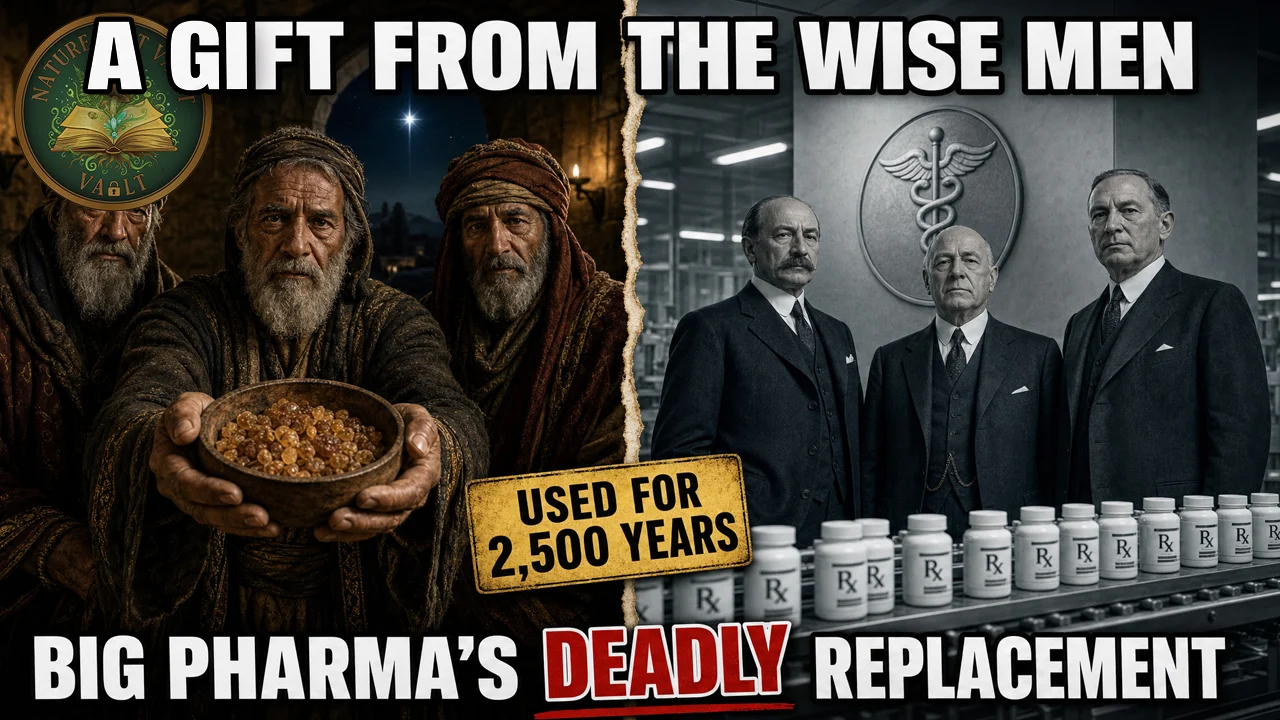
Table of Contents
What is Boswellia?
In December 2003, a senior cardiologist opened a folder of clinical trial data and realized that one of the most prescribed pain drugs in America was causing heart attacks. Not occasionally. Tens of thousands of them. He had been the lead investigator on the drug's pivotal trial. He had recommended it. And the company that made it had buried the cardiovascular signal in plain sight. The drug was Vioxx. It would be pulled from shelves nine months later. Before it was withdrawn, 80 million prescriptions had been filled in the United States. After it was withdrawn, the FDA's own senior scientist, David Graham, would testify under oath that between 88,000 and 139,000 Americans had suffered heart attacks or strokes because of it. Thirty to forty percent of them died.
The condition Vioxx was prescribed for, osteoarthritis of the knee, was already being treated, quietly, in clinical trials half a world away, with a tree resin that had been used for arthritis for at least 2,500 years. A resin that worked. A resin that one peer-reviewed trial after another showed could match the pain reduction of pharmaceutical drugs. A resin that could not be patented, could not be exclusively marketed, and could not generate $2.5 billion a year in sales.
This is Boswellia serrata, the Indian frankincense, family Burseraceae. It grows in the dry deciduous forests of central India. Tapping the bark releases a fragrant resin that hardens into amber-colored tears, the same way the frankincense of Bethlehem was harvested 2,000 years ago. The resin is in the same genus as the frankincense the wise men carried. The species the wise men most likely brought, Boswellia sacra, grew in southern Arabia; the species the Ayurvedic physicians wrote about, the one with the clinical record, is Boswellia serrata, the one growing in India. The resin contains a family of pentacyclic triterpenes called boswellic acids, the most potent of which is acetyl-11-keto-beta-boswellic acid (AKBA). In 1992 a German pharmacologist named Hermann Safayhi identified what these compounds do inside the body: they block 5-lipoxygenase (5-LOX), an enzyme that drives chronic inflammation through an entirely different pathway than the cyclooxygenase enzymes that aspirin, ibuprofen, and Vioxx target. Aspirin, ibuprofen, and Vioxx all worked on the same enzyme. Boswellia bypassed them. It worked on an inflammatory pathway the entire pharmaceutical industry had ignored.
| Metric | Value |
|---|---|
| Scientific name | Boswellia serrata |
| Family | Burseraceae (frankincense family) |
| Common names | Indian frankincense, salai, salai guggal, Shallaki |
| Native range | Dry deciduous forests of central India |
| Same genus as Bethlehem frankincense | Yes (Boswellia sacra, southern Arabia) |
| Earliest medicinal record | ~600 BCE, Sushruta Samhita (Sandhivata / arthritis) |
| Also documented in | Charaka Samhita; Mughal Persian medical texts; 17th-c. London & Paris apothecaries |
| Active compounds | Boswellic acids (AKBA, KBA, β-boswellic acid, acetyl-β-boswellic acid) |
| Most potent fraction | AKBA (acetyl-11-keto-β-boswellic acid) |
| Primary mechanism | 5-lipoxygenase (5-LOX) inhibition |
| Pathway identified | 1992, Hermann Safayhi (German pharmacologist) |
| 2003 Kimmatkar trial | 30 osteoarthritis patients, 8-week crossover, 100% pain reduction |
| 2007 Sontakke trial | 180 days vs valdecoxib; comparable pain reduction, no rebound |
| 2024 multicenter trial (India) | Pain reduction onset within 5 days |
| Also studied for | Ulcerative colitis, Crohn's disease, asthma |
| Vioxx FDA approval | 1999 (Merck, rofecoxib, COX-2 inhibitor) |
| Vioxx withdrawal | September 30, 2004 (80 million US prescriptions filled) |
| David Graham testimony | November 18, 2004 - 88,000 to 139,000 heart attacks/strokes, 30-40% fatal |
| Merck Vioxx settlement | November 9, 2007 - $4.85 billion for 47,000 plaintiffs |
| Typical clinical trial dose | 300-400 mg standardized extract, 3x/day with meals |
| Cost of a one-month supply | Under $30 (standardized boswellic-acid extract) |
Sushruta, the Charaka Samhita & 2,500 Years of Joint Medicine
The archive opens in northern India, sometime around 600 BCE. A physician named Sushruta is compiling what will become one of the founding texts of medicine on the Indian subcontinent. He is writing about wounds, about surgery, about the aching joints of aging bodies. He catalogs a resin tapped from a tree that grows in the dry mountainous regions of central India. He writes that it pacifies the inflammation of the joints. He prescribes it for what he calls Sandhivata, the disease of the wind in the joints. Today, we call it arthritis.
Charaka Samhita: A Parallel Record
The same resin appears in the Charaka Samhita, the other great Ayurvedic text from roughly the same era. Both works describe extraction methods, purification techniques, and precise dosing protocols. The tree is tapped by cutting the bark and letting the sap weep into hardened tears, an extraction method essentially unchanged in 2,500 years. The traditional dose, refined by Ayurvedic practitioners across two millennia, is in close alignment with the dosing used in modern clinical trials. Knowledge that took 20 centuries to refine arrived at the answer that modern pharmacology would confirm in the laboratory in the 1990s.
Mughal Persia and 17th-Century Europe
Persian practitioners in the Mughal courts used the same resin in ointments for the same condition. European travelers in the 17th century began sending samples back to royal apothecaries in London and Paris. The tree is in the same genus as the frankincense the wise men carried to Bethlehem: the same family, the same kind of resin, tapped the same way. The species the wise men most likely carried, Boswellia sacra, grew in southern Arabia. The species the Ayurvedic physicians wrote about, the one with the clinical record, is Boswellia serrata, the one growing in India.
The 1990s: Modern Pharmacology Finally Tests It
This is the resin that 2,500 years of traditional medicine prescribed for swollen, painful joints. And this is the resin that, in the 1990s, modern pharmaceutical science finally got around to testing in randomized controlled trials. The mechanism was no mystery by then. In 1992, a German pharmacologist named Hermann Safayhi had identified what the active compounds in Boswellia do inside the body. They block 5-lipoxygenase, an enzyme that produces some of the body's primary inflammation signals. Aspirin, ibuprofen, and the still-to-be-approved Vioxx all worked on a different enzyme entirely. Boswellia bypassed them. It worked on an inflammatory pathway the entire pharmaceutical industry had ignored. It worked. The traditional knowledge was correct. The 2,500-year-old prescription was scientifically confirmed.
The Science: 5-Lipoxygenase and the Kimmatkar & Sontakke Trials
5-LOX: The Inflammation Pathway NSAIDs Miss
Chronic inflammation in joints is driven by two enzyme families: cyclooxygenases (COX-1, COX-2) and 5-lipoxygenase (5-LOX). The COX pathway produces prostaglandins; the 5-LOX pathway produces leukotrienes. Aspirin, ibuprofen, naproxen, celecoxib, valdecoxib, and Vioxx all work on COX. None of them touch 5-LOX. The 5-LOX leukotrienes drive synovial inflammation, mucosal inflammation in the gut, and the bronchoconstriction of asthma. Hermann Safayhi's 1992 work demonstrated that boswellic acids inhibit 5-LOX directly, providing a mechanism for the joint, gut, and respiratory effects Ayurvedic physicians had described for two and a half millennia. Among the boswellic acids, AKBA (acetyl-11-keto-β-boswellic acid) is the most potent and the one modern extracts standardize against.
2003: The Kimmatkar Crossover Trial
In 2003, a research team led by Dr. Nirmal Kimmatkar published a double-blind, placebo-controlled trial. Thirty patients with osteoarthritis of the knee received Boswellia serrata extract for 8 weeks. The other half received placebo. After 8 weeks, the groups were crossed over. Every patient receiving the extract reported a decrease in knee pain. Every one of them. Swelling decreased. Walking distance increased. Flexion improved. When patients were switched to placebo, their symptoms returned. The crossover design eliminated chance, placebo response, and selection bias in one stroke. The result was as close to a definitive small-trial signal as a plant medicine has produced.
2007: Boswellia vs Valdecoxib (Same Class as Vioxx)
In 2007, Dr. Sarvesh Sontakke and a team at Government Medical College in Nagpur ran a 180-day trial. They tested Boswellia serrata directly against valdecoxib, a prescription drug from the same chemical class (COX-2 inhibitor) as Vioxx. The Boswellia group started slower. The pharmaceutical group felt relief sooner. But by the end of six months, the pain reduction was comparable. The difference was what happened next: one month after stopping treatment, the pharmaceutical patients were in pain again. The Boswellia patients were not. The plant did not just suppress symptoms; it modified the underlying inflammation in a way that outlasted the dose.
2024: Multicenter Onset Within Five Days
The modern science continued. A 2024 multicenter trial out of India tested a newer high-bioavailability standardized Boswellia serrata extract and documented pain reduction beginning within five days. Other published research has examined boswellic acids in ulcerative colitis, asthma, and Crohn's disease, with response rates comparable to standard treatments. The same enzyme pathway is involved in all of these conditions because all of them are driven by the same inflammation signals. The mechanism is not new. The plant is not new. The clinical evidence is not new. The only thing that is new is the willingness of a modern medical system to look at it.
Why It Stays Buried: Vioxx, 80 Million Prescriptions and David Graham's Testimony
In 1999, the FDA approved Vioxx. Vioxx (rofecoxib) was developed by Merck. It promised pain relief without the stomach bleeding that older anti-inflammatory drugs caused in older patients. It was patentable. It was marketable. It was destined for the older Americans whose knees, hips, and backs ached on a billion-dollar scale.
2000: The VIGOR Trial and the Buried Signal
By the end of 2000, Merck had run a trial called VIGOR comparing Vioxx to naproxen. In that trial, the Vioxx patients had a heart attack rate five times higher than the naproxen patients. Merck explained this away. They suggested that naproxen was somehow protective. It was not. The signal was real. The signal was buried. By 2003, doctors at Group Health Cooperative in Seattle had reviewed the same data and decided not to make Vioxx available to their half million members. They saw the cardiovascular signal. They declined the drug. Merck kept selling it.
2004: $2.5 Billion a Year, 80 Million Prescriptions
By 2004, Vioxx was generating $2.5 billion a year. 80 million prescriptions had been written. And inside the FDA, a senior scientist named David Graham was conducting a study of his own. He had access to the medical records of 1.4 million patients. He compared the heart attack rates of those who had been prescribed Vioxx with those who had been prescribed other painkillers. His findings would become one of the most consequential pieces of testimony in the history of American pharmaceutical regulation.
November 18, 2004: The Senate Testimony
On November 18, 2004, David Graham sat down in front of the United States Senate Finance Committee. Senator Charles Grassley of Iowa was chairing the hearing. The seating was so tight that lobbyists had paid people to stand in line to hold their places. Graham read his prepared statement. He testified under oath that Vioxx had caused, conservatively, between 88,000 and 139,000 Americans to suffer heart attacks or strokes. Of those, between 30 and 40 percent had died. The range of dead was somewhere between 26,400 and 55,600. To put the number in front of the senators, Graham used an image. He said the casualties were the rough equivalent of two to four commercial airliners falling from the sky every single week, for five years. He said the FDA's mishandling of Vioxx represented the single greatest drug-safety catastrophe in the history of the world. He said the FDA, as currently configured, was incapable of protecting Americans from another Vioxx.
2007: The $4.85 Billion Settlement
Merck had pulled the drug six weeks earlier, on September 30, 2004. Three years later, on November 9, 2007, the company agreed to pay $4.85 billion into a settlement fund for the 47,000 plaintiffs who had filed claims. It remains one of the largest pharmaceutical settlements in American history.
Why the Resin Was Never Promoted
Throughout all of this, the resin Sushruta had prescribed 2,500 years earlier was sitting on shelves in Indian pharmacies. Available. Unpatented. Unmentioned in American medical journals. It had succeeded in the 2003 trial. It had succeeded in the 2007 trial against the very same drug class that killed tens of thousands. None of it was promoted. None of it was marketed. None of it could generate a single quarter of pharmaceutical revenue. Boswellia serrata cannot be patented, because it is a plant. Its active compounds are natural molecules that no corporation owns. A bottle of standardized extract today costs under $30 and lasts a month. The patent on Vioxx generated $2.5 billion a year. This is not a coincidence of timing. This is the architecture of how American pharmaceutical development works. A drug that can be patented receives clinical trials, FDA review, sales representatives, advertising budgets, and physician-education programs. A plant resin used for 2,500 years receives none of those things. The fact that Boswellia produced pain reduction comparable to a $2.5 billion drug in head-to-head trials was, in commercial terms, irrelevant. There was no one to sell it.
How to Identify, Source, Dose & Use Boswellia
Identification
Boswellia serrata is a small to medium deciduous tree, 10 to 25 feet tall, with papery, peeling, ash-grey bark. The leaves are odd-pinnate, alternate, with 8 to 14 pairs of serrated leaflets - the species name serrata refers to the toothed leaf margin. Small white-to-pale-pink flowers appear in spring before the leaves fully emerge. The harvested material is not the leaf but the resin, exuded from carefully made cuts in the bark and collected after it hardens into amber-colored tears over 2 to 4 weeks. The other Indian frankincense species you may encounter is Commiphora wightii (guggul) - same Burseraceae family but a different genus and different active compounds.
Sourcing a Standardized Extract
Quality varies enormously across the commercial market. The clinical literature uses standardized Boswellia serrata extract, typically labeled as 60 to 65 percent total boswellic acids by HPLC. The most studied branded extracts further concentrate the AKBA fraction (for example 5-Loxin standardizes to 30 percent AKBA, AprèsFlex to similar levels). Look for: (1) Latin binomial Boswellia serrata on the label; (2) percentage of total boswellic acids and ideally the AKBA percentage; (3) third-party identity testing; (4) capsule form rather than crude resin powder, which has low bioavailability. Crude resin tears sold as incense are not pharmaceutically standardized and dosing is unreliable.
Dosing
Clinical trial doses cluster around 300 to 400 mg of standardized extract three times a day, taken with meals (boswellic acids are fat-soluble and absorption improves with dietary fat). This produces a daily dose of 900 to 1,200 mg. Newer high-AKBA concentrated formulations may use 100 to 250 mg total daily. Effect typically builds over 1 to 4 weeks for osteoarthritis pain, though the 2024 multicenter trial documented onset within 5 days with a newer extract. Treatment is normally continued at the same dose; some patients reduce to a maintenance dose after symptom control. Boswellia does not produce stomach bleeding the way NSAIDs do, so it does not require the gut-protecting protocols those drugs need.
What to Expect
For osteoarthritis pain: pain reduction, decreased swelling, improved walking distance and joint flexion, usually emerging at the 2-to-4-week mark with conventional extracts and sooner with high-AKBA formulations. For inflammatory bowel symptoms (used under clinical supervision): reduced flare frequency, improvement in endoscopic markers in some published trials. For asthma (used under clinical supervision, never as a substitute for a rescue inhaler): possible reduction in exacerbation frequency. The traditional Ayurvedic dose, refined over two millennia, is in close alignment with the dosing used in modern trials - a rare alignment that suggests the empirical knowledge was already optimized.
Safety
The most commonly reported side effects in clinical trials are mild gastrointestinal upset, nausea, heartburn, and occasional diarrhea, usually resolved by taking the extract with food. Unlike NSAIDs, Boswellia does not damage the stomach lining and does not carry the cardiovascular risk that defined the Vioxx catastrophe. Pregnant or breastfeeding women should avoid Boswellia (insufficient safety data). People on blood-thinners (warfarin, apixaban, etc.) should consult a clinician, as boswellic acids have mild platelet-modulating effects at high doses. Boswellia is metabolized through CYP enzymes and can interact with chemotherapy, immunosuppressants, and some psychiatric medications, so any prescription user should clear the addition with their prescribing physician. The historical safety record across 2,500 years of continuous Ayurvedic use is one reason it has remained a staple of South Asian medicine even without Western pharmaceutical infrastructure behind it.
Frequently Asked Questions
What is Boswellia serrata and what is it used for?
Boswellia serrata is a small to medium deciduous tree native to the dry hill forests of central India. Tapping the bark releases a fragrant resin that hardens into amber-colored tears - the same resin and the same genus as the frankincense the wise men carried to Bethlehem (which was most likely Boswellia sacra from southern Arabia). The Indian species is called salai or salai guggal in Hindi and Shallaki in Sanskrit. Sushruta catalogued it around 600 BCE in one of the founding texts of Indian medicine, prescribing it for Sandhivata, the disease of the wind in the joints - what we now call arthritis. It is also used in Ayurvedic medicine for inflammatory bowel disease, asthma, and chronic skin inflammation. The resin contains boswellic acids that inhibit 5-lipoxygenase, an enzyme central to chronic inflammation.
Does Boswellia really work as well as ibuprofen or prescription anti-inflammatories?
Multiple controlled trials suggest yes for osteoarthritis pain. In 2003 Dr. Nirmal Kimmatkar published a double-blind, placebo-controlled crossover trial of 30 patients with osteoarthritis of the knee. All patients receiving Boswellia serrata extract reported pain reduction; swelling decreased and walking distance increased. Symptoms returned when patients were crossed back to placebo. In 2007 Dr. Sarvesh Sontakke at Government Medical College Nagpur ran a 180-day head-to-head trial of Boswellia versus valdecoxib (a COX-2 inhibitor from the same class as Vioxx). The pharmaceutical group felt relief sooner; by six months pain reduction was comparable. One month after stopping treatment, the valdecoxib patients were in pain again - the Boswellia patients were not. A 2024 multicenter Indian trial documented onset within 5 days with a standardized extract. Boswellia works on a different enzyme (5-lipoxygenase) than NSAIDs (cyclooxygenase), so the two can sometimes be combined under clinical supervision.
What is the Vioxx scandal and how does it relate to Boswellia?
Vioxx (rofecoxib) was a Merck COX-2 inhibitor approved by the FDA in 1999 and marketed for osteoarthritis - the same condition Boswellia treats. By 2004 it was generating roughly $2.5 billion a year on 80 million US prescriptions. Merck's own 2000 VIGOR trial showed Vioxx patients had heart attack rates roughly five times higher than naproxen patients; Merck attributed this to naproxen being protective rather than Vioxx being harmful. Group Health Cooperative in Seattle declined to stock the drug for its 500,000 members based on the same data. The drug was withdrawn on September 30, 2004. On November 18, 2004, FDA senior scientist David Graham testified to the Senate Finance Committee that, conservatively, Vioxx had caused between 88,000 and 139,000 heart attacks and strokes in the United States, with 30 to 40 percent of those events fatal - he compared the casualty rate to two to four commercial airliners crashing every week for five years. Merck settled the resulting 47,000 plaintiff claims in 2007 for $4.85 billion. The relevance: a plant resin Sushruta prescribed 2,500 years earlier was producing comparable osteoarthritis pain reduction in clinical trials during the same years Vioxx was on the market. The resin could not be patented, so no company funded the trials needed to register it as a drug.
How do you take Boswellia? What is the dose?
Modern clinical trials standardize Boswellia serrata extract to its boswellic acid content. The most studied formulations contain 60 to 65 percent total boswellic acids and report AKBA (acetyl-11-keto-β-boswellic acid) as the most potent fraction. Typical trial doses range from 300 to 400 mg of standardized extract three times a day with meals, for an effective daily dose around 900 to 1,200 mg. Some standardized products (such as 5-Loxin and AprèsFlex) concentrate AKBA further and use lower daily doses (100 to 250 mg). Effect typically builds over 1 to 4 weeks; the 2024 multicenter Indian trial documented onset within 5 days with a newer high-bioavailability extract. Boswellia is fat-soluble, so absorption improves when taken with a meal containing some fat. A standard month's supply costs under $30.
Is Boswellia safe? Are there side effects?
Boswellia is generally well tolerated. In clinical trials the most commonly reported side effects are mild gastrointestinal upset, nausea, heartburn, and occasional diarrhea, usually resolved by taking the extract with food. Unlike NSAIDs, Boswellia does not damage the stomach lining or thin the blood. There is no documented cardiovascular risk - in fact, that is the central point of comparison with Vioxx. Caution is warranted for pregnant or breastfeeding women (insufficient safety data), people on immune-modulating therapy, and anyone taking blood-thinners, as boswellic acids have mild platelet-modulating effects at high doses. Boswellia can interact with cytochrome-metabolized drugs, so consult a clinician before combining it with chemotherapy, immunosuppressants, or psychiatric medication. The historical safety record across 2,500 years of continuous Ayurvedic use is one reason it has remained a staple of South Asian medicine even without Western pharmaceutical infrastructure behind it.
Explore More Medicinal Plants
Discover ancient healing plants backed by centuries of traditional use and modern science.
Browse Medicinal Plants Collection →