
Cleavers (Galium aparine): The Centuries-Old Lymphatic Herb Growing Free In Your Yard
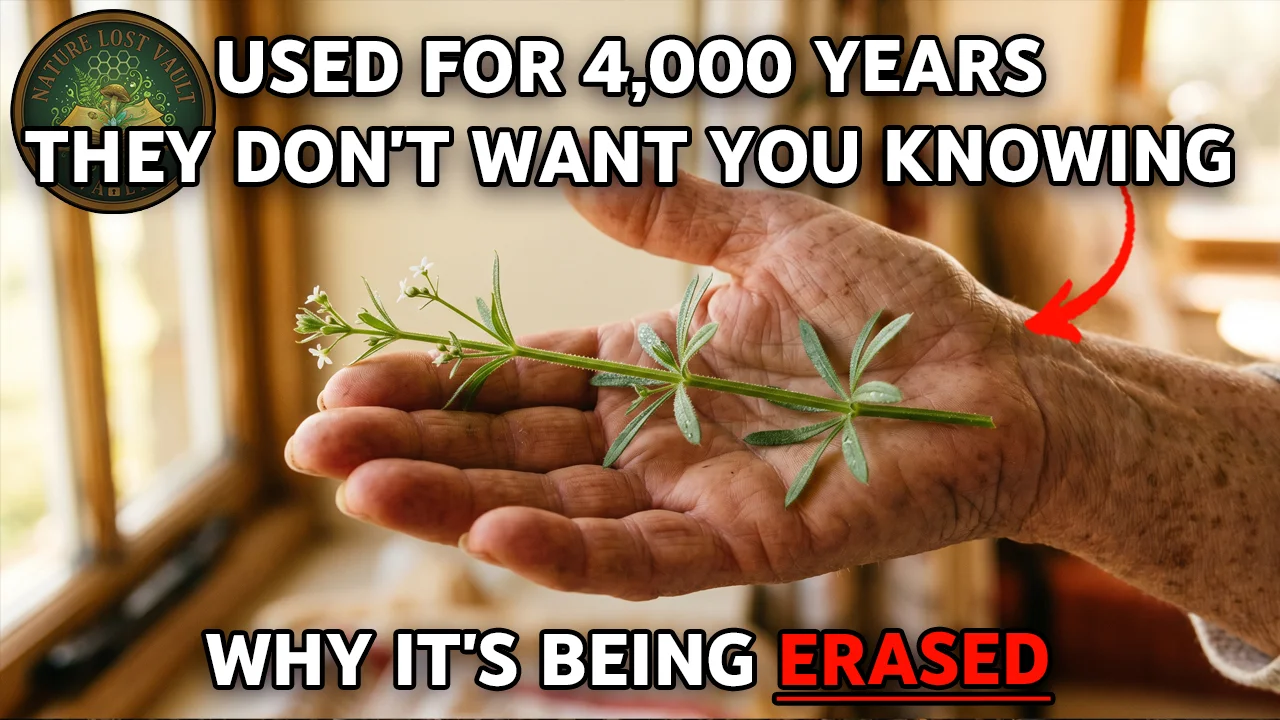
Table of Contents
Recommended Products:
Affiliate links - support our channel
What is Cleavers?
Every spring it shows up in your driveway, between the cracks in your patio, along the fence line behind the shed. It sticks to your pant leg when you walk past it. Most people pull it up and throw it in the trash.
This is cleavers (Galium aparine), also called goosegrass, sticky willy, catchweed, or bedstraw. It belongs to the same botanical family as coffee (Rubiaceae) and has been used as medicine for centuries. English herbalists from John Gerard (1597) to Nicholas Culpeper (1652) prescribed it. Several Indigenous nations of North America used Galium species as skin washes and kidney teas. Farm families in the 1800s relied on it for swollen ankles and puffy fingers.
And a medical device industry right now sells devices, compression garments, and subscription therapies for the exact conditions this plant was traditionally used to treat. The plant costs nothing. It cannot be patented. So it has been classified as a noxious weed in Canada's Weed Seeds Order and sprayed every spring across the canola and cereal fields of the northern prairies.
| Metric | Value |
|---|---|
| Botanical name | Galium aparine |
| Family | Rubiaceae (coffee family) |
| Earliest documented use | 1597 (John Gerard's Herball); Culpeper, 1652 |
| Primary traditional use | Lymphatic drainage, diuretic, skin tonic |
| Active compounds | Iridoids (asperuloside), flavonoids, tannins |
| Best harvest window | April-May (fresh spring shoots) |
| Preparation | Cold infusion (8-12 h), not boiled |
| Distribution | 6 continents; every US state & Canadian province |
| Modern research | 3+ peer-reviewed studies (2016, 2019, 2024) |
Centuries of Lymphatic Medicine
Cleavers is an old companion of farmed land, a weed that follows cultivation. Its small, round, bristly seeds, about 2 millimeters across, grow today in every hedgerow from Boston to Bucharest. Wherever humans settled and broke the soil, cleavers followed.
The Greek name was aparine, meaning "to seize, to cling." Specific prescriptions often credited online to Dioscorides, Galen and Pliny (for burns, water retention or weight loss) could not be confirmed in their texts, so the documented record here starts with the English herbalists.
In 1597, the English herbalist John Gerard recommended "a pottage made of Cleavers, a little mutton and oatmeal" to "cause lankness and keepe from fatnesse." By 1652, Nicholas Culpeper had established it as a standard household cleanser of the blood. Across the Atlantic, several Indigenous nations of North America used Galium species as skin washes and kidney teas, and America's Eclectic physicians of the 1800s prescribed cleavers as a diuretic and for skin eruptions.
For centuries of documented herbal medicine, cleavers did one thing consistently. It moved fluids. It cleared swellings. It supported what the ancients called the "sluggish humors" and what modern medicine calls the lymphatic system.
Modern Science on Cleavers
The lymphatic system is the body's primary drainage network. It carries waste, toxins, and immune cells through hundreds of miles of vessels and nodes. When it stagnates, tissues swell. Ankles puff. Fingers thicken. Fatigue sets in. Wounds heal slowly. Infections take hold. Today, 1 in 5 breast cancer survivors develops chronic lymphatic swelling.
2016: In Vitro Activity Against Breast Cancer Cells
A team published in the Journal of Ethnopharmacology tested cleavers extract against two types of human breast cancer cells. The extract killed both. Triple-negative cells died by apoptosis. Estrogen-receptor-positive cells died by necrosis. And the extract spared healthy breast cells entirely. Published in a peer-reviewed journal. Cited by oncology researchers. And never developed into a single pharmaceutical product.
2019: Immune Modulation
A team led by Tatiana Ilina, with Polish and Ukrainian colleagues, profiled the plant's chemistry in the journal Plants. The extracts showed immunomodulatory activity on human immune cells in the laboratory.
2024: Restoring Natural Killer Cell Function After Chemotherapy
Korean researchers tested cleavers extract on animals whose immune systems had been suppressed by chemotherapy. Natural killer cell activity, the cells that actively hunt cancer and infection, had dropped to under 30%. After treatment with cleavers extract, activity rose to nearly match the healthy control group.
A plant that grows wild in every American state. Free. In your driveway right now. The studies keep appearing. Nothing reaches the market, because nothing can be patented.
Why It Was Buried
What can be patented is everything else: pneumatic compression pumps, garments and therapies. Patients fought for years for coverage. In December 2022, Congress passed the Lymphedema Treatment Act, and from January 2024 Medicare covers compression garments.
Tactile Medical, SIGVARIS, 3M, Huntleigh Healthcare. These companies sell the machines. They do not sell cleavers.
And in the fields, the other half of the erasure plays out. Cleavers is one of the most actively poisoned plants in modern agriculture. It is listed as a Class 3 secondary noxious weed under Canada's Weed Seeds Order, which caps how much may appear in seed sold for planting. Agrochemical companies market herbicide mixes with cleavers named on the label. Each spring, millions of acres of farmland are sprayed to kill it.
The plant that Culpeper prescribed for swollen glands. The plant that Eclectic physicians prescribed as a diuretic. The plant that a 2024 animal study linked to recovering natural killer cell activity. Poisoned by name. Classified by law. Forgotten by medicine. Not because it failed. Because it succeeded without anyone owning it.
How to Identify, Harvest & Use Cleavers
Identification
Cleavers is one of the easiest wild plants to identify by touch. The stems and leaves are covered in tiny hooked hairs that make the whole plant stick like Velcro. Key traits:
- Square stems with backward-pointing hooked hairs.
- Whorls of 6 to 8 narrow leaves at each node, arranged like spokes on a wheel.
- Tiny white 4-petaled flowers in late spring.
- Small round bristly seeds about 2 mm across that stick to fur and clothing.
- Sprawling habit, climbing over other plants to 1 meter or more.
Common names: goosegrass, sticky willy, bedstraw, catchweed, stickyweed. All the same plant.
When and Where to Harvest
Harvest the fresh green aerial parts in April and May, before the plant flowers. Young shoots have the highest concentration of active compounds. Look along hedgerows, forest edges, shaded fence lines, stream banks, and garden margins. Avoid harvesting from roadsides, sprayed farm fields, or within 10 meters of pesticide-treated lawns.
The Cold Infusion (Traditional Preparation)
The active compounds in cleavers (iridoids like asperuloside) are delicate and degrade with heat. The preparation favored by modern herbalists is a cold infusion, not a boiled tea.
- Take a handful of fresh cleavers (about 30 g) or 2 tablespoons of dried herb.
- Crush lightly to release the plant juice.
- Place in a glass jar with 500 ml of cold filtered water.
- Cover and steep in the fridge overnight (8 to 12 hours).
- Strain through a fine sieve or muslin cloth.
The finished infusion has a pale green color and a mild, clean, cut-grass taste. Drink one cup before breakfast for up to 4 weeks as a spring tonic.
Hot Tea (If You Must)
If you need a hot version, do not boil it. Pour water just off the boil (around 80 °C / 175 °F) over 1 teaspoon of dried cleavers. Steep 10 minutes. Strain.
Fresh Juice (Strongest Form)
For the most concentrated preparation, pack fresh cleavers into a juicer. Take 1 to 2 tablespoons of fresh juice diluted in water, once a day, for up to 2 weeks.
Roasted Seed "Coffee"
Cleavers belongs to the same family as coffee. In Sweden, farmers historically roasted the small round seeds in iron pans until they darkened, then ground them for a brown powder with a bitter, earthy, coffee-like flavor. Not caffeinated, and mild and earthy rather than a true coffee replacement, but in 1931 Maud Grieve called the seeds "one of the best substitutes for coffee."
Safety Notes
Cleavers is generally safe for most adults as a tonic herb. It has a mild diuretic effect, so people on lithium or prescription diuretics should consult a healthcare provider before use. Not recommended during pregnancy due to lack of safety data. Always identify with certainty before consuming any wild plant, and never harvest from sprayed or contaminated areas.
Frequently Asked Questions
What is cleavers and what is it used for?
Cleavers (Galium aparine) is a wild herb in the coffee family (Rubiaceae) that has been used medicinally for centuries. Its primary traditional use is as a lymphatic tonic, meaning it supports the lymphatic drainage system that removes fluid, waste, and toxins from tissues. Nicholas Culpeper (1652) prescribed it as a spring blood cleanser and for swollen glands, and several Indigenous nations of North America used Galium species as skin washes and kidney teas. Modern peer-reviewed studies (2016, 2019, 2024) have found cleavers extract kills two breast cancer cell lines in vitro, shows immunomodulatory activity on human immune cells in vitro, and improved natural killer cell activity in animals whose immunity had been suppressed by chemotherapy.
How do you make cleavers tea?
The traditional preparation is a cold infusion, not a hot tea, because the delicate active compounds in cleavers are damaged by boiling water. To make a cold infusion: take a handful of fresh cleavers (about 30 g) or 2 tablespoons of dried herb, crush lightly, place in a jar with 500 ml of cold filtered water, cover, and steep overnight in the fridge (8 to 12 hours). Strain in the morning. Drink one cup before breakfast for up to 4 weeks in spring. The finished infusion has a pale green color and mild cut-grass taste. For a hot tea, pour water just off the boil (around 80 °C) over 1 teaspoon of dried cleavers and steep 10 minutes.
What does cleavers do for the lymphatic system?
Cleavers is classified in traditional Western herbalism as a lymphagogue, an herb that stimulates lymphatic drainage and fluid movement. The lymphatic system is the body's waste and immune transport network, with no central pump of its own. When it stagnates, tissues swell, ankles and fingers puff, and wounds heal slowly. Cleavers has been used for centuries to clear that stagnation. About one in five women treated for breast cancer develops lymphedema. While cleavers has no RCT-level evidence for treating lymphedema, centuries of consistent traditional use in Europe and North America, combined with modern in vitro evidence for immune and circulatory effects, explains its continued use.
Where can I find cleavers and how do I identify it?
Cleavers grows on 6 continents and is found in every US state, across Canada, the UK, and most of Europe. It appears in early spring (April and May in the Northern Hemisphere) along hedgerows, forest edges, fence lines, driveways, and disturbed ground. Identification is easy by touch: the stems and leaves are covered in tiny hooked hairs that make the whole plant stick like Velcro to clothing and fur. Other traits: square stems, whorls of 6 to 8 narrow leaves at each node, tiny white 4-petaled flowers, and small round bristly seeds 2 mm across. Common names include goosegrass, sticky willy, bedstraw, catchweed, and stickyweed.
Can you eat cleavers and is it safe?
Yes, cleavers is edible and non-toxic. Young spring shoots (under 15 cm) can be eaten raw in salads, but most people find the hooked hairs unpleasant and prefer to cook them briefly like spinach, or drink them as a cold infusion where the hairs are strained out. The roasted seeds have been used historically in Sweden as a coffee substitute because cleavers belongs to the same botanical family (Rubiaceae) as coffee. Cleavers is generally safe for most adults, but it has a mild diuretic effect, so people on lithium or prescription diuretics should consult a healthcare provider. It is not recommended during pregnancy due to lack of safety data.
Explore More Medicinal Plants
Discover ancient plants that healed civilizations before the pharmaceutical industry existed.
Browse Medicinal Plants Collection →