Saffron Matched Prozac in Clinical Trials. 90% of What You Buy Is Fake. Here's How to Grow It.
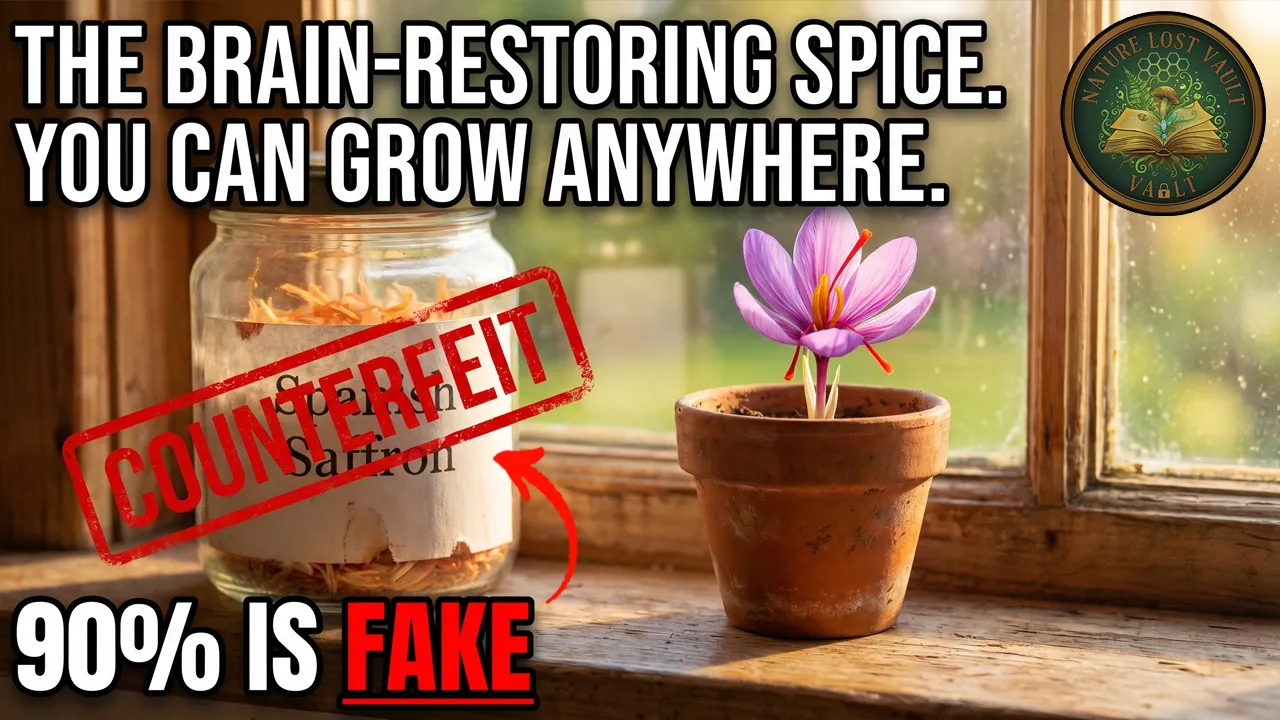
Table of Contents
Recommended Products:
Affiliate links - support our channel
What is Saffron?
The jar in your spice cabinet may be a forgery. It looks right. It smells vaguely right. The threads are red. The label reads Spanish saffron. You paid $18 for half a gram. But a UK investigation found that between 40 and 90% of what is sold under that name in Europe and North America contains almost no saffron at all. Corn fibers soaked in food dye, calendula petals, safflower stigmas, sometimes dyed silk, sometimes paper.
And the spice at the center of all of it, the one being stolen, diluted, and faked on an industrial scale, carries within its three tiny threads more clinical evidence for treating depression than most things your doctor can prescribe.
This is saffron (Crocus sativus), the most expensive spice on Earth. It is also a clinically validated antidepressant that matched fluoxetine (Prozac) in randomized double-blind trials. It grows in USDA zones 3 to 9, covering almost the entire continental United States. And 90% of what you buy is fake.
The Global Saffron Fraud
One country controls more than 90% of the world's supply. Iran's Khorasan province produces the vast majority of global saffron. When US and European sanctions hit Iran, the saffron could not be sold under its own name into Western markets. So it moved through intermediaries.
Iranian farmers sold in bulk to traders in Spain, the UAE, and Afghanistan. The traders repackaged the product. Spanish saffron, premium Italian threads, certified origin, all of it Iranian. Spain's labeling laws allowed importers to package foreign saffron domestically and market it as a product of Spain. In 2019, Spain exported 287,000 kg of saffron. Its domestic production that year was 1,537 kg.
The fraud compounded at the next layer. Scientists testing commercial samples found that up to 30% of the global saffron supply is adulterated, with rates reaching 60% in some markets. The FDA acknowledges saffron fraud specifically but has established no purity standard for the spice. There is no legal definition in the United States of what percentage of a jar labeled saffron must actually be saffron.
Into that vacuum moved the industrial adulterants: corn stigmas soaked in beet juice, safflower petals dried and pressed, turmeric mixed into saffron powder to mimic color. The most dangerous substitutes are synthetic dyes. Sudan dyes and rhodamine B have both been found in commercial saffron samples. Both are considered potentially carcinogenic.
| Metric | Value |
|---|---|
| Antidepressant dose (clinical trials) | 30 mg/day for 6 weeks |
| Efficacy vs fluoxetine (Prozac) | No statistically significant difference |
| Active compounds | Crocin, safranal (serotonin reuptake inhibitors) |
| Global adulteration rate | 40-90% of commercial supply |
| Spain 2019: exported vs produced | 287,000 kg exported / 1,537 kg produced |
| USDA growing zones | Zones 3-9 (almost all continental US) |
| Time from planting to harvest | 6-8 weeks (plant Sept/Oct, harvest Nov) |
| Corm multiplication rate | 20 corms become 80 by year 3 |
3,600 Years of Documented Use
The archive opens on the Aegean island of Santorini in the ruins of Akrotiri. A volcanic eruption around 1600 BCE buried the settlement in ash and preserved it perfectly. When archaeologists uncovered a fresco in the 1960s, they found the oldest botanically accurate images of medicinal plant use ever found. Women in elaborate robes plucking three red threads from purple flowers. A goddess watching over the harvest. Another woman using the gathered threads to treat a wound on her foot. The plant was Crocus sativus.
The Minoan civilization did not stumble onto it. They cultivated it deliberately, bred specifically for the length of its stigmas. Before that, the Sumerians gathered it from wild fields. Ancient Persian kings maintained dedicated cultivation fields in Isfahan 1,000 years before the common era. They mixed it into hot tea as a cure for melancholy. They called it zarin, golden.
When Alexander the Great's armies crossed into Persia, his soldiers began using saffron-infused baths to close their wounds. The tea was drunk on campaign for endurance. What they understood intuitively, modern pharmacology would eventually confirm in double-blind randomized controlled trials. But that confirmation would take three and a half millennia.
The Saffron War of 1374
By the 14th century, the demand for saffron in Europe had become so extreme that when a shipment of 800 pounds was intercepted en route to Basel, Switzerland, the theft triggered a war that lasted 14 weeks. The cargo was worth over half a million dollars at today's prices. Cities began posting armed guards at saffron fields.
In 1370, at the height of the Black Death, European demand exploded because physicians believed saffron could treat the plague. Farmers who might have grown it were dying alongside their crops. Supply collapsed. Prices went vertical. Merchants who controlled the trade routes wielded power that armies could not match.
Saffron in America
Around 1730, Pennsylvania Dutch settlers carried saffron corms to America. Within years, they were selling it to Spanish colonists in the Caribbean at a price the Philadelphia commodity exchange set equal to gold. But the War of 1812 destroyed most of the merchant ships carrying American saffron abroad. The trade never recovered. The corms remained in Pennsylvania gardens, but the market was gone.
Clinical Research: Saffron vs SSRIs
In 2005, a randomized double-blind clinical trial compared saffron extract to fluoxetine, the active compound in Prozac, for treating mild to moderate depression. Patients took 30 mg of saffron per day for 6 weeks. The results showed no statistically significant difference between saffron and fluoxetine.
A subsequent meta-analysis reviewed five independent clinical trials and found a massive effect size for saffron versus placebo, comparable antidepressant efficacy versus both fluoxetine and imipramine, and no severe adverse events reported in any of the trials.
The Mechanism
Crocin and safranal, the bioactive compounds responsible for saffron's color and aroma, inhibit the reuptake of serotonin in the synapses. This is the exact same mechanism exploited by the entire selective serotonin reuptake inhibitor (SSRI) category. They also modulate dopamine and stimulate the production of BDNF, the brain-derived neurotrophic factor that governs neurogenesis and memory consolidation.
A 2025 review identified that crocin inhibits acetylcholinesterase, the enzyme that breaks down acetylcholine. That is the precise mechanism of the frontline Alzheimer's drugs donepezil and rivastigmine.
A natural spice used for 3,500 years as a treatment for melancholy operates on the same molecular targets as the pharmaceutical industry's most prescribed products. The global SSRI market generates $15 billion per year. The Alzheimer's drug market is worth another $8 billion.
How to Grow Saffron at Home
Crocus sativus grows in USDA zones 3 to 9. That is almost the entire continental United States. In warmer zones, the corms go directly in the ground. In colder climates, they grow in containers that come indoors before the first hard freeze.
The plant requires almost nothing. Full sun, well-drained soil, and water only after planting and during active growth. It will not tolerate wet feet, but it tolerates cold, drought, neglect, and poor soil with remarkable patience.
Planting Instructions
When: Plant in September or October.
Depth: 3 to 4 inches deep, pointed end up, 4 inches apart.
Harvest: In 6 to 8 weeks, purple flowers appear. Each flower carries three red stigmas. Pick them in the morning when the bloom is fully open.
Drying: Dry threads on a paper towel for 2 days. Store in a glass jar out of light.
What You Get
50 flowers produce roughly a teaspoon of dried saffron. One teaspoon is enough to flavor a paella for eight people, brew weeks of medicinal tea, or add to a glass of warm milk every morning for a month of documented mood support.
The corms multiply underground on their own. Year 1, you have 20 corms. Year 3, you have 80. Year 5, you have enough to share with your neighborhood and still harvest more than you can use.
The woman in the Minoan fresco, crouching in an elaborate robe at Akrotiri 3,600 years ago, plucking three red threads from a purple flower and carrying them to a wound, understood something that a $15 billion pharmaceutical industry has spent decades obscuring. The threads do something. They do it reliably. The science exists. But the threads in your spice cabinet are probably not the threads that do it.
The answer is not to boycott the supply chain. It is to step outside it entirely. Plant 20 corms this September. By November, you will have harvested your first threads.
Frequently Asked Questions
Does saffron work as well as Prozac for depression?
In a 2005 randomized double-blind clinical trial, 30mg of saffron extract per day for 6 weeks showed no statistically significant difference from fluoxetine (Prozac) for treating mild to moderate depression. A meta-analysis of five trials confirmed comparable antidepressant efficacy with no severe adverse events.
How does saffron treat depression at a molecular level?
Saffron's active compounds, crocin and safranal, inhibit serotonin reuptake in synapses, the exact same mechanism used by SSRI antidepressants. They also modulate dopamine and stimulate BDNF (brain-derived neurotrophic factor), which governs neurogenesis and memory. A 2025 review found crocin also inhibits acetylcholinesterase, the mechanism of Alzheimer's drugs.
Is most commercial saffron fake?
A UK investigation found 40-90% of saffron sold in Europe and North America is adulterated. Common substitutes include corn fibers soaked in food dye, safflower petals, calendula, and dyed silk. Spain exported 287,000 kg in 2019 while producing only 1,537 kg domestically. The FDA has no purity standard for saffron.
Can you grow saffron at home?
Yes. Saffron crocus (Crocus sativus) grows in USDA zones 3-9, covering almost all of the continental United States. Plant corms 3-4 inches deep in September or October. Purple flowers appear in 6-8 weeks, each carrying 3 red stigmas. Corms multiply underground: 20 corms become 80 by year three.
Explore More Medicinal Plants
Discover documented herbal remedies validated by modern clinical research.
Browse Medicinal Plants Collection →