Dandelion (Taraxacum officinale): The Wild Superfood the 1946 Herbicide 2,4-D Turned Into a Weed, That the University of Windsor Now Studies for Cancer Cell Apoptosis
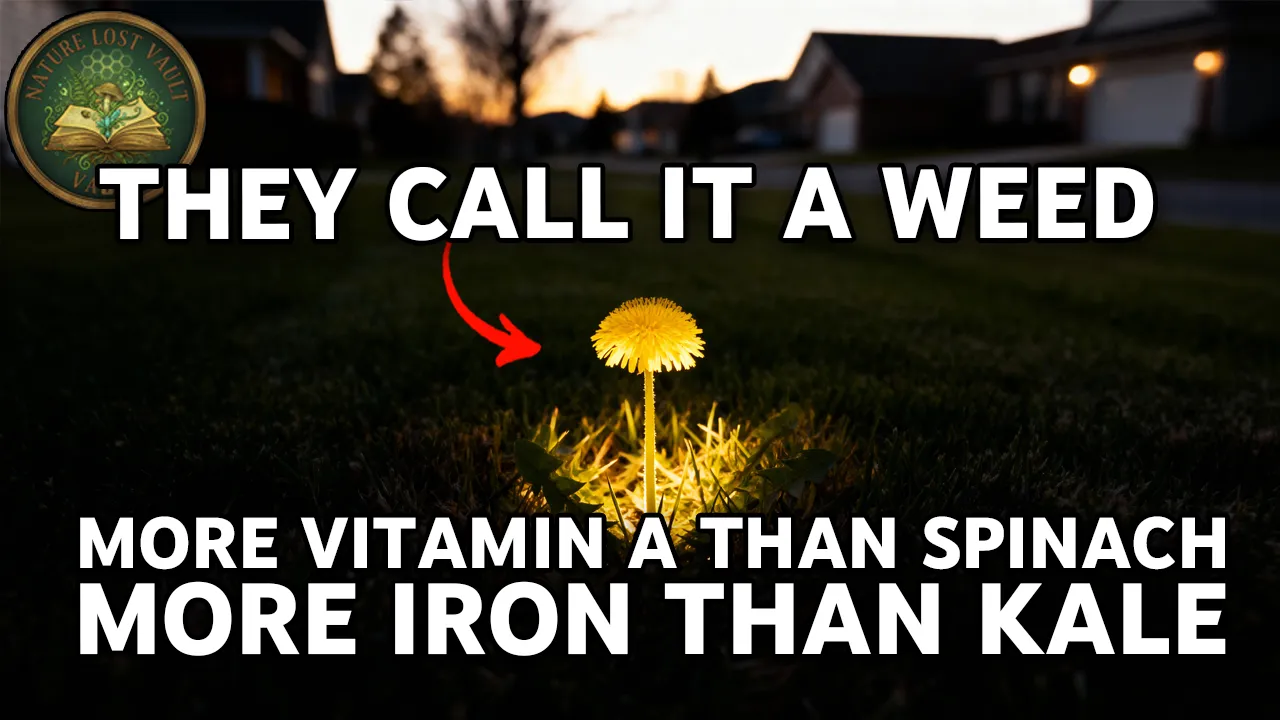
Table of Contents
- What is Dandelion?
- From Sun Simiao's 652 CE Pharmacy to Ibn Sina's Canon & the Mayflower's Seed Bag
- Nutrition Density, Inulin & the Ovadje-Pandey Windsor Cancer Studies
- Why It Stays Buried: The 1946 Herbicide 2,4-D & the Suburban Lawn Ideal
- How to Consume Dandelion (Greens, Root Coffee, Flower Syrup & Tincture)
- How to Source Dandelion (Forage, Grow & Buy)
- Frequently Asked Questions
What is Dandelion?
There is a plant that most American gardeners have been told to kill for years. The dandelion (Taraxacum officinale). We spray it with chemicals. We tear it from the soil. We curse it for daring to grow in our driveways.
Yet for thousands of years, this same plant healed the liver, cleansed the blood, and fed civilizations through famine. It survives fire. It survives drought. It survives frost. And in a research lab in Ontario, biochemists have documented a compound in its roots that reminds certain aggressive cancer cells how to die - while leaving healthy cells untouched.
It is not a weed. It is one of humanity's oldest medicines, one of the most nutrient-dense wild greens on record, and one of the very few plants where a single generation of postwar advertising completely rewrote the public verdict. This is the story of a plant superfood we turned into an enemy - and what modern chemistry, ethnobotany, and cancer research now say about the plant we tried to poison.
| Metric | Value |
|---|---|
| Scientific name | Taraxacum officinale F.H. Wigg. (1780) |
| Family | Asteraceae (daisy / sunflower family) |
| Common names | Dandelion, lion's tooth, Pu Gong Ying (蒲公英), tarakhshaqun |
| Etymology of "dandelion" | French dent de lion ("lion's tooth"), for the toothed leaf margin |
| Etymology of "Taraxacum" | Medieval Arabic tarakhshaqun ("bitter herb"), via Latin |
| Vitamin A (raw greens) | ~508 mcg RAE per 100 g - more than raw spinach (469 mcg) |
| Vitamin C (raw greens) | ~35 mg per 100 g - about 2.5x raw tomato (14 mg) |
| Iron (raw greens) | ~3.1 mg per 100 g - about 2x raw kale (1.5 mg) |
| Vitamin K (raw greens) | ~778 mcg per 100 g - one of the highest in any leafy green |
| Signature root fiber | Inulin (fructan prebiotic; feeds Bifidobacteria in the large intestine) |
| Signature bitter compound | Taraxinic acid glucoside (sesquiterpene lactone) |
| EMA monograph | European Medicines Agency: dandelion root & leaf (dyspepsia, appetite loss) |
| Germany Commission E approval | Loss of appetite, dyspeptic complaints, gallbladder support |
| ESCOP listing | European Scientific Cooperative on Phytotherapy: liver & digestive support |
| Earliest documented Chinese use | Sun Simiao, Beiji Qianjin Yaofang, 652 CE (as Pu Gong Ying) |
| Earliest documented Arab use | Ibn Sina, Canon of Medicine, 1025 CE |
| Key Windsor cancer papers | Ovadje et al. 2011 (J. Ethnopharmacol., leukemia); 2012 (PLoS ONE, melanoma); 2015 (Oncotarget, pancreatic) |
| Phase 1 human trial | Windsor Regional Cancer Program - NCT01745624 (end-stage blood-related cancers) |
| 1946 shift | American Chemical Paint Company brings 2,4-D to market as first selective broadleaf herbicide |
| Rubber cousin | Taraxacum kok-saghyz (Russian dandelion) - Continental Tire "Taraxagum" latex source |
| Modern American status | Sprayed as America's most-hated lawn weed - the wrong verdict on the wrong plant |
From Sun Simiao's 652 CE Pharmacy to Ibn Sina's Canon & the Mayflower's Seed Bag
Tang Dynasty China: Pu Gong Ying (652 CE)
The written record of dandelion medicine reaches back almost fourteen centuries. In 652 CE, the Tang Dynasty physician Sun Simiao compiled the Beiji Qianjin Yaofang - Prescriptions Worth a Thousand Pieces of Gold - and listed the yellow flower under its Chinese name, Pu Gong Ying (蒲公英). Traditional Chinese physicians used it to cool inflamed organs, purify the blood, and treat mastitis, boils, and infections that took lives before the age of antibiotics. Pu Gong Ying is still on the shelf of every Chinese herbal pharmacy today, unchanged in name and use.
Medieval Arab Medicine: Tarakhshaqun (~1025 CE)
By the year 1025, the Persian polymath Ibn Sina (known in the West as Avicenna) had written dandelion into his Canon of Medicine - one of the most influential medical textbooks in human history. The Arabic name he used was tarakhshaqun, "the bitter herb that opens blocked pathways inside the body." That Arabic name is where the modern genus name comes from: Taraxacum is a Latinization of tarakhshaqun. So the scientific name we use in a lab today is a fossil of a medieval Persian pharmacy.
European Herbalism & the Mayflower
Medieval European herbalists used dandelion as a liver tonic, a diuretic, and a wound wash. The sap was applied to warts. Roman soldiers ate the greens to prevent scurvy on long campaigns. By the seventeenth century, dandelion had become so integral to family medicine chests that European colonists deliberately carried the seeds across the Atlantic - it was one of the earliest introduced medicinal herbs in North America, brought on purpose, not by accident. Indigenous nations across the continent quickly incorporated the plant into their own materia medica: the leaves were boiled to restore vitality after the long starving months of winter.
Modern European Regulation: EMA, Commission E, ESCOP
None of this is folklore. Dandelion is a regulated pharmacy medicine in Europe today. The European Medicines Agency carries official herbal monographs for both dandelion root and leaf. Germany's Commission E (the expert panel that evaluates herbal medicines) approves it for loss of appetite, dyspeptic complaints, and gallbladder support. The European Scientific Cooperative on Phytotherapy (ESCOP) lists the same uses under liver and digestive support. Walk into a pharmacy in Germany or France and you will find dandelion, standardized and labelled, next to the goldenrod and the milk thistle.
Nutrition Density, Inulin & the Ovadje-Pandey Windsor Cancer Studies
The Nutrition Numbers (USDA FoodData Central)
The claim that dandelion greens beat several cultivated vegetables on key micronutrients is measurable, not folk. Per 100 g of raw greens:
- Vitamin A: ~508 mcg RAE - more than raw spinach (~469 mcg RAE).
- Vitamin C: ~35 mg - about 2.5x raw tomato (~14 mg).
- Iron: ~3.1 mg - about 2x raw kale (~1.5 mg).
- Vitamin K: ~778 mcg - one of the highest concentrations in any leafy green, critical for bone health and blood clotting.
- Calcium: 187 mg. Potassium: 397 mg. Plus B-complex vitamins and folate.
To the medieval physicians who called it "the bitter herb that opens the blocked pathways of the body," this was not sentiment. This was the pharmacy shelf of a wild plant that could restore strength after winter, correct the mineral deficits of a monotone grain diet, and support a liver working through infection.
The Root: Inulin, Prebiotic Fiber & Taraxinic Acid
The root does something the leaf cannot. It is heavy in inulin, a fructan-based prebiotic fiber that reaches the large intestine intact and feeds the Bifidobacteria - the friendly gut bacteria that produce the short-chain fatty acids linked to lower inflammation and better metabolic health. It also carries taraxinic acid glucoside, the sesquiterpene lactone that gives the plant its characteristic bitter taste and its liver-stimulating action. Bitter taste on the tongue triggers vagal signalling that primes the liver and gallbladder to release bile - which is exactly the pharmacological basis for the EMA and Commission E monographs.
The Windsor Cancer Studies (Ovadje & Pandey, 2011–2015)
At the University of Windsor in Ontario, biochemist Dr. Siyaram Pandey and PhD student Pamela Ovadje published a series of peer-reviewed papers on aqueous dandelion root extract (DRE) that changed how the plant was viewed in oncology research circles:
- Ovadje et al. 2011 - Journal of Ethnopharmacology. Aqueous DRE induced apoptosis (programmed cell death) in human leukemia cells while leaving healthy immune cells in the same dish untouched.
- Ovadje et al. 2012 - PLoS ONE. DRE extended the effect to aggressive melanoma cells, including drug-resistant lines that had stopped responding to standard treatments.
- Ovadje et al. 2015 - Oncotarget. DRE showed activity against pancreatic cancer cells, one of the deadliest tumors modern medicine faces.
The mechanism the Windsor team identified is not chemotherapy-style poisoning. DRE selectively activates caspase pathways inside cancer cells - the internal enzymatic cascade that healthy cells use to trigger their own controlled death when they detect fatal damage. Cancer cells lose that self-shutdown ability. DRE, in the dish, seems to hand it back to them, without touching healthy cells. The findings moved to a Phase 1 human clinical trial at the Windsor Regional Cancer Program - Dandelion Root Extract in End-Stage Blood-Related Cancers, ClinicalTrials.gov identifier NCT01745624.
The honest caveat: Phase 1 trials establish safety and dose in humans - they do not prove efficacy. Nothing in this research allows a claim that dandelion root cures cancer. But it does establish something remarkable: a plant that most American gardeners spray with herbicide contains a mechanism that a serious research group and a major cancer center considered worth taking into the clinic.
The Russian Cousin: Taraxacum kok-saghyz & Continental Tire's "Taraxagum"
The story does not end in the pharmacy. During World War II, when Asian rubber supplies were cut off, the Soviet Union turned to Taraxacum kok-saghyz - the Russian dandelion, whose roots contain high-quality natural latex. That research was largely shelved after the war. Today, with the global Hevea rubber supply threatened by South American leaf blight and climate change, Continental Tire (its dandelion rubber is marketed as "Taraxagum"), Ohio State University, and Germany's Fraunhofer Institute have revived kok-saghyz breeding. The plant we tried to poison out of our lawns may be part of the wheels of our civilization within a decade.
Why It Stays Buried: The 1946 Herbicide 2,4-D & the Suburban Lawn Ideal
1940s: Wartime Chemistry Meets the Postwar Suburb
The reclassification of dandelion from wild pharmacy to enemy weed was not the slow drift most plant erasures follow. It was fast, it was industrial, and it can be dated to a single chemical: 2,4-Dichlorophenoxyacetic acid, better known as 2,4-D.
The compound came out of secret wartime research in the early 1940s - at the UK's Rothamsted Experimental Station under Templeman and Slade, and at the University of Chicago under E. J. Kraus - some of it explicitly evaluating whether related phenoxy compounds could destroy the crop harvests of enemy nations. In 1946, the American Chemical Paint Company brought 2,4-D to market as the world's first selective broadleaf herbicide. Its property was industrially perfect: it killed dandelions, plantain, clover, and other broadleaf plants, but left lawn grasses (monocots) alive.
The Perfect Lawn Ideal Becomes Enforceable
Before 1946, keeping a monoculture of grass alive against the natural richness of a wildflower yard was impossible without weapons. 2,4-D handed suburban America the weapon. The perfect lawn ideal - a smooth uniform carpet of green grass, a symbol of order and prosperity - suddenly became industrially enforceable at scale. And once the chemical existed, chemical companies and lawn-care magazines needed a villain for the ads. They chose the bright yellow flower. Magazines mocked homeowners who allowed dandelions to appear on the front lawn. Neighbors shamed neighbors. A plant that had fed generations became, inside a single generation, a symbol of failure, laziness, and poverty.
The Plant Did Not Change
Nothing about the plant changed. It still had more vitamin A than spinach, more vitamin C than tomatoes, and more iron than kale. Its taproot still mined calcium and potassium from compacted subsoil and pumped them to the surface, healing the ground for other plants. Its early spring flowers still fed pollinators when the rest of the world was still gray. Its root still contained the caspase-activating compounds that the Windsor group would later document in peer-reviewed papers. What changed was the industry that needed a target. Meanwhile the dandelion itself keeps doing what it has always done: it returns after fire, it rises through concrete, and it endures.
Quick note on Agent Orange:
2,4-D itself is a distinct chemical from the Vietnam-era defoliant Agent Orange. Agent Orange was a 50/50 mix of 2,4-D and 2,4,5-T, and the human harm from Agent Orange was primarily caused by the dioxin (TCDD) contaminant in the 2,4,5-T fraction - not by 2,4-D itself. The two compounds share a family but not a rap sheet. The story here is about 1946 lawn-care history, not Vietnam-era herbicide warfare.
How to Consume Dandelion (Greens, Root Coffee, Flower Syrup & Tincture)
Every part of the plant is edible, and each part has its own harvest window. This is the single most useful thing to know: leaves in spring, blossoms in summer, roots in autumn.
1. Dandelion Greens (spring salad or saute)
Harvest the young rosette leaves in early spring, before the flower stalk appears. That is when they are tender and only lightly bitter. Later leaves are still edible but sharper - better cooked than raw.
- Raw salad: dress the young leaves in a bright vinaigrette (lemon or balsamic) with a little honey; the acid mellows the bitterness.
- Italian-style saute (cicoria ripassata): blanch the leaves 2 minutes in salted boiling water, drain, then saute in olive oil with garlic, chile flakes, and a squeeze of lemon.
- Wilted into soups & pasta: stir chopped leaves into bean soups, farro, or pasta dishes in the last 2 minutes of cooking.
2. Dandelion Root Coffee (autumn harvest)
This is the classic caffeine-free liver-supportive brew - rich, dark, faintly toasty, and used in European pharmacies for centuries.
- Dig the taproots in late autumn after the first frost - that is when the plant has pulled its energy underground and the root is thickest with inulin.
- Scrub thoroughly under running water; scrape off any damaged skin.
- Chop into pea-sized pieces.
- Spread on a sheet pan and roast at 350°F / 175°C for 30 to 45 minutes, stirring every 10 minutes, until dark chocolate-brown and fragrant.
- Cool completely, then grind in a burr grinder or spice grinder.
- Brew like coffee - about 1 tablespoon per cup of just-boiled water, steeped 5-10 minutes, then strained. Add milk and honey as you would to coffee.
Store the roasted ground root in a sealed jar out of light; holds flavor about 6 months.
3. Dandelion Flower Syrup / "Dandelion Honey"
The vegan honey substitute, and one of the most beautiful preserves you can make from a lawn weed.
- Pick 2 cups of fully open yellow flowers mid-morning on a dry sunny day.
- Shake the flowers open to release any insects; pull the yellow petals off the green calyx (the green is bitter - discard it).
- Simmer the petals gently in 2 cups of water with the peel of half a lemon for 15 minutes; steep overnight.
- Strain through cheesecloth; press to release all the liquid.
- Return the liquid to the pan, add 2 cups of sugar and the juice of half a lemon, and simmer 30-45 minutes until it coats the back of a spoon.
- Bottle hot into sterilized jars. Keeps 12 months sealed, 3 months in the fridge once opened.
4. Dandelion Root Tincture (herbal medicine form)
For anyone using dandelion in the European liver / digestion tradition, a tincture is the most concentrated, shelf-stable form. Typical adult dose: 2 to 4 ml of a 1:5 tincture, 2 to 3 times daily in a little water, ideally 10-20 minutes before meals - the bitter taste on the tongue is part of the mechanism.
Honest Safety Notes
- Never harvest from lawns treated with 2,4-D or any other herbicide, and not from roadsides where lead and modern spray accumulate. Ground you know is clean, only.
- Asteraceae cross-reactivity: dandelion is in the same family as ragweed, chamomile, and chrysanthemum. If you have known allergies to those plants, introduce slowly.
- Bile-duct obstruction: dandelion stimulates bile flow, so it is contraindicated if you have a known bile-duct obstruction or acute gallbladder inflammation.
- Prescription-drug interactions: check with a clinician before use if you take lithium (any diuretic can affect blood levels), potassium-sparing diuretics, or blood thinners (dandelion is high in vitamin K).
- The cancer research is preclinical / early-clinical. Do not stop or replace prescribed cancer treatment with dandelion products; if you want to combine, talk to your oncologist first.
How to Source Dandelion (Forage, Grow & Buy)
1. Forage (the easiest beginner ID on Earth)
Dandelion grows on every inhabited continent, from sidewalk cracks to alpine meadows. It is one of the safest plant IDs a beginner can make. Confirm all five:
- Single flower stem - never branching. If the stem branches, it is not Taraxacum.
- Hollow stem that oozes white latex when snapped.
- Deep-lobed leaves radiating from a basal rosette at ground level - no leaves on the flower stem.
- One bright yellow composite flower head per stem, becoming a white spherical seed puffball.
- Toothed leaf margin - the source of the name dent de lion.
Harvest windows: young leaves in early spring (before flowering, mildest); flowers late spring through summer, mid-morning on a dry day; roots in late autumn after the first frost (highest inulin).
Three rules: only harvest from ground you know is clean (never sprayed lawns, never busy roadsides); take a share and leave plenty for the pollinators that depend on dandelion as one of the earliest spring nectar sources; never confuse dandelion with its many yellow-composite look-alikes (Sonchus, Hypochaeris, Crepis) - all are edible, but if you want Taraxacum's specific chemistry, verify the single unbranched hollow stem and basal rosette.
2. Grow Your Own (one of the easiest medicinals on Earth)
Dandelion is genuinely easy to establish: broadcast seed on bare soil in spring or fall, cover lightly, keep moist for 2-3 weeks. Perennial - lives for years and self-seeds. Full sun to part shade, any soil that is not waterlogged. Cultivated varieties give bigger, less bitter leaves than the wild plant:
- 'Ameliore a Coeur Plein' - French heirloom, thick central rosette, mild flavor.
- 'Vert de Montmagny' - Quebec heirloom, dark green, cold-hardy.
- 'Italiko Rosso' - red-ribbed leaves, dramatic in salad.
Harvest leaves in 8-10 weeks. Once established, dandelion is more resilient than any cultivated vegetable in your garden.
3. Buy Dried Herb, Root Coffee, or Tincture
Reputable herb suppliers and Amazon stock dried dandelion leaf, dried and roasted root for coffee substitute, tinctures, and standardized capsules. What to look for on a label:
- The Latin name spelled out - Taraxacum officinale. The species matters; not all Taraxacum is officinale.
- The plant part specified - leaf, root, or aerial parts - not just "dandelion powder."
- For coffee substitute: look for "roasted dandelion root" - sometimes blended with roasted chicory root, which shares the same taste profile and mechanism.
- For tinctures: the herb-to-alcohol ratio (typically 1:5) and the alcohol percentage (typically 40-50%).
- Organic or wildcrafted certification where available - especially important given that most non-cultivated dandelion has spent its life in ground routinely sprayed with 2,4-D.
Frequently Asked Questions
What is the nutritional value of dandelion greens?
Dandelion greens are one of the most nutrient-dense wild greens on record. Per 100 g of raw greens (USDA FoodData Central figures):
- About 508 mcg RAE of vitamin A - more than raw spinach (469 mcg).
- About 35 mg of vitamin C - roughly 2.5x raw tomato (14 mg).
- About 3.1 mg of iron - roughly 2x raw kale (1.5 mg).
- Around 778 mcg of vitamin K, one of the highest concentrations in any leafy green (important for bone health and blood clotting).
- Plus 187 mg calcium, 397 mg potassium, and B-complex vitamins including folate.
The root is heavy in inulin, a fructan-based prebiotic fiber that feeds the beneficial Bifidobacteria in the large intestine, and in taraxinic acid glucoside, the sesquiterpene lactone that gives the plant its characteristic bitter, liver-stimulating action. Both leaf and root also carry taraxasterol, chicoric acid, and phenolic antioxidants studied for anti-inflammatory activity.
Can dandelion root extract kill cancer cells?
The signal is real, the mechanism is documented in peer-reviewed papers, and the caveat is that the evidence is still preclinical and early-clinical - not a proven treatment. At the University of Windsor in Ontario, biochemist Dr. Siyaram Pandey and PhD student Pamela Ovadje published a series of papers on aqueous dandelion root extract (DRE):
- Ovadje et al. 2011 in the Journal of Ethnopharmacology - apoptosis in human leukemia cells, no effect on healthy cells.
- Ovadje et al. 2012 in PLoS ONE - aggressive melanoma cells, including drug-resistant lines.
- Ovadje et al. 2015 in Oncotarget - pancreatic cancer cells, one of the hardest cancers to treat.
The mechanism is not poisoning: DRE selectively triggers apoptosis - programmed cell death - by activating caspase pathways inside the cancer cell. Healthy cells in the same dishes were unaffected. The findings moved to a Phase 1 human clinical trial at the Windsor Regional Cancer Program (ClinicalTrials.gov NCT01745624, Dandelion Root Extract in End-Stage Blood-Related Cancers). Phase 1 trials establish safety and dose, not efficacy - so no conclusion yet on whether DRE will help patients. Do not stop or replace prescribed cancer treatment with dandelion products. Speak to your oncologist before combining any herb with active chemotherapy.
What parts of the dandelion are edible and how do you prepare them?
Every part is edible and every part has its own moment.
- Leaves. Harvest young rosette leaves in early spring, before the flower stalk appears - tender and only lightly bitter then. Uses: raw in salad with a bright vinaigrette; sauteed with garlic and olive oil (Italian cicoria); wilted into pasta or bean soups; blanched to soften bitterness.
- Flower blossoms. Pick fully opened flowers mid-morning on a dry sunny day. Uses: whole flowers dipped in light batter and fried into fritters; petals-only steeped with lemon and sugar to make golden syrup or jelly with a honey-like note; petals dried and folded into biscuits. Always shake to remove insects; pull petals off the green base (calyx is bitter).
- Roots. Dig the taproots in late autumn after the first frost - the plant has pulled its energy underground. Scrub, chop, dry, roast at 350°F / 175°C for 30-45 minutes until dark brown and fragrant, then grind. Brews into a rich, dark, caffeine-free coffee substitute that supports the liver instead of stressing the adrenals.
- Flower buds (unopened). Excellent pickled like capers.
- Flower stems. Not commonly eaten - the milky latex is bitter.
Why is dandelion considered a weed in the United States?
Dandelion was reclassified from wild pharmacy to enemy weed inside a single generation, driven by a specific chemical: 2,4-Dichlorophenoxyacetic acid, 2,4-D. It was developed out of secret wartime research at the UK's Rothamsted Experimental Station and the University of Chicago in the early 1940s - some of that work studied whether related phenoxy compounds could be used to destroy enemy crop harvests.
In 1946 the American Chemical Paint Company brought 2,4-D to market as the world's first selective broadleaf herbicide. Its unique property was industrially perfect: it killed dandelions, plantain, clover, and other broadleaves, while leaving lawn grasses untouched. That property enabled the postwar "perfect suburban lawn" ideal to become industrially enforceable at scale. To sell the chemical, chemical companies and lawn-care magazines needed a villain to blame the ugly-yellow flower on. They cast dandelion as a symbol of neglect, laziness, and poverty.
In one generation, a plant Europeans had brought across the Atlantic on purpose - because it was one of their most reliable medicines - was recast in North America as America's most-hated weed. The plant did nothing to earn the change. What changed was the industry that needed a target.
Historical clarification: 2,4-D itself is separate from Agent Orange, the Vietnam-era defoliant. Agent Orange was a 50/50 mix of 2,4-D and 2,4,5-T, and the human harm from Agent Orange came primarily from the dioxin contaminant in 2,4,5-T.
Where can you source dandelion - forage, grow, or buy?
Three routes, all easy.
(1) Forage. Dandelion grows on every inhabited continent, from cracks in sidewalks to alpine meadows, and it is one of the safest plant IDs a beginner can make: single flower stem (never branching), hollow stem that oozes white latex when snapped, deep-lobed leaves radiating from a rosette at ground level, one bright yellow composite flower head per stem that becomes a white puffball seed head. Three rules: only harvest from ground you know is clean (never from lawns sprayed with 2,4-D or any other herbicide, and not from roadsides where leaded-gas-era soils and modern spray both accumulate); harvest leaves in early spring before flowering (mildest); dig roots in late autumn after the first frost (highest inulin).
(2) Grow. Dandelion is one of the easiest medicinals on Earth to establish: broadcast seeds on bare soil in spring or fall, cover lightly, keep moist for 2-3 weeks, harvest leaves in 8-10 weeks. Perennial - lives for years and self-seeds. Cultivated varieties like 'Ameliore a Coeur Plein', 'Vert de Montmagny', and 'Italiko Rosso' produce fatter, less bitter leaves than the wild plant. Full sun to part shade, any soil that is not waterlogged.
(3) Buy. Dried dandelion leaf, dried and roasted root for coffee, tinctures, and capsules are stocked by every reputable herb supplier and on Amazon. What to look for on a label: the Latin name Taraxacum officinale spelled out; the plant part specified (leaf, root, or aerial parts, not just "dandelion powder"); for coffee substitute, roasted dandelion root or a blend that lists roasted chicory alongside; organic or wildcrafted certification where possible.
Explore More Medicinal Plants
Discover ancient healing plants backed by centuries of traditional use and modern science.
Browse Medicinal Plants Collection →