These 10 Weeds Are Worth More Than Your Vegetable Garden. Why Were We Taught to Destroy Them?
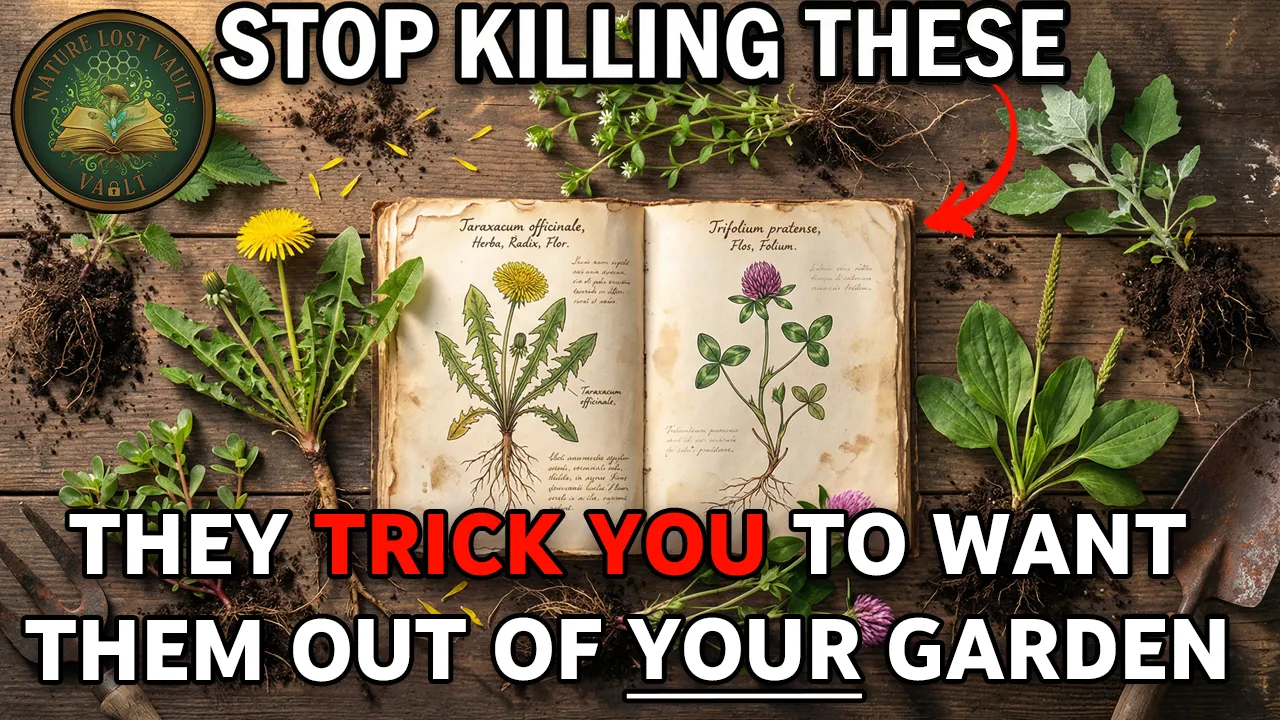
Table of Contents
- Amaranth: The Grain an Empire Burned
- Dandelion: The Mayflower's Cargo
- Red Clover: The $6 Billion Hormone Alternative
- Stinging Nettle: 30% Protein by Dry Weight
- Lamb's Quarters: Europe's Dominant Green for Millennia
- Plantain: White Man's Footprint
- Wood Sorrel and Ground Ivy: Filling the Gaps
- Purslane: The Biological Impossibility
- Chickweed: The February Harvest
- The $9 Billion Lie
Amaranth: The Grain an Empire Burned
In 1519, Hernan Cortes arrived in Mesoamerica and found a civilization of millions fed on corn, beans, chia, and one other grain the Aztecs called huauhtli. They also used it in religious ceremony, mixing it with honey to form sculptures of their gods. Spanish friars saw a rival Eucharist and condemned those rites as idolatry. A popular story says Cortes ordered the plant banned on pain of death, but no such decree has ever been found. What is documented is quieter: cultivation was discouraged, the tribute system that demanded the grain collapsed, and epidemics emptied the fields. Amaranth survived anyway, in highland plots and in the Mexican sweet called alegría.
A 100-gram serving delivers 14 grams of complete protein with all nine essential amino acids. Palmer amaranth has developed total resistance to glyphosate, outgrows soybeans, and snaps metal combine machinery. The grain the conquest pushed aside is still here.
Dandelion: The Mayflower's Cargo
The Puritans packed dandelion on the Mayflower. They deliberately introduced it to New England as a vital food and medicine crop. For 250 years, it was a kitchen staple. One cup of greens provides 535% of daily vitamin K, more beta-carotene than a carrot, and more calcium per calorie than milk. Then Scotts Company began marketing synthetic herbicides and told a generation that the ideal lawn was a uniform single-species carpet. They built a billion-dollar product line around the promise of eradicating dandelion. A pound of dandelion greens at a premium grocery store now costs $7. The exact same plant grows free in every unmowed lawn.
Red Clover: The $6 Billion Hormone Alternative
A 2005 randomized controlled trial enrolled 60 post-menopausal women. At 90 days, the treatment group's symptom scores had dropped by 78%. A 2023 trial found the same extract significantly improved lipid profiles over 3 to 6 months. The compounds responsible are isoflavones, specifically biochanin A and formononetin, which modulate estrogen receptors. The global hormone replacement therapy market is worth over $6 billion annually. Red clover grows in every lawn in the temperate world for free.
Stinging Nettle: 30% Protein by Dry Weight
Strip away the water content, and stinging nettle's leaf contains approximately 30% protein by dry weight, comparable to common beans and chicken. A single cup blanched provides nearly 100% of daily vitamin A alongside significant calcium, iron, potassium, and B vitamins. For 2,000 years, it was a staple vegetable across Northern Europe. During World War I, when the Allied blockade cut Germany off from cotton, the military used 2.7 million kg of nettle fiber for uniforms. The sting, which 60 seconds of blanching neutralizes, became the reason a 2,000-year food tradition was abandoned.
Lamb's Quarters: Europe's Dominant Green for Millennia
In 1840, a mummified man was discovered in a Danish bog. He had died in the 4th century BC. Scientists found lamb's quarters seeds among his final meal. Before spinach arrived from Asia in the 16th century, this plant was the continent's dominant leafy green. A 100-gram serving delivers 96% of daily vitamin C, 73% of daily vitamin A, 31% of daily calcium, and more protein per gram than spinach. A single plant produces up to 75,000 seeds in one season.
Plantain: White Man's Footprint
Native Americans called broadleaf plantain "white man's footprint" because it appeared wherever European settlers walked. It grew in compacted ground where nothing else survived. Dioscorides documented it in the first century. The Vikings used it for wound healing. It contains allantoin, which accelerates cell regeneration, and aucubin, a powerful anti-inflammatory compound. Crush a fresh leaf and press it to an insect sting. The mucilage draws the venom to the surface. This is verified chemistry available in your yard at no cost.
Wood Sorrel and Ground Ivy: Filling the Gaps
Wood sorrel colonizes partial shade and north-facing fence lines, producing vitamin C when the season is still cold. Children instinctively put it in their mouths because something deep in them recognizes the sharp citrusy taste as food. Ground ivy, called "ale hoof" for a thousand years, was the ingredient that made medieval ale drinkable before hops. The 1516 German Beer Purity Law replaced it because hops could be taxed and traded. Ground ivy, which grew free in every garden, could not be commodified. The rosmarinic acid is still there.
Purslane: The Biological Impossibility
In 2022, scientists at Yale described purslane as a biological impossibility. It runs two completely different photosynthesis systems simultaneously in the same cells. One optimized for rapid growth, one for extreme drought survival. No other plant on Earth does this. It contains up to 400 mg of omega-3 fatty acids per 100 grams of fresh leaf, more than any other land plant ever measured. The global herbicide market produces products specifically formulated to kill it. It is classified as the world's most common weed, growing in your driveway for free.
Chickweed: The February Harvest
The most dangerous window in any food disruption is late winter into early spring, the gap between the last stored food and the first real harvest. Chickweed fills that window precisely. It begins producing in February and March, weeks before the last frost date, dense tender mats of bright green when absolutely nothing else will grow. It delivers vitamins A, C, and B-complex alongside calcium, iron, magnesium, and zinc. One plant produces 800 seeds, which remain viable in soil for up to 10 years.
The $9 Billion Lie
Together, these ten plants provide complete vitamin C before anything else is growing, protein comparable to meat, omega-3 fatty acids that replace supplements, compounds documented in clinical trials for hormonal health, wound healing chemistry you can apply in seconds, and a banned sacred grain that survived 500 years of suppression. None of them require seed purchases, prepared soil, irrigation, fertilizer, or annual replanting.
The $9 billion lawn care industry was built on a story. The story says a uniform green monoculture means success and that anything growing without permission means failure. That story was written by people who needed to sell recurring annual products. The actual story is older. They keep coming back because they were not weeds to begin with. They were the foundation of the food system that existed before the one that replaced it.
Frequently Asked Questions
What weeds are more nutritious than vegetables?
Several common weeds outperform garden vegetables nutritionally. Lamb's quarters has 15x more calcium than spinach. Purslane has more omega-3 than salmon per leaf. Dandelion has more vitamin A than spinach. Chickweed has more vitamin C than oranges. All grow free without planting.
Are common garden weeds safe to eat?
Many common garden weeds are not only safe but highly nutritious. Plants like dandelion, lamb's quarters, purslane, chickweed, and plantain have been eaten for thousands of years. Always identify plants accurately before eating and avoid areas treated with herbicides or pesticides.
Why are nutritious plants classified as weeds?
Many edible plants were reclassified as weeds when the herbicide industry needed targets to sell products. The global herbicide market is worth over $74 billion annually. Plants that grow freely without planting threaten the model of purchased seeds and chemical inputs.
Explore More Survival Foods
Discover forgotten foods that sustained civilizations for millennia.
Browse Survival Foods Collection →