
This Free Kitchen Trick Replaces All Fertilizer Forever. Why Don't You Know About It?
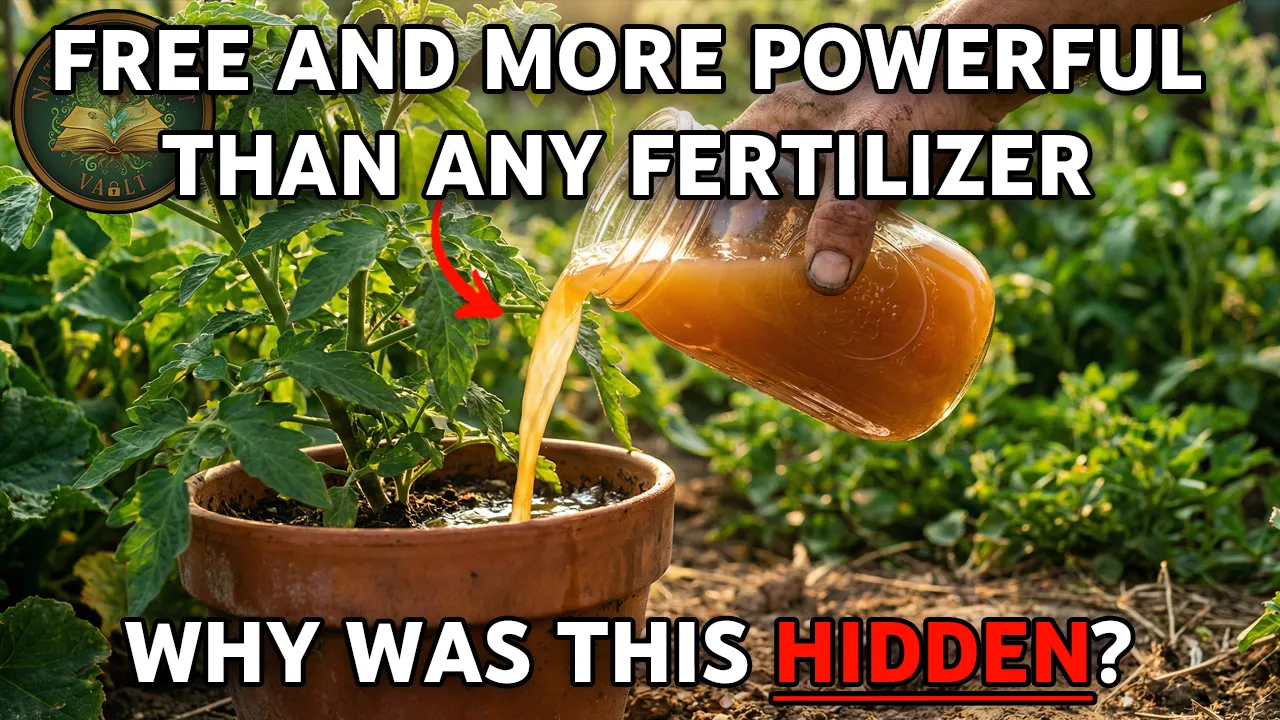
Table of Contents
The Korean Farmer Who Refused to Buy
In 1966, a farmer named Cho Han Kyu stood at the edge of a rice field in South Korea, watching his neighbors pour bags of synthetic fertilizer into the soil. Purchased on credit, and every year they needed more of it. The soil was getting weaker. The bags were getting more expensive. The farmers were getting poorer. Cho walked home and started writing down everything he remembered from the old ways.
What Cho remembered was a system Korean farmers had practiced for centuries before the chemical age arrived. A closed-loop method of feeding the earth using what the farm itself produced. Kitchen scraps, eggshells, vinegar brewed from rice, fermented plant material. He spent his life traveling to more than 30 countries, teaching over 18,000 students. He never patented the method. He never sold a product.
Why Calcium Is the Foundation of Plant Health
Without calcium, cell walls collapse. Fruits split before they ripen. Tomatoes rot from the bottom up before they ever turn red. Leaves curl, growth stalls, and no amount of nitrogen or phosphorus fixes it if the calcium is missing. The problem was never that calcium was unavailable. It was that the calcium was locked in a form the plant could not use.
The Chemistry That Unlocks the Mineral
Eggshells are 95% calcium carbonate, an extraordinary concentration of the exact nutrient your soil is likely lacking. But calcium carbonate is insoluble. Throw a handful of crushed shells into your garden and they will still be sitting there largely intact years later. When eggshells meet vinegar, the acetic acid pulls the locked calcium free from its carbonate prison and transforms it into calcium acetate, a water-soluble form the plant can absorb immediately through its leaves or roots. Carbon dioxide is released, the acid is neutralized, and what remains is one of the most bioavailable forms of plant calcium on Earth.
University of Hawaii Doubles Crop Productivity
When Cho's methods reached Hawaii in the early 2000s, researchers at the University of Hawaii put them to the test. Farms practicing Cho's methods doubled their crop productivity while cutting water use by 30%. They stopped buying pesticides. They stopped buying fertilizer.
The $14 Billion Industry It Replaces
The global synthetic calcium fertilizer industry generates billions of dollars every year. Industrial calcium nitrate is now a $14 billion market. Every bag sold replaces something a farmer once made at home from breakfast scraps. When American agricultural extension offices expanded after World War II, they were aligned with the chemical companies that made synthetic fertilizer profitable. They published guides on what to buy, not what to make. The idea that a mason jar and a dozen eggshells could solve a calcium deficiency was never going to appear in a USDA pamphlet. There was no profit in it.
The Step-by-Step Recipe
Save your eggshells. Rinse them with warm water and let them dry completely. Once you have a dozen, spread them in a dry pan over low heat for about 20 minutes. Do not scorch them. Let them cool, then crush them into small pieces. Place the crushed shells inside a clean glass jar. Pour in vinegar at a ratio of about 10 parts vinegar to 1 part shells. Any vinegar works: white, apple cider, or rice.
Within minutes, you will see bubbles rising. That is the calcium being released. Drape a breathable cloth over the mouth of the jar. Set it out of direct sunlight for 7 to 10 days. When the bubbling stops entirely, your calcium is ready. Strain out the remaining fragments. Dilute one tablespoon per gallon of water. Apply directly to soil or spray on leaves in the early morning. The calcium enters the plant in hours, not months.
What Happens in Your Garden
Tomatoes that used to crack or develop blossom-end rot stay firm. Squash fills out properly. Peppers hold their skin tight. The fruit stores longer because calcium-rich cell walls resist breakdown from the inside. Beneath the surface, calcium opens pathways for other nutrients to move and reduces soil compaction.
A few jars on a windowsill, a dozen eggs, a bottle of vinegar. This is what a $14 billion industry replaced. Not because the old method failed, because Cho's mason jar cannot be sold.
Explore More Survival Foods
Discover forgotten foods that sustained civilizations for millennia.
Browse Survival Foods Collection →