300X Sweeter, No Calories, Regulates Blood Sugar: Why Did The FDA Ban It?
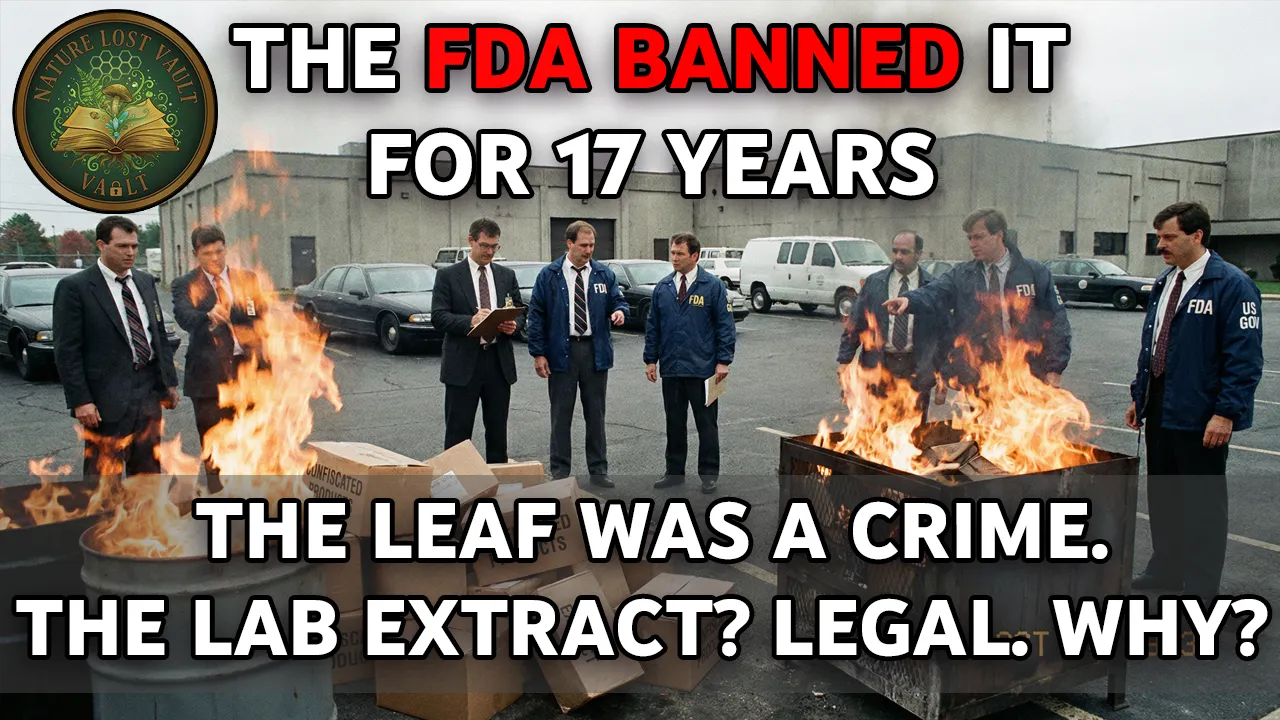
Table of Contents
- The Sweet Herb of the Amambay Mountains
- Bertoni's Discovery and the Science of Sweetness
- Japan's Stevia Revolution
- The Ban Begins: 1985–1991
- Aspartame: The Real Story
- The Cookbook Raid: When Knowledge Was a Crime
- The Corporate Reversal: 2008
- What They Approved vs. What They Banned
- The Guaraní and Biopiracy
- The Leaf That Remains
Recommended Product: Stevia Plant & Supplements
View Stevia OptionsAffiliate link - supports our channel
The Sweet Herb of the Amambay Mountains
There is a leaf three hundred times sweeter than sugar. It grows wild in the mountains of Paraguay. For a thousand years, indigenous healers used it to regulate blood sugar before diabetes even had a name.
Then, in 1991, federal marshals stormed warehouses across America. They confiscated hundreds of tons. They burned cookbooks. They seized shipments at the border.
The crime? Selling a plant that had been safely consumed in Japan, where it captured forty-one percent of the sweetener market.
The FDA called it unsafe while approving chemicals linked to brain tumors and seizures. For seventeen years, the sweetest natural substance on Earth was treated like a controlled substance. Then, in 2008, everything changed — but only after Coca-Cola and Cargill found a way to own it.
The archive opens along the border of Paraguay and Brazil, in the Amambay Mountains. The Guaraní people call it ka'a he'ê — the sweet herb. A shrub with leaves so potent that chewing a fragment no larger than a fingernail keeps the mouth sweet for an hour.
They used it to sweeten yerba mate, the bitter tea passed hand to hand in gourds. They brewed it for those whose blood ran too sweet, centuries before doctors gave diabetes a name. The Guaraní never farmed it. It grew wild on rocky slopes, in soil too poor for corn, spreading on its own terms.
Bertoni's Discovery and the Science of Sweetness
In 1887, a Swiss botanist named Moisés Santiago Bertoni arrived in Paraguay. He heard rumors from indigenous guides of this mythical plant. He searched for years. The Guaraní kept it secret.
Finally, in 1903, he received a live specimen. Bertoni wrote with the precision of a scientist who knew he had found something dangerous:
"A few small leaves are sufficient to sweeten a strong cup of coffee. Will sugar always be more advantageous? We cannot suppose this."
He named it Stevia rebaudiana. And he asked the question that would echo for a century: why use sugar when nature provided a calorie-free alternative?
The Chemistry of Sweetness Without Calories
In 1931, French chemists isolated the active compounds: stevioside and rebaudioside. They found the human body cannot metabolize them. They pass through unchanged. Sweetness without the spike — no insulin response, no caloric load.
By every measure, it was perfect. But perfection has no place in industrial food systems. Sugar is profitable. Sugar plantations span continents. Stevia was a wild weed anyone could grow. It couldn't be owned. So for decades, it remained a curiosity.
Japan's Stevia Revolution
In 1970, Japan banned artificial sweeteners like saccharin due to cancer risks. Desperate for a natural alternative, Japanese firms imported stevia seeds from Paraguay.
By 1988, stevia held forty-one percent of Japan's sweetener market. Soft drinks, pickles, ice cream. Coca-Cola Japan used it. Millions consumed it daily for decades. No adverse effects. No hospitalizations. No cancer.
The evidence was overwhelming. A plant safe for a thousand years of traditional use, validated by two decades of mass consumption across an entire nation, with zero recorded harm. Meanwhile in the United States, stevia remained largely unknown until small tea companies like Celestial Seasonings began importing it in the early 1980s. It was niche. But it was growing. And someone noticed.
The Ban Begins: 1985–1991
In 1985, the USDA visited Sunrider International and ordered their entire stevia stock destroyed. No explanation given.
That same year, Monsanto purchased the patent for aspartame, the chemical in NutraSweet. Aspartame was a billion-dollar industry. But it was plagued by complaints. By 1998, it would account for eighty percent of all FDA food additive complaints. And now, a natural competitor was appearing on shelves.
In 1987, FDA inspectors began raiding herb companies. They called stevia an "unapproved food additive." The Herb Research Foundation filed a Freedom of Information Act request to find out who had complained. The company's name came back redacted. Masked.
But the timeline tells the story.
By May 1991, the FDA issued an import alert. Stevia was banned. Hundreds of tons in warehouses became contraband overnight. Federal marshals confiscated inventory. Tea companies lost entire product lines.
Aspartame: The Real Story
Compare the FDA's treatment of stevia to its treatment of aspartame.
Aspartame was initially rejected by an FDA Board of Inquiry due to brain tumor evidence in rats. It was approved only after intense political pressure. Donald Rumsfeld, CEO of aspartame's manufacturer and former White House Chief of Staff, used his political connections to push it through.
The FDA commissioner who approved it, Arthur Hull Hayes, resigned under ethics investigations and immediately took a consulting position with the manufacturer at one thousand dollars per day. Seven FDA officials involved in fast-tracking aspartame later took high-paying jobs in the artificial sweetener industry.
Meanwhile, the leaf used safely for a thousand years — backed by 180 studies from Japan and Brazil, with World Health Organization safety levels already established — remained illegal. The FDA claimed "inadequate toxicological data" while ignoring the entire body of existing evidence.
The Cookbook Raid: When Knowledge Was a Crime
In 1999, federal marshals arrived at Stevita Company in Texas. They weren't just looking for the plant. They were looking for a cookbook.
The Stevia Cookbook by James Kirkland. Because it described using stevia as a sweetener, the FDA claimed the book itself constituted illegal product labeling. Marshals oversaw the destruction of the books.
The crime was knowledge. Not consumption. Not sale of the plant. The crime was a printed recipe that showed how to use it.
The ban held for seventeen years. Herb companies, tea manufacturers, and small supplement producers operated under the constant threat of raids while the artificial sweetener industry — linked to brain tumors, seizures, and eighty percent of FDA food additive complaints — operated freely.
The Corporate Reversal: 2008
In 2007, Coca-Cola and Cargill announced plans to develop a stevia sweetener. PepsiCo partnered with an aspartame subsidiary to launch PureVia. The same corporations that had benefited from stevia's suppression now saw an opportunity.
In December 2008, the FDA issued no-objection letters. Truvia and PureVia were approved.
But the FDA stated explicitly: "These products are not stevia, but highly purified extracts."
Whole leaf? Still banned. Crude extracts? Still banned. After seventeen years of prohibition, the FDA lifted the ban — but only for the version that corporations had managed to patent and control.
What They Approved vs. What They Banned
What the FDA approved was rebaudioside A — a single molecule isolated through a patented industrial process.
According to patent filings, this process requires forty steps using acetone, methanol, ethanol, and isopropanol. Industrial chemistry to extract one compound from a leaf that the Guaraní had simply chewed.
What's Actually in Truvia
- Less than 1% stevia (rebaudioside A only)
- 99% erythritol — a sugar alcohol fermented from genetically modified corn
- Marketed as "nature's calorie-free sweetener"
In 2014, Cargill paid six million dollars to settle lawsuits challenging their "natural" claim. They were forced to add an asterisk.
The same plant banned as unsafe is now approved — but only after being chemically processed beyond recognition. The same corporations that lobbied for the ban now profit from the patented extract. What could not be owned was banned. What could be owned was approved.
The Guaraní and Biopiracy
Today, the stevia market is worth $765 million annually. Consumers buy it thinking they're choosing nature over chemicals. Most don't know the FDA still bans the whole leaf. Most don't know their "natural sweetener" requires industrial solvents to produce.
In 2016, Guaraní leaders formally accused corporations of biopiracy. They argued that traditional knowledge — accumulated over a thousand years of observation and use — was stolen without consent or compensation.
The corporations replied that stevia is no longer indigenous. It's global now, grown mostly in China, divorced from its origins. The Guaraní people see nothing from the $765 million market built on their ancestors' discovery.
The pattern repeats. Amaranth was banned by conquistadors. Mesquite was cleared by ranchers. Tepary beans were erased by machines. What threatens the system is not failure. It is success without chains. Crops that feed without fertilizer. Medicine that heals without prescriptions. Sweeteners that satisfy without side effects. Anything that bypasses the middleman is systematically erased — not through destruction, but through regulation.
The Leaf That Remains
Today, stevia is everywhere. But it's a ghost. A chemical shadow of what the Guaraní knew.
The original leaf — the one chewed by Guaraní healers, the one sweetening mate in clay gourds, the one growing wild in the Amambay Mountains — remains forbidden to sell as a sweetener in the United States.
The knowledge waits in seeds stored in jars. In backyard gardens where people still grow the whole leaf and steep it in tea, refusing to buy the powder in the packet. The leaf is legal to grow. Legal to possess. Legal to consume in your own home.
The vault remains open. The wisdom persists. But it requires choosing the leaf over the laboratory. Choosing knowledge over convenience. Choosing to remember what they tried to erase.
Explore More Medicinal Plants
Discover ancient healing plants backed by centuries of traditional use and modern science.
Browse Medicinal Plants Collection →