Survived the Atomic Bomb, Planted in Every City, Buried in Every Pharmacy: The Lost Memory Tree
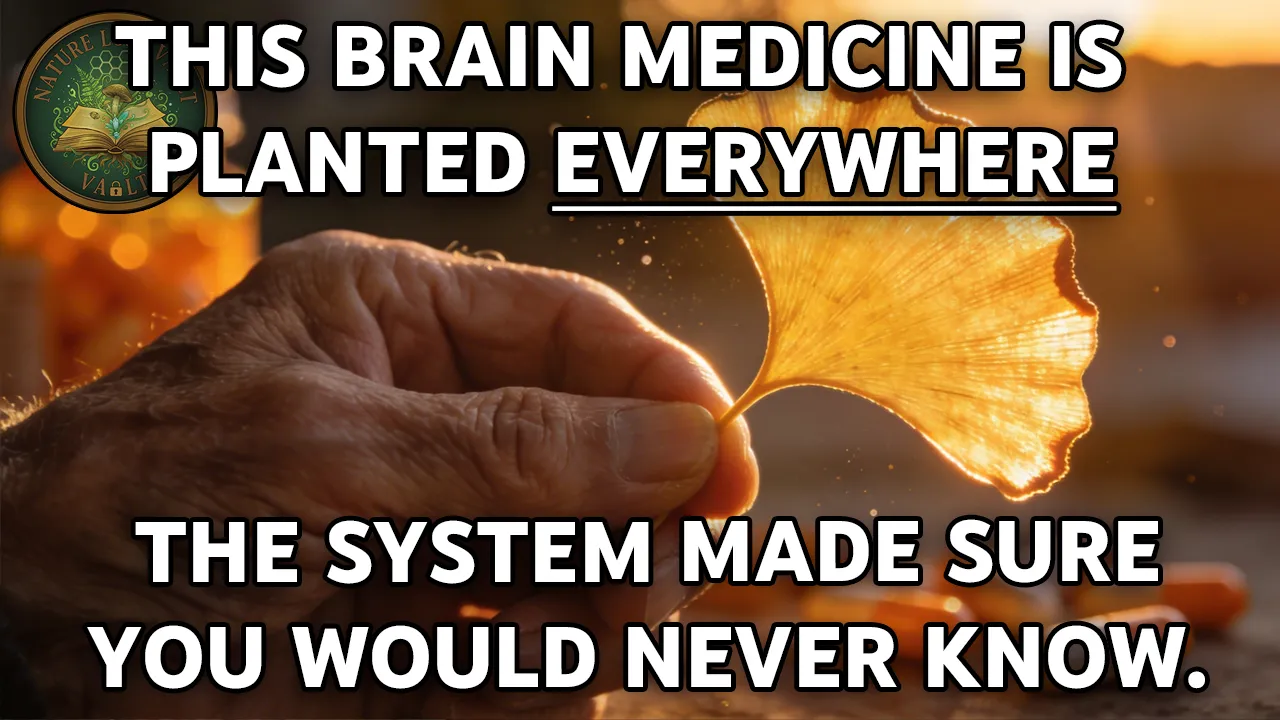
Table of Contents
Recommended Products:
Ginkgo Biloba Tree Tree Seeds Dried Leaves
Affiliate links - supports our channel
What is Ginkgo Biloba?
On August 6, 1945, the atomic bomb detonated 600 meters above Hiroshima. Everything within two kilometers of ground zero vaporized. Buildings collapsed. Rivers boiled. The heat at the hypocenter reached temperatures roughly 40 times hotter than the surface of the sun. When the dust settled, nothing moved. Nothing breathed. Nothing lived. Except six trees. Six Ginkgo biloba trees, standing within sight of ground zero, their trunks charred black and their branches stripped bare. Scientists said they were dead. The next spring, something green pushed through the scorched bark. New leaves. New life. The Japanese gave the survivors a name: Hibakujumoku, the survivor trees.
What survived Hiroshima had already survived almost everything else. Ginkgo biloba is the last living member of family Ginkgoaceae and the entire order Ginkgoales: a 200-million-year-old evolutionary lineage with fossils essentially identical to the living tree on every continent except Antarctica. It outlived the dinosaurs. It survived five mass extinctions. Ice ages that buried continents. It is a botanical orphan: every relative it has ever had is extinct, and the species itself was nearly lost in the wild before being preserved for two millennia in Chinese temple and monastery gardens.
Traditional Chinese Medicine has used it for at least 2,000 years. The earliest Chinese pharmacopeia, the Shen Nong Ben Cao Jing, recorded the seeds, leaves, and roots as distinct medicines. In 1509, the Ming-Dynasty physician Liu Wentai formalized the leaf in the imperial materia medica for lung disease, heart conditions, and memory that faded with age. In 1964, Dr. Willmar Schwabe Pharmaceuticals in Germany standardized the leaf extract EGb 761 (24% flavonoid glycosides, 6% terpene lactones, <5 ppm ginkgolic acids), and over the following four decades that extract was tested head-to-head against donepezil (Aricept), the most widely prescribed Alzheimer's drug. The 2006 Italian, 2009 triple-arm, and 2018 long-term German trials all reported the same finding: EGb 761 matched donepezil for mild-to-moderate dementia, with fewer adverse events. The European Medicines Agency licensed standardized ginkgo extract as medicine for mild dementia in 2014. The US Food and Drug Administration still classifies it as a dietary supplement, which means doctors cannot prescribe it and insurance will not cover it. The tree grows in nearly every American city, lining streets and parks. Most Americans have never been told it is the same medicine that costs $500 a month behind the pharmacy counter.
| Metric | Value |
|---|---|
| Scientific name | Ginkgo biloba |
| Family | Ginkgoaceae (monotypic, sole surviving species) |
| Common names | Ginkgo, maidenhair tree, ichō (Japanese), Bái Guǒ (Chinese, "white nut" - the seed) |
| Lineage age | ~200 million years (Permian/Triassic origin) |
| Native range | China; cultivated worldwide |
| Mature size | 65-115 feet tall (20-35 m) |
| Lifespan | 1,000+ years (oldest documented ~2,500 years) |
| Reproduction | Dioecious (separate male and female trees) |
| Hibakujumoku | 6 ginkgos survived the Hiroshima A-bomb (6 Aug 1945) |
| Earliest medicinal record | Shen Nong Ben Cao Jing (~2,000 years ago) |
| Imperial materia medica | Liu Wentai, 1509 (Ming Dynasty) |
| Active leaf compounds | Flavonoid glycosides, ginkgolides A/B/C, bilobalide |
| EGb 761 specification | 24% flavonoid glycosides, 6% terpene lactones, <5 ppm ginkgolic acids |
| Developed by | Dr. Willmar Schwabe Pharmaceuticals, 1964 (Germany) |
| Donepezil head-to-head trials | 2006 Italian, 2009 triple-arm, 2018 German - matched outcomes |
| EU regulatory status | EMA-licensed as medicine for mild dementia (2014) |
| US regulatory status | FDA-classified dietary supplement |
| Aricept (brand) cost | $500-660/month ($6,000-7,900/year) |
| Ginkgo extract cost | $10-30/month retail (or free, harvested) |
| 1999 radiation study (Mutation Research) | Up to 83% reduction in chromosomal damage at higher EGb 761 dose |
Hiroshima, 200 Million Years & the 1509 Imperial Materia Medica
August 6, 1945: The Hibakujumoku
August 6, 1945. Hiroshima, Japan. The atomic bomb detonates six hundred meters above the city. Everything within two kilometers vaporizes. Buildings collapse. Rivers boil. The heat reaches temperatures forty times hotter than the surface of the sun. When the dust settles, nothing moves. Nothing breathes. Nothing lives. Except six trees. Six ginkgos, standing within sight of ground zero, trunks charred black, branches stripped bare, leaves burned to ash. Scientists said they were dead. Radiation levels should have killed every cell. But in the spring of 1946, something green pushed through the scorched bark. New leaves. New life. The Japanese gave them a name: Hibakujumoku. Survivor trees. And they asked a question the world still has not answered: what does this tree know about survival?
200 Million Years of Refusing to Die
The ginkgo did not just survive Hiroshima. It survived everything. Roughly 200 million years of fossil record. Fossils essentially identical to living trees have been found on every continent except Antarctica. It outlived the dinosaurs. It survived five mass extinctions. Ice ages that buried continents. Asteroids that turned day into decades of night. When every other species in its family died - and there were once many - the ginkgo adapted. Today it is a botanical orphan: the sole living representative of an entire order of plants, preserved into the modern era almost entirely because Chinese monks planted it in temple gardens for over two millennia.
The Shen Nong Ben Cao Jing and Liu Wentai (1509)
The Chinese knew what they had. The earliest Chinese pharmacopeia, the Shen Nong Ben Cao Jing, recorded ginkgo two thousand years ago. Not as decoration. As medicine. The seeds, the leaves, and the roots - all three parts healing different systems. The Ming-Dynasty physician Liu Wentai formalized the leaf in the imperial materia medica in 1509: for lung disease, for heart conditions, for memory that faded with age. Emperors ate the seeds. Temples planted the trees. By the 1600s, when European explorers first encountered ginkgo in Japanese temple gardens, they found specimens already a thousand years old. Giants that had fed generations.
The Science: EGb 761, Aricept Trials & Radiation Protection
1964: The EGb 761 Standardized Extract
In 1964, Dr. Willmar Schwabe Pharmaceuticals in Germany perfected what they called EGb 761: a standardized ginkgo leaf extract specified to 24% flavonoid glycosides, 6% terpene lactones (ginkgolides A, B, C, and bilobalide), and less than 5 parts per million ginkgolic acids (the alkylphenols responsible for allergic skin reactions). Precise. Repeatable. Patentable. EGb 761 is the formulation behind Tanakan in France, Tebonin in Germany, and Rokan in Japan, and it is the extract used in essentially every controlled trial cited in this article.
The terpene lactones are the unusual part. Ginkgolides A, B, and C are diterpene trilactones found nowhere else in nature, and bilobalide is a sesquiterpene also unique to Ginkgo biloba. Ginkgolide B is a potent inhibitor of platelet-activating factor (PAF), which explains the documented effect on cerebral microcirculation. The flavonoid glycoside fraction provides antioxidant activity, and bilobalide has been shown in animal models to protect neurons against ischemic and hypoxic damage. Together they form a multi-compound profile that is genuinely difficult to reduce to a single mechanism, which is part of why head-to-head trials against single-molecule pharmaceuticals have been able to reach a draw.
2006: Italian Direct Comparison Against Donepezil
Ginkgo biloba extract versus donepezil, the blockbuster Alzheimer's drug sold as Aricept. Twenty-four weeks. Mild-to-moderate dementia patients. Double-blind study.
"No evidence of relevant differences in efficacy between EGb 761 and donepezil in the treatment of mild to moderate Alzheimer's dementia."
They worked the same. But ginkgo had fewer side effects.
2009: Triple Comparison (Ginkgo, Donepezil, Combined)
Ninety-six patients with Alzheimer's and neuropsychiatric symptoms. Ginkgo, donepezil, or both combined. Twenty-two weeks. The result: similar effectiveness across all three groups. Cognitive tests, behavior scores, daily living activities - no significant difference.
2018: Long-Term German Study Over Age 80
One hundred and eighty-nine patients over eighty years old. Dementia diagnosis. Twelve months of treatment. Ginkgo versus donepezil. The conclusion: similar treatment outcomes. Cognitive decline measured the same. But adverse events were higher in the donepezil group. Ginkgo was safer.
The Price Spread
- Aricept (brand donepezil): $500-660 per month - $6,000-7,900 per year
- Donepezil (generic): $170-196 per month - ~$2,000 per year
- Ginkgo biloba extract: $10-30 per month retail - or free, if you know which tree
Radiation Protection: 1999 French Study
Scientists tested ginkgo on rats exposed to 4.5 Gray of radiation - enough to cause severe chromosomal damage. They gave some rats EGb 761 before and after exposure. The results, published in Mutation Research: ginkgo reduced radiation-induced chromosome damage by 83% at the higher dose. Clastogenic factors - the plasma compounds that cause genetic breaks long after radiation exposure - dropped from severe to nearly undetectable.
Chernobyl Recovery Workers
They tested it on Chernobyl recovery workers: the men who went into the reactor zone in 1986 and whose blood still carried clastogenic activity years later. The dose: 40 mg of ginkgo extract, three times daily, for two months. Chromosomal damage dropped significantly. The extract protected their cells from ongoing radiation effects.
2006 Turkish & 2009 Korean Studies
A 2006 Turkish study irradiated rats with 800 cGy of whole-body exposure - lethal levels. Half the rats received ginkgo extract before and after. The ginkgo group showed dramatically reduced oxidative damage in lungs, liver, kidneys, and intestines, with glutathione levels preserved and free-radical markers suppressed. A 2009 Korean lymphocyte study exposed human cells to radiation: 30% of untreated cells underwent programmed cell death; only 5% of ginkgo-treated cells did. The extract neutralized the radiation-generated free radicals before the apoptosis signal triggered. This research exists. It is published. Radiation protection from a tree that grows on sidewalks. And yet - how many people facing radiation therapy know about it? How many nuclear workers carry ginkgo extract?
Why It Stays Buried: Female Trees, Corporate Capture & the FDA Trap
Round One: Urban Planning Removes the Females
Here is where the story fractures. The tree Chinese medicine used for millennia and the tree planted in every American city are not the same. Ginkgo trees are dioecious - either male or female. Males produce pollen. Females produce seeds enclosed in fleshy outer shells. And those shells smell. Butyric acid - the compound in rancid butter, in vomit, in decomposition. When female ginkgo seeds drop in autumn, sidewalks become unbearable. People complained. Cities listened. By the 1980s, urban foresters made a decision: plant only males. Cultivars with names like Autumn Gold, Lakeview, Princeton Sentry, Magyar. Guaranteed sterile. Guaranteed clean. Guaranteed no smell. Seoul, South Korea deployed 440 workers every autumn to hand-pick seeds before they fell - cost: $13,000 a year. Other cities took the simpler route: ban females entirely. Iowa City chopped them down. Easton, Pennsylvania banned new plantings. But they eliminated something else along with the smell: the medicine. In Traditional Chinese Medicine, the seeds were the primary medicine - used for 2,000 years before anyone touched the leaves. Urban planning systematically erased half the tree's medicinal chemistry in the name of aesthetics. They bred the cure out to avoid the smell. Most people alive in North America today have never seen a female ginkgo.
Round Two: Schwabe Captures the Free Tree
Once Schwabe Pharmaceuticals had EGb 761 - the patent, the formula, the trials - they owned the conversation. By the 1990s, EGb 761 was generating $500 million in annual sales as Tanakan, Tebonin, and Rokan. Traditional Chinese Medicine had used whole leaves: boiled them in water, dried them into powder, simple preparations that preserved hundreds of compounds working together. The pharmacologists called that "unstandardized." They isolated the compounds they understood. They threw away the compounds they did not. They created extraction processes that cost tens of millions of dollars to replicate. Only corporations could afford the trials. Only corporations could prove efficacy under modern rules. Traditional preparation became "unscientific." Herbalists became "anecdotal." A tree that had grown freely in every climate now required pharmaceutical processing to be considered legitimate medicine.
Round Three: The FDA Supplement Trap
Here is the trap. The FDA classified ginkgo as a dietary supplement, not a drug. Doctors cannot prescribe it. Insurance will not cover it. It does not matter that European studies showed efficacy. It does not matter that the European Medicines Agency licensed standardized ginkgo extract as medicine for mild dementia in 2014. In the United States, it is a supplement. Supplements do not get prescribed. They do not get covered. They sit on pharmacy shelves next to multivitamins while patients pay $500 per month for the pharmaceutical version of the same cognitive support. The irony is surgical. Ginkgo grows in every city park. On every suburban street. Outside hospitals, outside nursing homes, outside the pharmacies selling Aricept. The medicine is planted everywhere. But the system made sure most Americans would never know.
Round Four: The Radiation Research Stays in Journals
The 1999 French chromosomal-damage study, the Chernobyl-workers data, the 2006 Turkish whole-body study, the 2009 Korean lymphocyte work - this research is published, peer-reviewed, and reproducible. It is also not promoted, not taught in oncology rotations, not handed to patients walking into radiation therapy. Cheap, accessible radiation protection does not generate revenue for the industries that profit from expensive solutions. The research stayed in journals. The tree stayed ornamental. The knowledge stayed buried.
Four Suppressions, One Tree
None of these industries coordinated. They did not need to. Each acted in its own interest. Urban planners chose males to avoid complaints. Pharmaceutical companies standardized to patent. The FDA labeled supplements to protect drug exclusivity. Cold-war-era radiation researchers had no incentive to popularize a free protectant. Each made the rational decision to maximize profit or minimize friction. The cumulative effect was total: a tree with 200 million years of survival, 2,000 years of medical use, and modern clinical validation became invisible. Planted everywhere. Known by no one. Today an estimated 6 million Americans live with Alzheimer's disease. By 2050 that number will hit 14 million. The pharmaceutical solution costs $6,000 to $8,000 per year for brand-name drugs, $2,000 for generics. Those drugs slow decline. They do not stop it. They do not reverse it. They buy time. Meanwhile the ginkgo leaves continue to fall every November, a golden carpet that lasts two weeks before the city sweeps them away.
How to Identify, Forage & Use Ginkgo
Identification
Ginkgo is the easiest medicinal tree in the world to identify - it does not look like anything else. The leaves are unmistakable: bright green, fan-shaped, 2 to 4 inches across, with parallel veins fanning out from the petiole (no central midrib), and a distinct central notch that often divides the fan into two lobes (the biloba in the species name). They are arranged in small clusters along short woody spur shoots on older branches and singly on new growth. In autumn, the entire tree turns a uniform brilliant yellow-gold, then drops its leaves over a roughly two-week window - one of the most striking colour displays in any urban environment. The bark on mature trees is grey-brown, deeply ridged, almost cork-like. Mature size is 65 to 115 feet (20 to 35 m) tall. Female trees in autumn produce yellow-orange seeds about the size of a small plum, with a fleshy outer coat that smells strongly of rancid butter when ripe - this is how you tell male from female. Ginkgo has no close lookalikes in any North American or European urban landscape.
Foraging the Leaves
The best window is early to mid autumn, when the leaves are still green or just beginning to turn yellow at the edges. The flavonoid and terpene-lactone content is highest before the leaves are fully yellow and dropping. Take only the leaves you need from any one tree - removing 10 to 20 percent of the lower canopy does not harm a mature ginkgo. Critical sourcing rule: never harvest from trees you do not personally know to be untreated. Avoid trees next to busy roads, parking lots, dog-walking paths, and anywhere municipal landscape spraying happens. The same chemical-tolerance that makes ginkgo a popular street tree means it absorbs and stores the residues of whatever has been sprayed on or near it. The cleanest sources are private gardens, untreated park sections, and arboretums.
Alcohol Tincture (the Most Effective Preparation)
Most of the ginkgolides and bilobalide are poorly water-soluble, so a tea pulls relatively little of the active fraction. The traditional preparation that matches modern extract chemistry is an alcohol tincture. Chop a generous handful of fresh green ginkgo leaves coarsely, pack a clean glass jar half-full, and cover completely with 40 percent vodka or higher. Seal, label, and steep in a dark cupboard for 4 to 6 weeks, shaking every few days. Strain through cheesecloth into a dropper bottle. Typical adult dose: 1 to 2 mL (about half a dropper) one to three times a day, diluted in a small glass of water. Effect on circulation and mental clarity typically takes 4 to 6 weeks of daily use to become noticeable; this is consistent with the time course of EGb 761 in the clinical trials.
Tea (Lighter, but Useful)
A simple ginkgo tea is still worth making for the flavonoid fraction. Use 1 to 2 teaspoons of dried crumbled leaves per cup of water, simmer (not boil) for 8 to 10 minutes, strain. The flavor is mild and slightly nutty. The terpene lactones will be largely absent, but the flavonoid antioxidants are well extracted.
About the Seeds (Bai Guo)
The seeds of female trees - known as Bái Guǒ or "white nut" - have been a food and medicine in East Asia for millennia. Important: the fleshy outer coat must be removed (wear gloves; it contains the same compounds that cause poison-ivy reactions in sensitive people), and the inner kernel must be lightly roasted or boiled before eating. Raw seeds, or more than a small handful of cooked seeds in a day, are toxic. They contain 4'-O-methylpyridoxine (ginkgotoxin), a vitamin B6 antagonist, and seizures have been documented at high intake, particularly in children. Adult traditional culinary dose is around 5 to 10 cooked seeds per day, never more. People taking anti-epileptic medication should avoid ginkgo seeds entirely.
Safety & Drug Interactions
Standardized ginkgo leaf extract (with ginkgolic acids reduced to under 5 ppm) is generally well tolerated. Mild side effects include headache, dizziness, and gastrointestinal upset. The two important warnings: (1) Ginkgolide B has anti-platelet activity, so ginkgo can increase bleeding risk for people on warfarin, apixaban, aspirin, or any other anticoagulant, and should be stopped at least 2 weeks before any surgery. (2) Ginkgo seeds, raw or in excess, can trigger seizures (see above). Pregnant or breastfeeding women should avoid medicinal-strength preparations. People taking antidepressants (SSRIs/MAOIs), antiepileptics, or chemotherapy should consult a clinician before regular use. The leaf extract, harvested and prepared correctly, has a long-established safety record across millions of European prescriptions over the past 60 years.
Frequently Asked Questions
What is Ginkgo biloba and what is it used for?
Ginkgo biloba is a dioecious deciduous tree, the only surviving species in the family Ginkgoaceae, with a fossil record stretching back roughly 200 million years to the Permian and Triassic periods - it is one of the world's oldest living plant lineages. The fan-shaped, deeply notched leaves and the yellow autumn color make it instantly recognizable, and it has been planted as a street and temple tree across China, Japan, Korea, Europe, and North America. Traditional Chinese Medicine has used the seeds, leaves, and roots for at least 2,000 years for lung disease, heart conditions, and age-related cognitive decline. The standardized leaf extract EGb 761, developed in 1964 by Dr. Willmar Schwabe Pharmaceuticals, is licensed in Europe under names like Tanakan, Tebonin, and Rokan for mild dementia, peripheral vascular disease, tinnitus, and vertigo.
Does Ginkgo biloba actually work for memory and dementia?
Multiple controlled trials of the standardized EGb 761 extract have shown effects comparable to donepezil (Aricept), the most widely prescribed Alzheimer's drug. A 2006 Italian double-blind 24-week trial in mild-to-moderate Alzheimer's dementia found no relevant difference between EGb 761 and donepezil, with fewer adverse events on ginkgo. A 2009 triple-arm trial of ginkgo, donepezil, and combination therapy reported similar effectiveness across all three groups. A 2018 German 12-month trial in patients over 80 reached the same conclusion: similar cognitive outcomes, with adverse events higher in the donepezil group. The European Medicines Agency licensed standardized ginkgo extract as medicine for mild dementia in 2014. Effects are most documented for mild-to-moderate dementia and age-related cognitive decline rather than for prevention in cognitively healthy adults.
Why are the female ginkgo trees disappearing from city streets?
Ginkgo is dioecious: separate male and female trees. The female trees produce fleshy seed coats containing butyric acid - the same fatty acid that gives rancid butter, vomit, and decomposition their smell. When the seeds drop in autumn, sidewalks under a female tree become unbearable. Starting in the 1980s, urban foresters began planting only sterile male cultivars (Autumn Gold, Lakeview, Princeton Sentry, Magyar). Seoul, South Korea deploys roughly 440 workers every autumn to hand-pick seeds before they fall, at a cost of about $13,000 a year. Iowa City and Easton, Pennsylvania chose the simpler route and banned females outright. The aesthetic problem is real - but Traditional Chinese Medicine used the SEEDS as a primary medicine for 2,000 years before anyone tested the leaves. Urban planning eliminated half of the tree's documented medicinal chemistry to avoid the smell.
Can I make ginkgo medicine from the trees on my street?
The fan-shaped leaves are easy to identify, abundant in autumn, and contain the same flavonoids and terpene lactones (ginkgolides A, B, C and bilobalide) that are concentrated in commercial EGb 761 extract - just at lower density and unstandardized. The traditional preparation is a tincture: pack a clean jar half-full of fresh chopped leaves harvested in early autumn (when the leaves are still green or just turning yellow), cover completely with 40 percent vodka or higher, seal, steep 4 to 6 weeks in a dark cupboard, then strain. Typical adult dose is 1 to 2 mL one to three times a day. A tea is possible but less effective because the terpene lactones are poorly water-soluble. Critical sourcing rule: harvest only from trees you know have NOT been chemically sprayed, away from busy roads, parking lots, and dog-walking paths. The seeds (with their butyric-acid pulp removed and the kernel briefly cooked) are also traditionally edible in small amounts, but raw or large quantities are toxic - see safety.
Is Ginkgo biloba safe? Any drug interactions or warnings?
Standardized ginkgo leaf extract (with ginkgolic acids reduced to under 5 ppm) is generally well tolerated; commonly reported side effects are mild headache, dizziness, and gastrointestinal upset. The two important warnings: (1) Ginkgo has mild anti-platelet effects through the ginkgolide B fraction, so it can increase bleeding risk for people on warfarin, apixaban, aspirin, or any other anticoagulant, and should be stopped at least 2 weeks before any surgery. (2) Ginkgo seeds contain 4'-O-methylpyridoxine (ginkgotoxin), which is a vitamin B6 antagonist; raw seeds, or more than a small handful of cooked seeds, can trigger seizures, particularly in children. Pregnant women should avoid medicinal-strength preparations. People taking anti-epileptic medication should avoid the seeds entirely. The leaf extract, harvested and prepared correctly, has a long-established safety record across millions of European prescriptions.
Explore More Medicinal Plants
Discover ancient healing plants backed by centuries of traditional use and modern science.
Browse Medicinal Plants Collection →