
Grows in Frozen Dirt. Tastes Like Fresh Oysters. Why Did It Disappear?
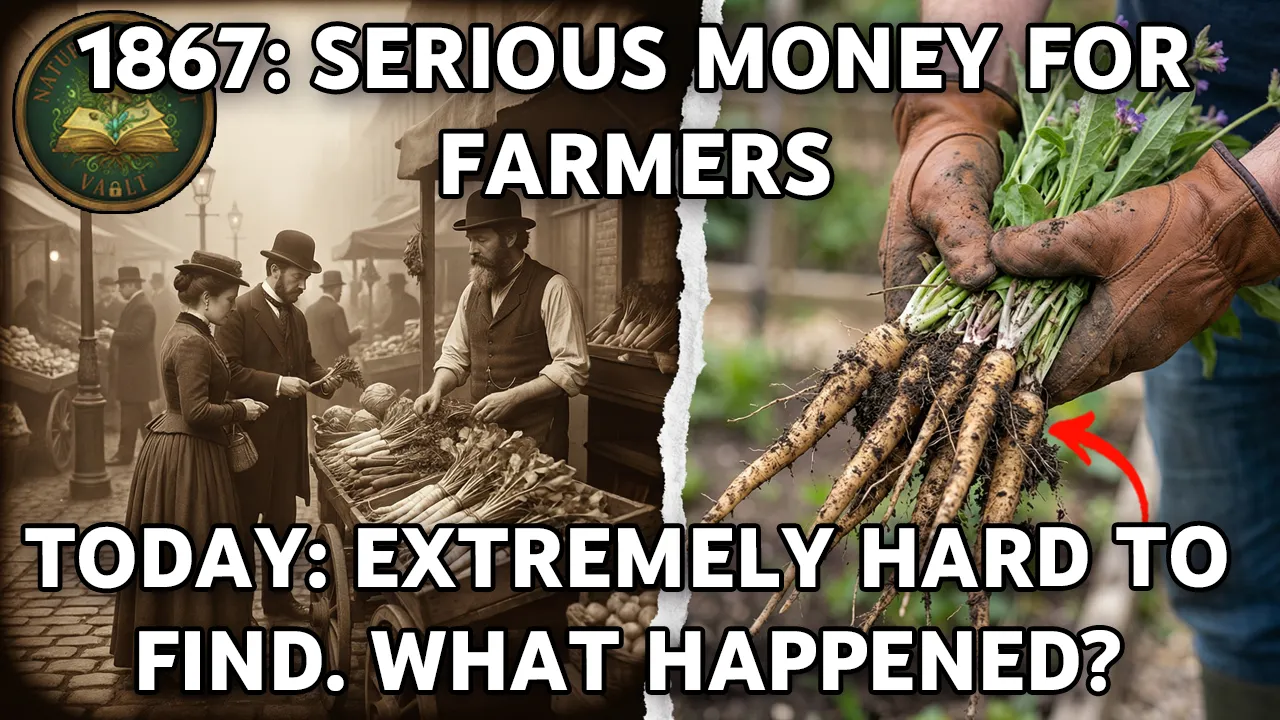
Table of Contents
- Mrs. Beeton's Essential Root
- From the Mediterranean to Monticello
- A Nutritional Profile That Rivals Bananas
- A Nightmare to Harvest
- The Appliance That Killed It
- The Oyster Flavor No Other Vegetable Can Match
- Growing Salsify in Your Garden
- Reclaiming What Was Lost
- FAQ
Mrs. Beeton's Essential Root
In 1861, every proper Victorian household owned one indispensable book: Isabella Beeton's Book of Household Management. Recipe number 1149, "To Dress Salsify," is devoted to a white root that breaks if you breathe on it wrong, oozes sticky latex when cut, and turns brown within minutes of harvest. This is salsify. Beeton's note explains its value in two words: "Seasonable in winter." For 300 years it was worth every bit of trouble.
During Britain's long dark winters, when fresh produce vanished for months, salsify delivered something remarkable: the taste of the ocean from a root you could dig from frozen ground. The English called it the vegetable oyster, or oyster plant. It fed kings and peasants alike. Today, few supermarkets stock it.
From the Mediterranean to Monticello
The plant comes from the Mediterranean, where people gathered wild salsify for centuries. Its genus name, Tragopogon, is Greek for "goat's beard," after the silky tuft on each seed. By the 1600s and 1700s, kitchen gardens across France, Italy and England grew it as a winter root, and it crossed the Atlantic with the colonists. Thomas Jefferson grew salsify in his vegetable garden at Monticello. Nineteenth-century American seed catalogs sold it as a standard vegetable, usually as "vegetable oyster," and cooks fried it in batter as a stand-in for oysters.
A Nutritional Profile That Rivals Bananas
The plant looks like nothing special. Grass-like leaves stretch three feet tall. Purple flowers bloom in summer with an unusual habit: they open in the morning sun and fold shut by midday. (A yellow cousin, Tragopogon pratensis, earned the English folk name "Jack-go-to-bed-at-noon" for the same habit.) Beneath the soil, a slender white taproot grows 12 inches deep.
Inside that root is a solid nutritional profile. USDA data for 100 grams of raw salsify: 380 milligrams of potassium, edging past a banana's 358; 60 milligrams of calcium, nearly double a parsnip; 3.3 grams of protein, more than three times a carrot; plus vitamin B6 and vitamin C. And like chicory and Jerusalem artichoke, it stores much of its energy as inulin, a prebiotic fiber that feeds beneficial gut bacteria.
Inulin also gives salsify a gentler effect on blood sugar than a starchy root of the same weight. In cold storage and after frost, part of that inulin breaks into simpler sugars, which is why the roots taste sweeter after a hard freeze.
A Nightmare to Harvest
Peak salsify happened during the late Victorian era, when it was a standard item in seed catalogs and market gardens. But the peculiarities were brutal. The plant demands 120 to 150 days of cool weather to mature. Hot summers above 85 degrees turn the roots stringy and fibrous. You cannot transplant salsify, as the seedlings develop a taproot immediately and any disturbance kills them.
The real problem is the harvest. Salsify roots are extraordinarily fragile. When you dig one, you are performing surgical excavation. Half the time it snaps. And when salsify breaks, the root immediately begins oozing milky white latex. The broken surface oxidizes within minutes, turning from white to brown to gray. A broken salsify root loses market value instantly. Commercial farmers tried everything. Nothing solved the fundamental problem: salsify roots are anatomically fragile and industrial agriculture demands crops that tolerate rough handling.
The Appliance That Killed It
The Victorians had a solution: they simply left the roots in the ground. Salsify tolerates hard freezes. In fact, frost improves the flavor by converting starches to sugars. A farmer could mulch the bed with straw, dig through winter as needed, and harvest fresh roots until spring. This system worked perfectly until it became completely obsolete.
When home refrigeration spread between the 1920s and the 1950s, the entire logic of winter vegetables shifted. Any vegetable could now be stored year-round. Potatoes shipped in bulk without damage. Carrots tolerated mechanical harvesting. Parsnips did not snap if handled roughly. Salsify, meanwhile, required skilled hand harvesting, broke during transport, and needed near-freezing storage with extreme humidity.
The final blow came from international trade. Refrigerated shipping meant fresh asparagus could arrive from South America in January. The unique flavors that made salsify special during Victorian winters became ordinary once global supply chains could deliver anything at any time. By the middle of the century, salsify had vanished from American and British commercial produce.
The Oyster Flavor No Other Vegetable Can Match
Salsify's flavor is unlike anything else in the plant kingdom. When properly prepared, it delivers a taste that is unmistakably reminiscent of shellfish. Not fishy, not briny, but that distinct oceanic richness no other vegetable can replicate. The Victorians understood that a vegetable did not need to ship across continents. It needed to survive your local winter. Salsify excelled at that singular task.
Growing Salsify in Your Garden
The plant is not gone. Salsify still grows wild in ditches and abandoned fields, the descendants of Victorian plantings persisting where no one tends them. Small seed companies still sell heirloom varieties like Mammoth Sandwich Island. The seeds germinate readily. The plants tolerate cold. The roots will survive all winter beneath a layer of mulch. In spring, you can dig them fresh from the ground and prepare them exactly as Mrs. Beeton instructed in 1861.
Reclaiming What Was Lost
The plant does not know it is obsolete. It still concentrates inulin and potassium in ratios that modern vegetables rarely match. It still produces that oyster-like flavor. It still solves the problem of winter nutrition. We just decided we do not need that problem solved anymore.
Salsify was a vegetable that demanded effort and rewarded it with survival. Modern agriculture prefers vegetables that demand nothing and reward convenience. The choice between these priorities shaped which plants we remember and which we forget.
Frequently Asked Questions
What does salsify taste like?
Salsify has a delicate flavor remarkably similar to fresh oysters, earning it the nickname 'oyster plant.' The flavor is most pronounced when the roots are harvested after frost, which converts starches to sugars and intensifies the oyster-like taste.
Can salsify grow in frozen soil?
Yes. Salsify thrives in cold conditions and can be left in the ground through winter, harvested as needed even from frozen soil. Frost actually improves the flavor by converting starches to sugars, making it one of the few root vegetables that improves in winter.
Why did salsify disappear?
Salsify was a staple Victorian vegetable grown in European kitchen gardens since the 1600s. It disappeared because the roots are irregular in shape, making mechanical harvesting and commercial packaging difficult. Modern grocery supply chains favor uniform produce.
Explore More Survival Foods
Discover forgotten foods that sustained civilizations for millennia.
Browse Survival Foods Collection →