
Sustained Millions for 1,000 Years: Then White Settlers Made It Extinct in One Decade
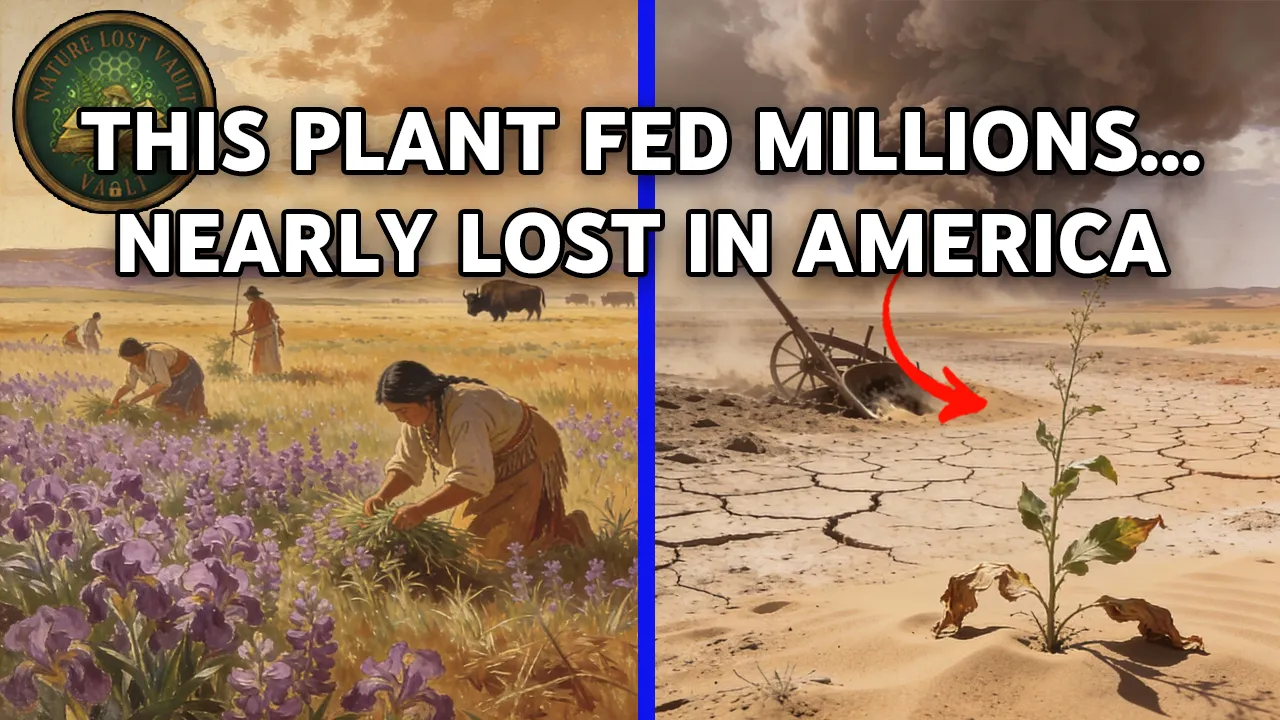
Table of Contents
What is Prairie Turnip?
A single root, seven times more protein than a potato, stored for years without rotting, braided into ropes and hung in lodges across the plains. The Lakota named an entire month after it. Tempsilla itkawi, the moon when it ripens. The capital of Kansas takes its name from this plant, Topeka.
A good place to dig. Then came 1870. General Philip Sheridan stood before Congress. Destroy the buffalo, he said.
Destroy the Indians commissary. President Grant vetoed every protection bill. 60 million buffalo fell between 1870 and 1890. The prairie went under the plow.
99.9%. Gone. With it went the plant that could have stopped the dust bowl. The plant that held soil together with roots that drove 6 ft deep.
The plant that fixed nitrogen while everything else starved the land. If you find one growing wild today, you are standing on ground that has never been tilled. Not once, not ever. A marker of what we destroyed.
In 1804, Lewis and Clark stopped at a Mandan village in what would become North Dakota. The French boatman had a name for it, Pom Bloun, which means white apple. William Clark wrote in his journal that grizzly bears dug it with a passion. The Lakota women taught their children a game.
Prairie turnips point to each other. When you find one, look where the branches aim and run that direction to find the next. It kept children busy during harvest. It taught them to read the prairie.
Women used fireh hardened digging sticks. The work was so important it influenced where tribes hunted. They chose territories partly based on where temps grew. May through July, when purple flowers rose above the grass, that was harvest time.
Too early, the roots stayed limp. Too late, the plant snapped at ground level and tumbled away, scattering seed. The roots were sliced and sun dried, then braided into ropes using the long tap roots. They were hung on meat racks beside buffalo strips.
Some were pounded into flour. Others were traded to the Arikara for corn and to the Mandan for squash. This is the prairie turnip (*Psoralidium esculentum*). The Lakota call it timpsula.
Historical Context & Discovery
The Dakota call it typina. The Blackfoot named it Okonoke. It was the single most important plant in their culture. In Blackfoot legend, a woman married the morning star and lived in the sky.
She dug up a turnip root. The hole opened beneath her. She fell back to earth carrying the plant, a gift to her people. At the Blackfoot Sundance, the opening ritual exchanges a bundle containing prairie turnip roots.
Some dancers wear headdresses made entirely from braided roots and stems. The nutrition, 7% protein. Potato has 2%. Nearly four times more, over 50% carbohydrates, mostly complex ones.
They do not spike blood sugar the way potato starch does. The Lakota knew this before the glycemic index existed. 17.1 mg of vitamin C per 100 g. In winter, when the plain's diet was dried meat and little else, this stopped scurvy.
Lewis and Clark survived partly on dried prairie turnips traded from indigenous people, calcium, iron, magnesium, zinc. The dried roots lasted years. They were ground into flour that never spoiled. They were boiled into porridge that treated stomach ulcers.
People survived on prairie turnip alone when nothing else remained. Indigenous people, white settlers, both protein quality score with egg set at 100 came back 36. Not high, but this was wild. Zero cultivation, zero fertilizer, zero irrigation.
It grew on dry hilltops where nothing else would. Rocky soil over limestone. Farmers called the land worthless. Then the military.
In 1875, General Philip Sheridan addressed a joint session of Congress. Slaughter the buffalo, he said. Not for food, not for hides. to starve the plains Indians into submission.
These men, he said, speaking of buffalo hunters, have done more in the last 2 years to settle the vexed Indian question than the entire regular army has done in the last 40 years. They are destroying the Indians commissery. When Texas tried to protect Buffalo, Sheridan blocked it personally. Send them powder and lead.
He said, "For a lasting peace, let them kill, skin, and sell until the buffaloos are exterminated. Then your prairies can be covered with speckled cattle. " President Grant vetoed every federal protection bill. He pocket vetoed them.
Scientific Research & Nutritional Benefits
This was not accident. This was policy. Secretary of the Interior Columbus Delano wrote in his annual report, "I would not seriously regret the total disappearance of the buffalo from our western prairies, regarding it as a means of hastening their sense of dependence upon the products of the soil. The herds died first.
Central Plains by 1872, Southern Plains by 1879, Northern Plains by 1884, from 60 million to under 1,000 in 20 years. Then came the plows, the Homestead Act, 1862, 160 acres to anyone who would settle for 5 years. Millions of acres of prairie that had never been touched in 10,000 years went under steel blades. Every acre plowed destroyed every prairie turnip on it.
The plant takes 2 to four years to mature from seed. It cannot survive tilling. It cannot regrow from fragments. Prairie turnips only grow where land has never been broken.
They are markers of original prairie. By 1900 99.9% of the tall grass prairie was gone. Door's allotment act 1887. Reservation lands were divided into individual parcels.
The stated goal was to turn Indians into landowning farm families. The actual result was more prairie plowed and more turnips destroyed. The Lakota and Dakota who tried to harvest found themselves on reservations where the land had been broken for wheat and corn. The gathering grounds were gone.
By the late 1800s, prairie turnip was replaced by government rations, white flour, white sugar, processed cheese, the foods that created fry bread. Fry bread is not traditional. It is what happens when you destroy a food system and replace it with commodity rations. Scientists tried to bring it back.
Garden plantings and domestication tests failed. The prairie turnip evolved for harsh dry prairie. It needs well drained rocky soil, full sun, and minimal water. Competition from other plants kills it.
Overwatering causes root rot. It grows from Manitoba to Texas, but only on untilled ground, the kind of ground that barely exists. In Minnesota, ethnobbotonists mapped the sightings. The plant once grew across the western half of the state.
Now, there are only a handful of locations straddling the Minnesota River. If we farm that river valley, those last populations will vanish. A month was named for it. An entire city.
It fed more people than corn for thousands of years across the largest grassland in North America. Today, most people who walk past it think it is a weed. In the Dakotas, prairie turnip still grows in scattered patches. Prairie remnants were never grazed too heavily and were never plowed.
It flowers in May and June and ripens in June and July. Some Lakota families still harvest. They still braid the taproots into ropes and hang them to dry. They still teach their children the game and follow where the branches point.
Linda Black Elk, Lakota ethnobbotonist, takes people to secret locations. They dig with care and leave the seed head to blow away and replant itself. Sustainable harvest is possible, but only on the tiny fragments that remain. The Skangu Food Sovereignty Initiative on Rosebud Reservation works to restore traditional foods.
Keenan Wedel, garden assistant there, told researchers that timila is a traditional food, a big part of my ancestors diet. Before big farms, this plant alone could feed many people. A few native plant nurseries sell seeds now. Prairie Moon Nursery, Windflower Natives, Morning Sky Greenery.
They ship to gardeners trying to restore small prairie patches. But you cannot scatter seeds and expect them to grow. The seeds need scarification, freezing overnight and boiling water poured over them. They must be planted in poor rocky soil with perfect drainage.
Even then, it takes 3 to four years before you get an edible root. And it only thrives where it always thrived. Dry hilltops, thin soil over limestone bedrock, places where modern agriculture sees no value. If you find one growing wild, truly wild, not cultivated, you are standing on a prairie remnant that has never been tilled.
ground that survives from before the plows came, before 60 million buffalo died in 20 years, before 99.9% of the prairie vanished. That is how rare it has become. A plant that grows on land too poor for wheat. It needs no fertilizer because it fixes its own nitrogen.
It needs no irrigation because it evolved for drought. It stores for years without spoiling. It has more protein than the potato. It has enough vitamin C to prevent scurvy.
The government destroyed it to force Plains Indians onto reservations. Settlers plowed the prairie to grow wheat. Then came the Dust Bowl. From 1930 to 1936, the top soil blew away in black blizzards.
The prairie that had held soil for 10,000 years was gone. The deep root systems that prevented erosion were gone. The native grasses that made the plains were gone. Prairie turnip tap roots go 4 to 10 cm deep.
They hold soil and they fix nitrogen. They thrive on land that cattle and wheat destroy. Research shows absence of native grasses was the main contributor to the dust bowl. The planes lost nearly 1/3 of their prime top soil after the buffalo slaughter and prairie destruction.
The plant that could have prevented it had been systematically eliminated 40 years earlier. Not an accident. Buffalo were killed to starve indigenous people. Sheridan said so.
Grant vetoed protection bills. Prairie was plowed to make farms. The Homestead Act incentivized it. The Door's Act forced it.
Every prairie turnip, a plant that had fed people for thousands of years on land too poor for other crops, was destroyed in the process. Big agriculture sells the story that industrial farming feeds the world. That we need pesticides and fertilizers and irrigation and massive machinery to survive. For millennia, Plains Indians fed themselves on plants like prairie turnip.
Plants that grew without help, required no chemicals, thrived on worthless land, provided more nutrition than the potatoes and wheat that replaced them. The knowledge was there. The plants were there. The system worked.
It was destroyed intentionally. Prairie turnip still exists. on reservation lands in the Dakotas, on tiny prairie remnants in Minnesota and Kansas and Montana, in the hands of Lakota and Dakota families who remember. If you find untilled prairie, and that is a big if, you might find it purple flowers in June.
How to Identify, Grow & Use Prairie Turnip
Blue green leaves in groups of five, short stalks covered in silver hairs. Dig carefully. Roots 4 in down. Spindle-shaped the size of an egg.
Dark skin that peels away to white flesh underneath. Slice them thin. Braid the long taproots. Hang them to dry.
The knowledge still exists. It was suppressed, nearly erased, but not destroyed. The Lakota named an entire month after this plant. The Black Feet made headdresses from its roots.
Topeka named their city after the place where it grew. It fed more people across a larger area for a longer time than almost any other native food. The plant does not care about government policy. It does not care about manifest destiny or the Doors Act or commodity rations.
On the rare patches of prairie that were never plowed, it grows. It blooms purple in June. It feeds grizzly bears and indigenous families and anyone who knows to look. The prairie turnip remembers what we destroyed and it grows anyway.
If this vault opened something for you, subscribe to Nature's Lost Vault and hit the bell. Every like and every share helps preserve this wisdom.
Finding Seeds: Prairie Turnip seeds can be found through specialty seed companies and heritage seed banks.
Check local native plant societies and seed exchange programs for authentic varieties.
Frequently Asked Questions
How much protein does prairie turnip have?
Prairie turnip contains 7x more protein than potatoes by dry weight. It also stores for years without rotting when dried, making it one of the most reliable survival foods of the Great Plains tribes.
Why did prairie turnip go extinct?
Prairie turnip was made functionally extinct when white settlers plowed 98% of the Great Plains grassland in the late 1800s. General Sheridan explicitly ordered the destruction of buffalo and native food sources to force Plains tribes onto reservations.
Can you still find prairie turnip?
Prairie turnip survives in small remnant prairie patches and is being cultivated by some Native seed keepers and permaculture growers. It is not commercially available at scale. Restoration efforts focus on rebuilding prairie ecosystems where it naturally grows.
Explore More Survival Foods
Discover ancient plants that sustained civilizations through drought, famine, and extreme conditions.
Browse Survival Foods Collection →