
Hosta (Hosta montana): The Japanese Spring Vegetable 'Urui' Sold as Yamagata's Snow-Blanched Yuki Urui, That American Nurseries Sell Only as Ornamental Deer-Candy Foliage
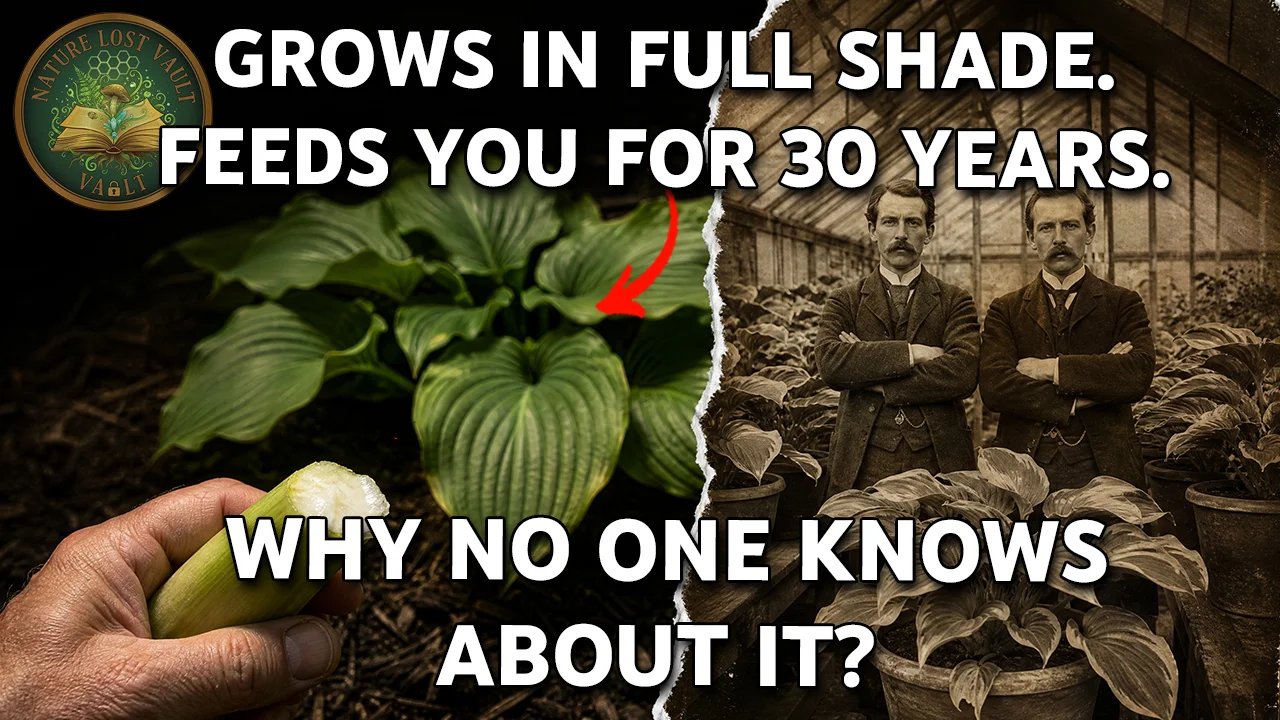
Table of Contents
- What is Hosta (Urui)?
- From Siebold's 1823 Nagasaki Smuggling to Thomas Hogg's 1862 Lincoln Appointment
- Nutrition Density (Vitamin C, K, Folate, Beta Carotene), Saponins & the 'Deer Candy' Confirmation
- Why It Stays Buried: Two Nurserymen Chose Variegation Over the Vegetable
- How to Harvest & Cook Hosta Shoots (The 30-90 Second Boil)
- How to Source Hosta (Harvest Your Own, Grow & Buy Seeds)
- Frequently Asked Questions
Recommended Product:
Safety note: Boil hosta shoots 30-90 seconds before eating to remove water-soluble saponins. Only harvest from plants you have never treated with systemic pesticide or synthetic fertilizer. Raw hosta is mildly toxic to dogs and cats.
Affiliate link - supports our channel
What is Hosta (Urui)?
In the third week of April, before the tomato starts go in the ground, before the peas are up, before anything in the vegetable garden is close to ready, one crop on your property is already at harvest size. You planted it. You paid retail for it. You have been raking around it every spring for twenty years.
And this same week, in a supermarket in northern Japan, that exact plant is sitting in a refrigerated case, sealed in a sleeve, stamped with a barcode, and sold at a premium as a spring vegetable - complete with a harvest season, a growers cooperative, and a regional brand name.
The shoots emerge furled tight, pale at the base, cool and crisp when you snap one off. The flavor lands somewhere between asparagus and butter lettuce, carrying a faint slickness like young okra. One hundred grams delivers 50 mg of vitamin C. An orange carries 53.
The plant is hosta (Hosta spp.). The primary species in the Japanese commercial market is Hosta montana - oba giboshi, the large-leaf hosta - and the spring shoots are known in Japanese markets as urui. Every American garden reference in print lists this plant. Or rather, they list the leaf. The reason you have never eaten it has nothing to do with flavor, and nothing to do with safety. It comes down to two nineteenth-century nurserymen, and a decision about which half of the plant was worth money.
| Metric | Value |
|---|---|
| Scientific name (culinary standard) | Hosta montana F. Maek. |
| Family | Asparagaceae (formerly Liliaceae) |
| Japanese name (species) | Oba giboshi (オオバギボウシ) - "large-leaf hosta" |
| Japanese vegetable name | Urui (ウルイ) - the furled spring shoots |
| Premium blanched product | Yuki Urui (雪ウルイ) - "snow urui," greenhouse-blanched in Yamagata |
| Culinary category | Sansai (山菜) - Japan's revered "mountain vegetables" |
| Native range | Japan, Korea, eastern China |
| USDA hardiness | Zones 3-9 (perennial, returns 30+ years) |
| Growing conditions | Deep shade tolerant; no fertilizer needed; rainfall watering |
| Harvest window | 7-10 days after shoots break ground, leaves still rolled tight |
| Vitamin C (per 100 g raw) | 50 mg (orange = 53 mg) |
| Vitamin K (per 100 g raw) | 160 mcg (about a full day's intake) |
| Potassium (per 100 g raw) | 390 mg |
| Folate (per 100 g raw) | 120 mcg |
| Beta carotene (per 100 g raw) | 1,900 mcg |
| Calories (per 100 g raw) | 19 kcal (Japanese Food Composition Tables, 8th rev.) |
| Compound requiring cooking | Saponins (water-soluble; boil 30-90 sec to remove) |
| European introduction | Philipp Franz von Siebold, Leiden 1830 (smuggled from Dejima 1829) |
| American introduction | Thomas Hogg Jr., US Marshal in Japan 1862 (appointed by Lincoln); shipped to New York + Samuel Parsons on Long Island |
| Named cultivars today | ~7,000 (American Hosta Society, international registration authority) |
| Modern US status | Most widely planted perennial in temperate US; 2024 = "Year of the Hosta" |
| 'Sagae' cultivar | From Sagae City, Yamagata (same basin as Yuki Urui); RHS AGM 1993; Hosta of the Year 2000 |
| Wildlife testimony | "Deer Candy" per NC Cooperative Extension, MSU Extension, UConn Home & Garden Center |
| Look-alike (Japan foraging only) | False hellebore (Veratrum spp.) - toxic steroidal alkaloids |
From Siebold's 1823 Nagasaki Smuggling to Thomas Hogg's 1862 Lincoln Appointment
1823 Nagasaki: The German Doctor on Dejima
Nagasaki Harbor. 1823. A German physician named Philipp Franz von Siebold arrives at the Dutch trading post on the artificial island of Dejima. Japan is closed to the outside world - the entire country under a two-century-long sakoku policy of near-total foreign exclusion, with Dejima the only Western foothold permitted. Siebold spends six years practicing medicine, quietly assembling the largest collection of Japanese plants and animals any European had ever held.
In October 1829, Japanese authorities place him under house arrest and expel him for possessing forbidden coastline maps. He sails anyway - and he takes the collection with him.
1830 Leiden: Turning Smuggled Biology Into a Nursery Business
Arriving in the Netherlands in July 1830, Siebold settles in Leiden and turns his smuggled biology into a lucrative business. He sold Japanese plants to European gardens by the hundred. He introduced Japanese knotweed - a disastrous story for another day. And he is also the man who introduced hostas to Europe. He marketed them strictly as garden foliage. There is no historical record of anyone in Leiden asking the Japanese what they did with the shoots.
1862 Japan: Lincoln Appoints Thomas Hogg Jr as US Marshal
Thirty years later, the same botanical misunderstanding reached America. And this time, the architect worked for the United States government.
Thomas Hogg Junior was born in London in 1820 and raised in New York City, heir to one of the region's first commercial nurseries. In 1862, President Abraham Lincoln appointed Hogg a United States Marshal and assigned him to the American consulate in Japan. He held that post for seven years. And he spent those years shipping native Japanese plants back to his family nursery in New York, and to Samuel Parsons, a Long Island nurseryman who propagated them for the American gardening public.
In 1880, Parsons wrote that Hogg had given America more new Japanese plants than any collector since Robert Fortune. Among Hogg's most famous introductions were two variegated hostas. One is still sold today under his own name.
The Choice That Buried the Vegetable
Here is the crucial detail history glosses over. Neither man was hiding the plant's edibility. They were selecting for profit. A variegated leaf sold for more money than a plain green one, so variegation crossed the ocean. The culinary shoot stayed in Japan, because nobody in the Western botanical pipeline was in the vegetable business. American breeders then spent a century finishing the job. There are roughly 7,000 named hosta cultivars today. The American Hosta Society calls it the most widely planted perennial in the temperate United States. The National Garden Bureau named 2024 the Year of the Hosta.
Nutrition Density (Vitamin C, K, Folate, Beta Carotene), Saponins & the 'Deer Candy' Confirmation
The Japanese Food Composition Tables (8th Revised Edition)
The Japanese Food Composition Tables, 8th revised edition - the official reference maintained by the Japanese Ministry of Education, Culture, Sports, Science and Technology - lay out the nutritional reality of a plant most Americans have never eaten. Per 100 g of raw urui:
- 19 calories
- 50 mg vitamin C - an orange carries 53 mg
- 160 mcg vitamin K - about a full adult day's intake
- 390 mg potassium
- 120 mcg folate
- 1,900 mcg beta carotene
The vitamin C of citrus, and a full day of vitamin K, thriving in the one neglected strip of your yard that gets zero sun.
Saponins: Why the 30-90 Second Boil Matters
Hostas carry saponins - the same class of bitter, soapy compound rinsed off raw quinoa, and the reason poison control lists raw hostas as mildly toxic to dogs and cats. Saponins are water-soluble, so a brief rolling boil pulls them out. The traditional Japanese preparation of urui mandates a 30- to 90-second blanch before serving specifically for this reason. Boiled and drained, the shoots are safe, tender, and mild.
The 'Deer Candy' Confirmation From Three US Universities
While the American nursery trade was making the leaf thick and waxy for slug resistance, the wildlife in your yard has been voting the other way every night. The evidence is federal-university documented:
- North Carolina Cooperative Extension lists the hosta under the heading "Deer Candy."
- Michigan State University Extension reports that deer prefer hostas over many other plants, seeking them out selectively.
- The Home & Garden Education Center at the University of Connecticut connects the dots outright. Their bulletin notes the young leaves are edible and traditionally served in Japan raw, boiled, and fried in tempura, then concludes that this inherent palatability is exactly why local gardeners call the plant deer candy to begin with.
The animals in your yard have been telling you what this plant is for twenty years. You have been buying chemical repellent to argue with them.
The 'Sagae' Cultivar: The Same Basin Sends America Both Products
Sometime between 1912 and 1926, a hosta with striking cream-and-gold edges appeared in a private garden in Sagae City. Sagae sits in the Yamagata Basin, the same prefecture where farmers blanch hosta shoots in the dark and sell them as Yuki Urui. The plant was registered in 1996 under the name of the city that produced it: 'Sagae'. It won the Royal Horticultural Society Award of Garden Merit in 1993. In 2000, the American Hosta Growers Association crowned it Hosta of the Year. Sagae City lists it as their official municipal plant.
So the one Japanese prefecture that commercially farms this genus as a staple vegetable also handed America one of its most heavily decorated ornamentals. Two identities, born in one basin. America imported only one of them, and handed it a trophy.
Why It Stays Buried: Two Nurserymen Chose Variegation Over the Vegetable
The Selection Pressure Was Money, Not Malice
There was no ban, no raid, no warning label, and no cover-up. Neither Siebold in Leiden nor Hogg in New York was hiding the plant's edibility. They were selecting for profit. In the nineteenth-century European ornamental market, a variegated leaf commanded a substantially higher price than a plain green one. So variegation crossed the ocean. The culinary shoot stayed in Japan because nobody in the Western botanical pipeline was in the vegetable business.
The Century That Finished the Job
American breeders then spent a century polishing the mistake. Read any modern nursery catalog and the breeding priorities are printed in plain language. They praise thick substance. Heavy wax. Deep corrugation. And excellent slug resistance. One popular listing advertises that the heavy leaves "keep slugs at bay."
Which is a polite way of saying that generations of horticulturists selected an edible Asian vegetable for the specific trait of being unappetizing. And they succeeded. The modern American ornamental hosta is genuinely tougher, waxier, and more slug-resistant than the wild Japanese Hosta montana that a Yamagata farmer would harvest for the produce market.
The strange thing about hostas:
Nothing was ever hidden. No agency banned it. No company locked it in a vault. Every American garden reference in print lists this plant - or rather, they list the leaf. It stood in the open the whole time, sold by the millions with an award ribbon on it, and we still managed to lose the vegetable half. Not the plant. Just the reason to eat it. You have been growing a Japanese vegetable garden in your flower bed for twenty years without knowing it, all because one nurseryman in New York decided which half of the plant was worth selling. The tag in that drawer says ornamental. The plant has never once agreed with it.
How to Harvest & Cook Hosta Shoots (The 30-90 Second Boil)
The safest hosta harvest on Earth is the one you already own. Six rules, one traditional Japanese cooking step, and a handful of preparations that convert the plant your neighbor grows for foliage into a real spring vegetable.
1. Harvest Window & Technique
- Cut in early spring, 7 to 10 days after the shoots break ground, while the leaves are still rolled into a tight tube. Once the leaves unfurl and mature, the texture toughens and the flavor drops off.
- Work the outer ring of the clump and leave the center crown alone.
- Harvest no more than one third of the shoots from any single plant. The hosta will carry on for the rest of the season as if nothing happened, and return for another 30 years.
- Snap or cut cleanly at the base, where the shoot is pale and crisp.
2. The Mandatory 30-90 Second Boil
Hostas carry saponins - the same class of bitter, soapy, water-soluble compound rinsed off raw quinoa, and the reason poison control lists raw hostas as mildly toxic to dogs and cats. Because saponins are water-soluble, a brief rolling boil pulls them out. The traditional Japanese method mandates this step for a reason. Do not skip it.
- Bring a pot of water to a rolling boil.
- Drop in the trimmed shoots. Boil 30 to 90 seconds depending on thickness - thin shoots 30 seconds, fatter Hosta montana shoots up to 90.
- Drain immediately, then plunge into ice water to stop the cooking and preserve the crispness.
- Pat dry.
3. Traditional Japanese Preparations
- Cold with sesame dressing & bonito flakes: whisk 2 tbsp soy sauce, 1 tbsp rice vinegar, 1 tbsp sesame oil, 1 tsp sugar, 1 tsp toasted sesame seeds; dress the cool blanched shoots and top with a pinch of bonito flakes. This is the classic breakfast-side preparation in Tohoku.
- In hot miso soup: drop the blanched shoots into a bowl of freshly-made miso soup at the last minute; the shoots stay crisp and add a fresh green note.
- Tempura: dip the whole blanched shoots in a light cold-water tempura batter (flour + ice water + egg yolk, barely mixed), fry at 340°F / 170°C for 60-90 seconds until pale golden. Serve with tempura sauce (dashi + soy + mirin) or salt and lemon.
- Clear broth (suimono): float the blanched shoots in a clear dashi-based broth with a sliver of yuzu peel.
4. The Yuki Urui (Snow Urui) Method
In Yamagata Prefecture, farmers lift dormant hosta crowns into greenhouses in late autumn and keep the emerging shoots shrouded so that no light reaches them. The deprived stems rise up white, so tender they are eaten raw in salads. That product carries its own prestige trade name: Yuki Urui, or snow urui. If you want to try it at home, cover a hosta crown in early spring with an inverted large pot or dark garbage can before the shoots emerge. The blanched shoots will be pale, tender, and less saponin-heavy - though the 30-90 second boil is still recommended.
Honest Safety Notes
- Boil the shoots 30-90 seconds before eating. Do not skip this step. Raw hostas contain saponins that are irritating to humans and mildly toxic to dogs and cats.
- Only harvest from hostas you have never treated. No systemic insecticide, no synthetic fertilizer in the bed. Systemic pesticides move through the whole plant; you cannot wash them off.
- Keep raw and cooked hosta away from cats and dogs - even cooked, they are on the ASPCA's mildly-toxic-to-pets list.
- The false-hellebore risk is a WILD-foraging problem in Japan, not a garden problem in America. Two native Veratrum species (false hellebores) send up spring sprouts that closely mimic Hosta montana in the Japanese mountains, contain steroidal alkaloids, and cause vomiting, blurred vision, slowed heart, and plummeting blood pressure. You do not have that problem - the plant in your bed is the one you bought. The plastic nursery tag is probably still in your kitchen drawer.
- Introduce gradually. As with any new food, try a small serving first and watch for individual sensitivity, especially if you have known plant allergies.
How to Source Hosta (Harvest Your Own, Grow & Buy Seeds)
1. Harvest From Your Own Garden (Probably Already Available)
The American Hosta Society - the international registration authority for the genus - calls hostas the most widely planted perennial in the temperate United States. There are probably a dozen of them lining the front of a house on your street right now. Any true Hosta will work as urui. Best culinary picks:
- Hosta montana (oba giboshi, large-leaf hosta) - the species that drives the commercial Yamagata market. Traditional first choice.
- Hosta sieboldiana and its varieties ('Elegans', 'Frances Williams') - generous shoots, mild flavor.
- Hosta 'Sum and Substance' - large chunky shoots.
- Hosta 'Sagae' - the same Yamagata-origin cultivar that won the 2000 American Hosta Growers Hosta of the Year.
- Hosta plantaginea (fragrant hosta) - the shoots are edible; the flowers are famously eaten in Chinese cuisine.
Follow the harvest rules above: outer ring only, no more than one third, and only from plants that have never been sprayed. The plastic nursery tag in your kitchen drawer is your identification. This is the safest urui harvest on Earth.
2. Grow Your Own (One of the Easiest Perennials on Earth)
Hostas are almost unfairly easy to grow. Perennial in USDA zones 3-9. Deep shade tolerant - they thrive in the neglected strip of your yard where nothing else survives. No fertilizer needed. No watering beyond rainfall in most climates. Divide clumps every 4-5 years to keep shoot production strong.
Plant nursery divisions or bare-root crowns in spring or fall, 18-24 inches apart (larger for full-size species like H. montana and H. sieboldiana). Water in well. Mulch. Wait. In 2-3 seasons you will have a mature clump producing 20-40 shoots every April.
If you are planting specifically for the vegetable use, favor a plain green large-leaf species (H. montana, H. sieboldiana) over a heavily-variegated cultivar - green forms tend to be more vigorous and produce more shoots. Site them where you would put a shade vegetable bed: deep shade or dappled morning light, moist rich soil, mulched.
3. Buy Nursery Plants
Reputable garden nurseries stock the full 7,000-cultivar range. For culinary use, what to look for on the tag:
- The Latin name spelled out: Hosta montana, Hosta sieboldiana, or Hosta plantaginea for the most-verified culinary species.
- A green-leaved (not heavily variegated) form for maximum vigor and shoot production, if the aesthetic works for you.
- Plants that have never been treated with systemic pesticide - ask the nursery. Many big-box-store hostas are pre-treated with neonicotinoids that persist in the plant tissue for a season or more.
- Or buy from an organic nursery or a specialty hosta breeder that guarantees no systemic treatment.
Wait a full season after transplanting before harvesting shoots for culinary use - it lets the plant establish and clears any residual nursery treatment from its system.
Frequently Asked Questions
Are hostas actually edible? What is urui?
Yes. Hosta shoots are a well-established Japanese spring vegetable called urui, and they are commercially farmed for the produce market in Yamagata Prefecture in the mountains of northern Honshu. Urui belongs to the sansai - the revered mountain vegetables of Tohoku that emerge from the snowmelt in early spring and tell Japanese people that winter has broken.
The species driving that market is Hosta montana, known in Japanese as oba giboshi (the large-leaf hosta). The furled young shoots are harvested 7 to 10 days after the shoot breaks ground, while the leaf is still rolled into a tight tube; Japanese grocers call them the breath of early spring. The flavor lands somewhere between asparagus and butter lettuce, with a faint slickness like young okra.
In Yamagata, farmers lift dormant hosta crowns into greenhouses in late autumn and keep the emerging shoots shrouded so no light reaches them - the deprived stems rise up white, so tender they are eaten raw. That premium blanched product carries its own trade name: Yuki Urui, or snow urui. Elsewhere the green shoots are battered for tempura, dropped into clear broth or miso soup, or served cold with sesame dressing and bonito flakes.
Per 100 g of raw urui (Japanese Food Composition Tables, 8th revised edition): 19 calories, 50 mg vitamin C (an orange has 53), 160 mcg vitamin K, 390 mg potassium, 120 mcg folate, and 1,900 mcg beta carotene.
If hostas are edible, why do American gardeners think they are ornamental only?
Two nineteenth-century nurserymen chose which half of the plant was worth money, and the vegetable half stayed in Japan.
In 1823 the German physician Philipp Franz von Siebold arrived at the Dutch trading post on the artificial island of Dejima in Nagasaki Harbor. Japan was closed to the outside world. Siebold spent six years quietly assembling the largest collection of Japanese plants and animals any European had ever held. In October 1829 Japanese authorities placed him under house arrest and expelled him for possessing forbidden coastline maps; he sailed with the collection. Arriving in Leiden in July 1830, he turned his smuggled biology into a lucrative European nursery business - and marketed hostas strictly as garden foliage.
Thirty years later, the same botanical misunderstanding reached America. In 1862 President Abraham Lincoln appointed Thomas Hogg Junior a United States Marshal at the American consulate in Japan. Hogg spent seven years shipping native Japanese plants back to his family's New York nursery and to Samuel Parsons, a Long Island nurseryman. In 1880 Parsons wrote that Hogg had given America more new Japanese plants than any collector since Robert Fortune.
Neither Siebold nor Hogg was hiding the plant's edibility. They were selecting for profit. A variegated leaf sold for more money than a plain green one, so variegation crossed the ocean. The culinary shoot stayed in Japan, because nobody in the Western botanical pipeline was in the vegetable business. American breeders then spent a century finishing the job: ~7,000 named cultivars today, bred for thick substance, heavy wax, deep corrugation, and "excellent slug resistance" - a polite way of saying generations of horticulturists selected an edible Asian vegetable for the specific trait of being unappetizing. The National Garden Bureau named 2024 the Year of the Hosta.
Why are hostas called "deer candy"?
Because the animals in your yard have been telling you what this plant is for years. Three land-grant university extension services document it:
- North Carolina Cooperative Extension lists the hosta under the heading "Deer Candy."
- Michigan State University Extension reports that deer prefer hostas over many other plants, seeking them out selectively.
- The Home & Garden Education Center at the University of Connecticut connects the dots outright: their bulletin notes the young leaves are edible and traditionally served in Japan raw, boiled, and fried in tempura, then concludes that this inherent palatability is exactly why local gardeners call the plant deer candy to begin with.
While the nursery trade was making the leaf thick and waxy for slug resistance, the wildlife in your yard was voting the other way every night. American gardeners spend an enormous amount of money on chemical repellents to protect a plant that a Japanese farmer would harvest and sell at a premium. The deer are not confused. The American gardener is.
How do you harvest and cook hosta shoots safely?
Six rules, and the safest hosta harvest on Earth is the one you already own.
- Harvest window. Cut the shoots in early spring, 7 to 10 days after they break ground, while the leaves are still rolled tight.
- Technique. Work the outer ring of the clump; leave the center crown alone. Harvest no more than one third of the shoots from any single plant, and the hosta will carry on as if nothing happened.
- Boil 30 to 90 seconds. Hostas carry saponins - the same class of bitter, soapy, water-soluble compound rinsed off raw quinoa, and the reason raw hostas are mildly toxic to dogs and cats. The traditional Japanese method mandates this step. Do not skip it.
- Cook or serve. Dress the shoots cold with sesame oil and bonito flakes; drop them into hot miso soup; or batter and fry them for tempura.
- Never from sprayed plants. No systemic insecticide, no synthetic fertilizer in the bed. Systemic pesticides move through the whole plant; you cannot wash them off.
- The false hellebore caveat only matters in the wild. Foraging wild urui in the mountains of Japan carries real risk because two native false hellebores (Veratrum species) send up spring sprouts that closely mimic Hosta montana; they contain steroidal alkaloids that cause vomiting, blurred vision, slowed heart, and plummeting blood pressure. You do not have that problem - you bought the plant, you put it in the dirt yourself, the nursery tag is still in your kitchen drawer.
Where can you source hosta - harvest your own, grow, or buy?
Three routes, and one of them is almost certainly already in your yard.
(1) Harvest from your own garden. The American Hosta Society calls hostas the most widely planted perennial in the temperate United States. Any true Hosta will work; Hosta montana (oba giboshi, the large-leaf species that drives the Yamagata commercial market) is the traditional first choice, and the popular Hosta sieboldiana varieties, 'Sum and Substance', 'Sagae', and H. plantaginea (fragrant hosta) all give strong shoots.
(2) Grow your own. Perennial in USDA zones 3-9, tolerant of deep shade (where almost nothing else survives), no fertilizer needed, no watering beyond rainfall in most climates, and they return for 30 years. If you are planting specifically for the vegetable use, choose a green-leaved (not variegated) large-leaf species and site them where you would put a shade vegetable bed - deep shade or dappled morning light, moist rich soil, mulched. Divide clumps every 4-5 years to keep shoot production strong.
(3) Buy seeds or nursery plants. Reputable nurseries stock 7,000+ cultivars; Amazon and mail-order seed suppliers stock seed for many species including Hosta montana. On a label, look for the Latin name spelled out; a green-leaved form for maximum shoot production; and organic or untreated seed. Hosta seeds do not come true to type from cultivars - if you want a specific variety you must buy a rhizome division. For culinary use, wild-type H. montana or H. sieboldiana from seed is the most authentic route.
Explore More Medicinal Plants
Discover ancient healing plants backed by centuries of traditional use and modern science.
Browse Medicinal Plants Collection →