
Solomon's Seal (Polygonatum): The 'Many Knees' Joint-and-Tendon Root Dioscorides Prescribed, John Gerard Called Unmatched for Broken Bones in 1597, and the Garden Industry Made 2013 Perennial Plant of the Year Without Mentioning It Was Medicine
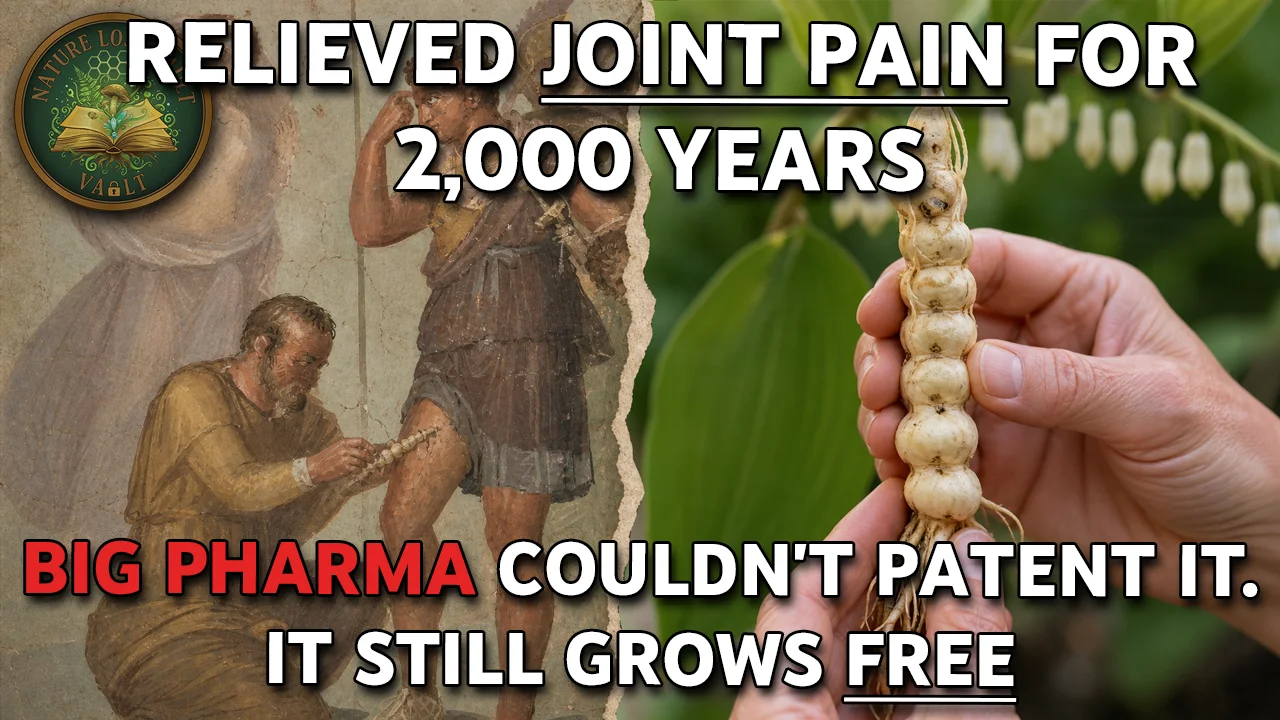
Table of Contents
- What is Solomon's Seal?
- From Dioscorides & Gerard 1597 to Yu Zhu (玉竹) & Native American Woodland Medicine
- Steroidal Saponins, Diosgenin, Allantoin & the 2023 Phytochemistry Review
- Why It Stays Buried: The 2013 Perennial Plant of the Year & a 20-Century Forgetting
- How to Consume Solomon's Seal (Tincture, Decoction & Capsules)
- How to Source Solomon's Seal (Forage, Grow & Buy)
- Frequently Asked Questions
Recommended Products:
Dried Solomon's Seal Root Capsules Seeds
Affiliate links - support our channel
What is Solomon's Seal?
Right now, in shade gardens all across America, millions of people are growing a medicine and calling it a decoration. They planted it for the arching stems and the row of little white bells that dangle along them every spring. A tasteful green thing for the corner where the lawn gives up. In 2013 the garden industry even crowned it Perennial Plant of the Year. And almost none of the people who bought it have the faintest idea what they actually put in the ground.
Because for 2,000 years, on three separate continents, this was never scenery. This was the plant people reached for when their knees ground bone on bone. When their hands stiffened and their fingers stopped closing. When a shoulder locked up, or a joint began to catch and click with every step. Roman physicians used it. Chinese healers used it. Native Americans dug it out of these same woods. And a small handful of herbalists are still quietly digging it today, for the exact same reason.
The strangest part is that the plant has been telling us the truth the entire time. Translate its scientific name out of the original Greek and you get two plain words: poly ("many") + gony ("knee") - "many knees." Someone, centuries ago, looked at this thing and named it after the aching joints it was meant to fix. And then we forgot we ever knew.
This is Solomon's seal (Polygonatum).
| Metric | Value |
|---|---|
| Scientific name (genus) | Polygonatum Mill. (60+ species worldwide) |
| Family | Asparagaceae (formerly Liliaceae) |
| Etymology of Polygonatum | Greek poly (many) + gony (knee / joint) - "many knees" |
| Origin of "Solomon's seal" name | Round scars on rhizome resemble the wax seal of King Solomon |
| American species | Polygonatum biflorum (smooth Solomon's seal) |
| European species | Polygonatum multiflorum (common Solomon's seal) |
| Chinese species | Polygonatum odoratum - Yu Zhu (玉竹, "jade bamboo") |
| Habitat | Dry shade, deciduous woodland understory |
| USDA hardiness | Zones 3-8 |
| Height | 1-4 feet on a single unbranched arching stem |
| Flower | Small white bells hanging UNDER the stem (key ID feature) |
| Berries | Blue-black in autumn - TOXIC to humans (birds are fine) |
| Medicinal part | Rhizome (jointed underground root) - the very tissue the plant is named for |
| Signature bioactive class | Steroidal saponins (150+ identified across the genus) |
| Key sapogenin | Diosgenin - pharmaceutical steroid raw template |
| Additional actives | Allantoin (same soothing compound in drugstore skin creams) |
| Earliest documented Western use | Dioscorides, De Materia Medica, 1st century CE |
| John Gerard "Herball" | 1597 - "no plant on Earth compares to it for closing wounds and knitting broken bones" |
| Nicholas Culpeper "Complete Herbal" | 1653 - prescribed root for bruises, sprains, deep joint aches |
| Modern herbalist use (US) | Jim McDonald, David Winston - dry, grinding, catching joints; tendons; ligaments |
| 2023 Phytochemistry review | 150+ steroidal saponins catalogued; anti-inflammatory + anti-osteoporotic activity |
| 2013 Perennial Plant of the Year | Variegated Solomon's seal (P. odoratum 'Variegatum') - crowned as scenery |
| Common look-alike to rule out | False Solomon's seal (Maianthemum racemosum) - flowers in a plume at TIP, not under stem |
| Modern American status | Sold as ornamental "shade garden" scenery - almost nobody knows it is medicine |
From Dioscorides & Gerard 1597 to Yu Zhu (玉竹) & Native American Woodland Medicine
1st Century Rome: Dioscorides Records the Root
The Western written record of Solomon's seal medicine reaches back nearly 2,000 years. In the 1st century CE, the Greek physician Pedanius Dioscorides - a surgeon in the Roman army - compiled his five-volume De Materia Medica, the single most influential drug reference in Western history. Solomon's seal is in it, and it stayed in it: De Materia Medica remained the standard European pharmacology text for more than 1,500 years.
1597 England: John Gerard Calls It Unmatched for Broken Bones
By 1597, the English herbalist John Gerard wrote in his enormous Herball that no plant on Earth compared to Solomon's seal for closing wounds and knitting broken bones. Half a century later, Nicholas Culpeper - whose Complete Herbal (1653) outsold nearly every book in the English language except the Bible - prescribed the root for bruises, sprains, and the deep aches that move into the joints as a body ages. In two English generations, Solomon's seal was written into the most-read medical books of the era.
China: Yu Zhu (玉竹), "Jade Bamboo"
An ocean and a continent away, the closely-related species Polygonatum odoratum still holds a permanent place in the traditional Chinese pharmacy under the name Yu Zhu (玉竹, "jade bamboo"). In Traditional Chinese Medicine (TCM) classification, Yu Zhu is a Yin tonic - the remedy for a body "gone dry and stiff," including dry cough, dry throat, and joint stiffness. Walk into a Chinese pharmacy in Beijing or Chinatown in San Francisco today and you can buy it - dried, sliced, and ready to decoct. Different language, different century, same plant, same complaint.
Native American Woodland Medicine
And long before either of those books arrived on this continent, Native peoples were pulling the same jointed root out of American soil. The eastern woodland nations (Cherokee, Iroquois, Ojibwe among them) cooked the young shoots like asparagus and boiled the starchy rhizome like a potato when the season was lean, all while using that same root as medicine for sore joints and bad backs. Food and pharmacy in a single plant.
Steroidal Saponins, Diosgenin, Allantoin & the 2023 Phytochemistry Review
The Slippery Gel: Mucilage in the Fresh Root
Here is a clue that ties the folklore directly to the chemistry. Pull a fresh Solomon's seal rhizome from the ground, wash it, and rub it between your fingers. It feels faintly slippery, almost gel-like. Old herbalists explained the effect by saying the plant "brings water and give back to worn tissue, the way a drop of oil quiets a dry hinge." Modern chemistry gives that same intuition a molecular vocabulary: the slick quality comes from mucilaginous steroidal saponins concentrated in the rhizome. The tissue-lubricating feel is not a metaphor - it is real chemistry, and it points straight at the plant's central bioactive class.
The 2023 Phytochemistry Review: 150+ Steroidal Saponins
In 2023, a review in the journal Phytochemistry catalogued more than 150 steroidal saponins across the Polygonatum genus and laid out their documented biological activities. In plain terms, the review documented two overlapping effects: anti-inflammatory activity (against joint and tissue swelling) and anti-osteoporotic activity (against the thinning of bone). That is exactly the combination the plant has been prescribed for since the 1st century - joints and bones - now described with chromatography peaks and cell-culture assays instead of Latin herbals.
Allantoin: The Same Molecule in Your Skin Cream
The Solomon's seal rhizome also carries allantoin - the same soothing compound the drugstore quietly folds into skin creams, diaper-rash ointments, and after-shave lotions to speed epithelial healing. Allantoin promotes cell proliferation, keratolysis (loosening of hardened skin), and moisture retention. Its presence in Solomon's seal helps explain the plant's classical reputation for wound closure that Gerard was writing about 400 years ago.
Diosgenin: The Pharmaceutical Steroid Template
The molecule at the center of the saponins is a sapogenin called diosgenin - and this is where the story turns from folk medicine into industrial chemistry. Diosgenin is one of the raw templates the pharmaceutical industry has used for decades to build steroid drugs. It has been chemically converted in the lab into the starting materials for corticosteroids, sex hormones, and (most famously) the first oral contraceptives that emerged from the 1940s-50s Marker-degradation work on Mexican yam diosgenin. Solomon's seal is one of a small handful of temperate-climate plants that carries diosgenin at meaningful levels.
So the plant your neighbor is growing for its foliage is made from the same starting material as some of the medicines that replaced it. It was never just a leaf. We simply stopped reading the label.
What Modern Herbalists Actually Reach For It For
Two of the most-respected American herbalists working today - Jim McDonald and David Winston - reach for Solomon's seal specifically for the kind of joint most other remedies do not touch. Most joint remedies do one of two things: they fight inflammation (like NSAIDs) or they mute the pain signal (like opioids). Solomon's seal seems to work on the moisture and tension of the tissue itself. The people who use it talk about:
- The dry, grinding, catching kind of joint - the knee that crunches on the stairs.
- The shoulder that never came all the way back after an old injury.
- Tendons rubbed raw from the same motion repeated a hundred thousand times (tennis elbow, plantar fasciitis, De Quervain's).
- Ligaments that have gone either too tight or too slack - the same root oddly seems to coax both back toward the middle.
- The hand that aches folding laundry on a cold morning. The knee you have to talk down the porch steps. The stiffness that used to burn off by noon and now just settles in and stays.
Why It Stays Buried: The 2013 Perennial Plant of the Year & a 20-Century Forgetting
No Ban. No Raid. Just Out-Competed by the Pharmacy Counter.
So what happened to all that knowledge? Nothing dramatic. No ban, no raid, no warning label. Solomon's seal was simply out-competed by the pharmacy counter. As pills took over the home remedy shelf across the twentieth century, the old uses slipped out of memory, and the plant got handed a second career it never asked for.
Nurseries Notice the Arching Stems
Nurseries noticed the elegant arching stems and the leaves edged in cream, and started selling Solomon's seal as an ornamental. Deer avoid it. It thrives in the dry shade where almost nothing else will grow. It multiplies quietly by rhizome and asks nothing of the gardener. Every one of those traits made it perfect scenery for the corner of the yard nobody knew what to do with.
2013: Perennial Plant of the Year
By 2013, the Perennial Plant Association - the trade group that decides what fills the benches at your local garden center - named the variegated form (Polygonatum odoratum 'Variegatum') its Perennial Plant of the Year, and growers shipped it out by the truckload. An entire generation met this plant as furniture. They learned its shape, its shade tolerance, the handy fact that deer leave it alone - and not one word about the twenty centuries of joints behind it.
The strange thing about Solomon's seal:
Nothing was ever hidden. No agency banned it. No company locked it in a vault. It stood in the open the whole time, handed out by the millions with an award ribbon on it, and we still managed to lose it. Not the plant. Just the reason for it. A root your great-grandmother would have known on sight became, in a single generation, a nice green backdrop for the hostas. The plant never changed. Only what we remembered about it did.
How to Consume Solomon's Seal (Tincture, Decoction & Capsules)
The medicine is the rhizome only - never the berries, which are toxic. Traditional and modern herbal use converges on three preparations, and each one has its place.
1. Tincture (the herbalist's default)
An alcohol tincture pulls the steroidal saponins out of the rhizome and stores them shelf-stable for years. This is the form both Jim McDonald and David Winston most commonly use in their practices for joint, tendon, and ligament work.
Typical adult dose: 2 to 4 ml of a 1:5 tincture, 2 to 3 times daily in a little water. Start at the low end of the range for the first week to judge your response, then adjust upward if needed. Many herbalists suggest a 4-6 week trial for chronic joint / tendon issues before evaluating whether it is helping.
2. Decoction (traditional Chinese and Native American method)
Because the medicinal part is a hard woody rhizome (not a soft leaf), the classic water-based preparation is a decoction (a longer, gentler simmer) rather than a quick tea infusion.
- Place 1 to 2 teaspoons of dried, sliced Solomon's seal rhizome in a pot with 2 cups of cold water.
- Bring to a boil, then reduce to a very gentle simmer.
- Simmer covered for 20 to 30 minutes. The water will darken slightly and the liquid will feel faintly slippery on the tongue - that is the saponin mucilage.
- Strain and drink. Sweeten with honey if desired.
Dose: 1 cup, 2 to 3 times daily, between meals.
3. Capsules (the simplest daily dose)
For people who do not want to measure a tincture or brew a decoction, pre-encapsulated dried rhizome gives a consistent daily dose without preparation. Typical strength is 400 to 500 mg of dried rhizome per capsule; the usual approach is 1 to 2 capsules twice daily, with water and a meal.
Honest Safety Notes
- NEVER eat the berries. The small blue-black berries that hang beneath the stem in autumn are the one part of the plant that is toxic to humans - even though birds swallow them and spread the seeds just fine. The medicinal part is the underground rhizome. Only the rhizome.
- Identify confidently first. True Solomon's seal has bells hanging UNDER the arching stem; false Solomon's seal (Maianthemum racemosum) has a plume of flowers at the TIP. False Solomon's seal is not dangerous but is not the same medicine.
- Avoid during pregnancy and breastfeeding without medical guidance - safety data in these populations is limited.
- Consult a clinician if you take prescription steroids, hormone therapy, or immunosuppressants - the saponin/diosgenin chemistry overlaps with those pathways.
- Give it time. Solomon's seal is not a painkiller; it works on the underlying tissue. Herbalists typically evaluate after 4-6 weeks of consistent use, not after a single dose.
- Prefer cultivated-source products where possible. The plant is slow to reproduce in the wild, and heavy wild-digging can damage colonies.
How to Source Solomon's Seal (Forage, Grow & Buy)
1. Forage (with caution - this plant is slow to recover)
True Solomon's seal (Polygonatum biflorum in North America) grows across most of the eastern and central United States and southern Canada in the deciduous woodland understory, and across much of Europe and temperate Asia. It thrives in dry shade - the stubborn woodland corner where almost nothing else will grow.
Identification (the two must-check features):
- Single unbranched arching stem, 1-4 feet tall, with alternate oval leaves that have parallel veins.
- Small white bell-shaped flowers hanging UNDERNEATH the stem in spring - tucked below the leaves, so you have to lift the arch to see them.
Rule out the look-alike: false Solomon's seal (Maianthemum racemosum, formerly Smilacina racemosa) is very similar in stem and leaf, but its flowers form a fluffy plume at the very TIP of the stem instead of hanging underneath. Bells underneath the arch = true Solomon's seal. Plume on the end = false.
Harvest window: dig the rhizome in autumn after the plant has drawn its energy back down underground and the leaves have yellowed. Take only a portion of a healthy patch and replant the crown so the colony recovers.
Three foraging rules:
- Identify confidently first - flower position is the decisive check. If you cannot see flowers, wait until spring.
- Never harvest from a small patch. Polygonatum is slow-growing and takes years to recover a colony. Favor cultivated sources when possible.
- Never eat the blue-black berries - toxic to humans.
2. Grow Your Own (one of the easiest true medicinals for a shade garden)
Solomon's seal is genuinely simple to establish in a shade garden. It thrives in USDA zones 3-8, tolerates dry shade, needs no fertilizer, and deer leave it alone. Direct-sow the seed in autumn (it needs cold stratification through winter) or plant a nursery rhizome division in spring; give each rhizome 12-18 inches of space to colonize.
Species to look for at nurseries:
- Polygonatum biflorum - the American native, best fit for eastern US gardens.
- Polygonatum multiflorum - the European species, hardy and vigorous.
- Polygonatum odoratum 'Variegatum' - the variegated 2013 Perennial Plant of the Year, still stocked by almost every garden center in the country.
Any nursery-grown Polygonatum from a reputable source will work as medicine - the compound chemistry is identical whether the plant was sold as scenery or as an herb.
3. Buy the Dried Root or Finished Preparation
Reputable herb suppliers and Amazon stock the dried, sliced rhizome (for decoction or making your own tincture), pre-formulated alcohol tinctures, and encapsulated dried root. What to look for on a label:
- The Latin name printed on the jar: Polygonatum biflorum (American), P. multiflorum (European), or P. odoratum (Chinese Yu Zhu).
- The plant part specified - rhizome or root - not just "Solomon's seal powder."
- For tinctures: the herb-to-alcohol ratio (typically 1:5) and alcohol percentage (typically 40-50%).
- For capsules: milligram dose per capsule (typically 400-500 mg).
- Cultivated-source or certified-sustainable wildcraft - the plant is slow to reproduce in the wild.
» Dried Solomon's seal root (for decoction or your own tincture)
» Capsules (easiest daily dose)
» Seeds (grow your own shade-garden patch)
Frequently Asked Questions
What does 'Solomon's seal' mean and where does the name come from?
The plant carries two names, and each one records a completely different observation.
The common name Solomon's seal comes from the rhizome - the thick, pale, jointed root that sits just under the soil. When a stem dies back each year, it leaves a round scar on the flesh of the rhizome, one scar per year the plant has lived. Ancient herbalists thought those scars looked like the wax seal that King Solomon (the wise king of scripture) would have pressed onto a document, and reasoned that a plant "signed" by Solomon had to hold some of his wisdom.
The scientific name Polygonatum is more literal. It is Greek, and it translates as two plain words: poly ("many") + gony ("knee" or "joint") - "many knees." Someone, centuries ago, looked at the knuckled, many-jointed root and named the plant for what it treated: a plant shaped like a joint, for joints. That kind of doctrine-of-signatures reasoning is usually pure superstition. In this case it happened to be right - and it took modern chemistry nearly 2,000 years to catch up.
What is Solomon's seal used for in traditional and modern herbalism?
For 2,000 years across three continents, Solomon's seal has been the plant people reached for when a joint began to grind, a tendon stiffened, a shoulder locked, or a bone needed to knit.
- The Roman physician Dioscorides recorded it in the 1st century CE (De Materia Medica).
- The English herbalist John Gerard wrote in 1597 that no plant on Earth compared to it for closing wounds and knitting broken bones.
- Nicholas Culpeper's 1653 Complete Herbal prescribed the root for bruises, sprains, and the deep aches that move into joints as a body ages.
- In China, Polygonatum odoratum still holds a permanent place in the traditional pharmacy under the name Yu Zhu (jade bamboo), classified as a remedy for a body "gone dry and stiff."
- Native peoples across the eastern woodlands pulled the same jointed rhizome out of American soil - as food (young shoots cooked like asparagus, rhizome boiled like a potato) and as joint medicine.
Modern American herbalists Jim McDonald and David Winston reach for it specifically for the dry, grinding, catching kind of joint - the knee that crunches on the stairs, the shoulder that never came all the way back, the tendon rubbed raw from the same motion repeated a hundred thousand times - and for tendons and ligaments that have gone either too tight or too slack (the same root seems to coax both back toward the middle). Most joint remedies fight inflammation or mute the pain signal; Solomon's seal seems to work on the moisture and tension of the tissue itself. Pull a fresh rhizome and it feels faintly slippery between your fingers - that gel-like quality points straight at the mucilaginous saponins that make up its chemistry.
What is the active chemistry of Solomon's seal?
The rhizome is loaded with a class of compounds called steroidal saponins. In 2023, a review published in the journal Phytochemistry catalogued more than 150 of them across the Polygonatum genus, with documented anti-inflammatory and anti-osteoporotic activity - in plain terms, activity against swelling and against the thinning of bone at the same time.
The root also carries allantoin, the same soothing compound the drugstore quietly folds into skin creams and diaper-rash ointments to speed epithelial healing.
The molecule at the center of the saponins is a sapogenin called diosgenin - and this is where the story turns from folk medicine into industrial chemistry. Diosgenin is one of the raw templates the pharmaceutical industry has used for decades to build steroid drugs. It has been converted in the lab into the starting materials for corticosteroids, sex hormones, and the first oral contraceptives (via the mid-20th-century Marker-degradation work on Mexican yam diosgenin). So the plant your neighbor is growing for its foliage is made from the same starting material as some of the medicines that replaced it. It was never just a leaf - we simply stopped reading the label.
How do you tell true Solomon's seal apart from false Solomon's seal, and which part is medicinal (or toxic)?
Two identification rules and one safety rule.
- Flower position - the decisive difference. True Solomon's seal (Polygonatum) grows on a single unbranched arching stem, and its little white bell-shaped flowers hang UNDERNEATH the stem, tucked below the leaves where you have to lift the arch to see them. False Solomon's seal (Maianthemum racemosum, formerly Smilacina racemosa) holds its flowers in a fluffy plume at the very TIP of the stem instead. Bells underneath the arch = real. Plume on the end = false. False Solomon's seal is not dangerous, but its chemistry is different and it should not be substituted.
- Stem & leaf. True Solomon's seal has a single unbranched stem 1-4 feet tall with alternate, oval, parallel-veined leaves. False Solomon's seal is very similar in stem and leaf, which is exactly why the flower position matters.
- Safety - the medicine is the rhizome ONLY. The jointed underground root, which is the very tissue the plant was named for, is the entire medicinal part. In autumn the true plant hangs small blue-black berries beneath its stem, and those berries are the one part you never touch - they are toxic to people (even though the birds swallow them and spread the seeds just fine). Never eat the berries. Use the rhizome, dug in autumn after the plant has drawn energy back down.
Where can you source Solomon's seal - forage, grow, or buy?
Three routes.
(1) Forage. Solomon's seal grows across most of the eastern and central United States and southern Canada in the deciduous woodland understory, and across much of Europe and temperate Asia. It thrives in dry shade. Identify by the single unbranched arching stem, alternate oval leaves, and small white bells hanging UNDERNEATH the stem (not on top - that is the false Solomon's seal look-alike). Harvest the rhizome in autumn after the plant has drawn its energy back down. Three rules: identify confidently first (rule out false Solomon's seal by checking flower position); do not harvest from woodlots that have been chemically sprayed or that show heavy foot traffic; leave the majority of a wild patch untouched - Polygonatum is slow-growing and takes years to recover a colony.
(2) Grow your own. Solomon's seal is one of the easiest true medicinals to establish in a shade garden. Thrives in USDA zones 3-8, tolerates dry shade, needs no fertilizer, and deer leave it alone. Direct-sow the seed in autumn (it needs cold stratification) or plant a nursery rhizome division in spring; give it 12-18 inches of space to colonize. In 2013 the variegated form (P. odoratum 'Variegatum') won Perennial Plant of the Year - meaning almost every garden center in America stocks a variety of it as an ornamental. Any nursery-grown Polygonatum from a reputable source will work as medicine.
(3) Buy. Reputable herb suppliers and Amazon stock the dried rhizome (for decoction or tincturing), pre-formulated tinctures, and encapsulated dried root. On a label, look for: the Latin name (P. biflorum, P. multiflorum, or P. odoratum) spelled out; the plant part specified (rhizome or root, not just "Solomon's seal powder"); herb-to-alcohol ratio for tinctures; milligram dose for capsules; and organic or wildcrafted certification where possible. Given the plant is slow to reproduce in the wild, prefer cultivated-source and certified-sustainable products.
Explore More Medicinal Plants
Discover ancient healing plants backed by centuries of traditional use and modern science.
Browse Medicinal Plants Collection →