
Staghorn Sumac (Rhus typhina): The Wild 'Indian Lemonade' Shrub Destroyed as Poison, Sold in the Middle East as Za'atar
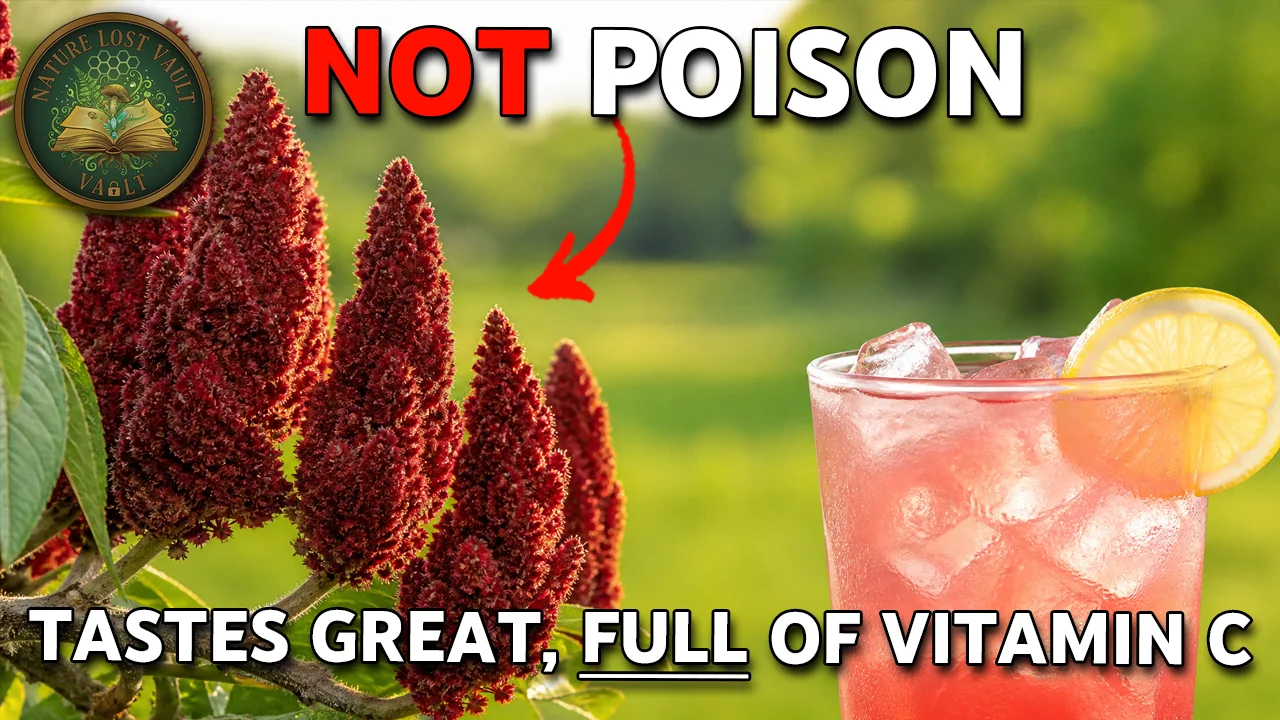

Table of Contents
- What is Staghorn Sumac?
- From Cherokee 'Indian Lemonade' to 1629 English Gardens & the Za'atar Spice Trade
- The Chemistry: Malic Acid, Ascorbic Acid & the Anacardiaceae Family
- Why It Stays Buried: The Poison Sumac Mistake & the Ten-Second ID Nobody Taught You
- How to Consume Staghorn Sumac (Cold Lemonade, Ground Spice & Tea)
- How to Source Staghorn Sumac (Forage, Grow & Buy)
- Frequently Asked Questions
What is Staghorn Sumac?
Every autumn, somewhere in this country, a homeowner walks into the backyard with a saw and destroys one of the most useful wild plants in North America. And they do it on purpose. A neighbor warned them. An internet article told them to. Or the name alone just sounded dangerous.
The shrub they are killing grows tall clusters of deep red cones, and those cones taste like cold lemonade straight off the branch. Crushed and dried, they become the tart, ruby-colored spice that gives Middle Eastern cooking its signature tang. Four hundred years ago, wealthy English gardeners paid serious money to grow this exact American plant as a prized ornamental. It still grows wild, for free, across more than thirty states.
So why do so many Americans look at it and reach for a chainsaw? The answer is one word. Sumac. And a case of mistaken identity almost four centuries in the making. The shrub being cut down is staghorn sumac (Rhus typhina). And nearly everything most people believe about it is wrong.
| Metric | Value |
|---|---|
| Scientific name | Rhus typhina L. (1756) |
| Family | Anacardiaceae (cashew / mango / pistachio family) |
| Common names | Staghorn sumac, velvet sumac, Indian lemonade tree, vinegar tree |
| Origin of "staghorn" name | Young branches covered in soft velvet fuzz, like a deer's antler |
| Mediterranean spice cousin | Rhus coriaria (the sumac in Middle Eastern za'atar) |
| Poison sumac (the confused plant) | Toxicodendron vernix - different genus, swamp-only, white drooping berries |
| Native range | More than 30 US states + southern Canada |
| USDA hardiness | Zones 3-8 |
| Habitat | Dry sunny open ground - roadsides, field edges, old pastures |
| Mature height | 15-25 feet, forms colonies by root suckers |
| Berry appearance | Tight upright cones of deep crimson, pointing skyward like torches |
| Berry harvest window | Late summer to early fall (August-September in most regions) |
| Autumn foliage | Long feathery compound leaves turn brilliant scarlet |
| Berry surface chemistry | Coated mainly in malic acid (vitamin C content modest) |
| First European catalog record | John Parkinson, 1629 (prized ornamental in wealthy English gardens) |
| Formal scientific naming | Carl Linnaeus, 1750s (Rhus typhina) |
| Documented Native nations | Cherokee, Ojibwe, Iroquois (ethnobotanist Daniel Moerman) |
| Colonial-era name | "Indian lemonade" (settlers' name for the cold-steeped drink) |
| Historical industrial use | Bark + leaves used for tanning leather and setting cloth dyes (tannin-rich) |
| Winter ecological role | The tall cones stay on the branches - important cold-season food for songbirds |
| Key technique for lemonade | COLD water steep only - hot water pulls out bitter tannins |
| Modern American status | Mowed, cut, and pulled as a roadside "poison" - the wrong plant, on the wrong ground |
From Cherokee 'Indian Lemonade' to 1629 English Gardens & the Za'atar Spice Trade
The Plant Native Nations Turned to All Summer
Long before anyone feared this plant, the native people of this continent treasured it. Native nations from the Cherokee to the Ojibwe to the Iroquois used staghorn sumac as food and as medicine for centuries. They soaked the red cones in cool water to make a tart, rose-colored drink, so close to lemonade that early settlers called it Indian lemonade and drank it all through the summer heat.
The ethnobotanist Daniel Moerman, who spent decades documenting how Native Americans used wild plants, recorded staghorn sumac in role after role, from a cooling beverage to a wash for sore throats. The tartness you taste is real chemistry - the surface of each berry is coated in malic acid, the main acid, with modest amounts of vitamin C. The dried cones kept their tang for months, which made them a quiet kind of insurance against a long winter.
1629: A Prized Ornamental in the Finest English Gardens
Here is the irony that should sting a little. While Americans were learning to fear it, Europeans were paying handsomely to plant it. By the time the English herbalist John Parkinson was cataloguing garden plants in 1629, this American shrub was already a prized ornamental across the wealthy gardens of England, grown for its torch-like cones and its blazing autumn color. A century later, the great botanist Carl Linnaeus gave it its formal scientific name, Rhus typhina, in the 1750s. The plant your neighbor wants to cut down today was once a status symbol in the finest gardens of London.
From Wild Roadside to the Middle Eastern Spice Jar
And those red cones do far more than make a drink. If you have ever eaten za'atar - that earthy, tangy spice blend dusted over warm flatbread and roasted vegetables all across the Middle East - then you have already tasted sumac. The bright, lemony note in that blend comes from dried, ground sumac berries. The spice you buy in the jar usually comes from a Mediterranean cousin in the very same genus (Rhus coriaria), but the staghorn sumac growing wild on the American roadside carries that same sharp, tart flavor.
Cooks across the Levant and the Mediterranean dust the deep red powder over hummus, over grilled meats, over rice and roasted vegetables, both for the tang and for that gorgeous color. So picture this. People drive to the grocery store and pay a premium for a small, imported jar, while the same flavor sits ignored on the shrub they have been trying to bulldoze out of the yard. Laboratory studies also report antioxidant activity in sumac fruit. The tang and the color are why the rest of the world never stopped using it.
Everyday, Ordinary, and Then Forgotten
For most of American history, none of this was a secret, and none of it was special. It was simply ordinary. Staghorn sumac was the plain, everyday shrub at the edge of the field. Its bark and leaves are heavy with tannins, and tanners once used it to cure leather, while dyers used it to set color into cloth. Nobody wrote songs about it. It was just there. Useful, reliable, standing quietly at the corner of every dry lot in the country. And maybe that is how a plant slips out of memory. Not with a government ban, and not with a scandal, but with a slow, collective shrug. One generation at a time, until all that is left is the half of the name that frightened people.
The Chemistry: Malic Acid, Ascorbic Acid & the Anacardiaceae Family
Why the Berries Taste Like Lemonade
The reason a fresh red cone tastes like citrus off the branch has nothing to do with lemon juice and everything to do with what covers the outside of each berry. The surface of each drupe is coated in a fine coating of malic acid (the same tart acid you find in green apples), with a modest amount of vitamin C. That coating is water-soluble, which is exactly what makes the cold-water lemonade work: the water dissolves the acids off the outside of the berries, leaving the pigment and the flavor in the jar and the tannin-heavy woody bits behind.
And it is exactly why rain washes the flavor away. A hard downpour rinses the acid coating right off the cone. Foragers who know this pick only on a dry day.
The Anacardiaceae Family (and Why It Does Not Make It Dangerous)
Staghorn sumac sits in the same broad plant family as poison sumac, and this shared family is where all the confusion comes from. That family - Anacardiaceae - also includes cashews, mangoes, and pistachios. It includes poison ivy, too. So somewhere along the line, the logic became simple, and simply wrong. Sumac sounds like poison sumac. Poison sumac is related to poison ivy. Therefore, all sumac must be trouble.
Think about that for a second. We do not throw out cashews because they have a difficult cousin. Nobody looks at a mango and worries. Family membership does not make a plant dangerous - the actual chemistry does. Poison sumac produces the same urushiol compound as poison ivy, which is what causes the rash. Staghorn sumac produces no urushiol at all. Its chemistry is tart acids, tannins, and pigment.
Vitamin C, Tannins, and Why Cold Water Matters
The two important compound groups on the plant do very different things - and knowing which is which is the difference between a great drink and a bitter one. The acids on the berry surface (mainly malic) are what you want: bright, tart, citrusy. The tannins bound up in the plant tissue (bark, stems, and the woody inside of the cone) are what you do not want in your glass: bitter, mouth-puckering, astringent.
Here is the trick: cold water dissolves the surface acids but leaves most of the tannins locked in the plant tissue. Hot or boiling water drags the tannins out too, and that is when your lemonade turns harsh and undrinkable. It is the same reason cold-brewed coffee tastes smoother than the hot-poured version - low temperature leaves the bitter compounds behind.
Why It Stays Buried: The Poison Sumac Mistake & the Ten-Second ID Nobody Taught You
Two Plants, One Half of a Name
This story does not start with a chainsaw. It starts with a name that two very different plants were unlucky enough to share.
Poison sumac is a real and genuinely dangerous plant. The blistering rash it leaves behind can be even worse than poison ivy, so the fear is not invented out of thin air. But here is where the trouble begins. Poison sumac and staghorn sumac are not the same plant. They are not even close. And the only thing they truly share is half of a name.
The Ten-Second ID: Red Up on Dry Ground vs White Down in a Swamp
Here is the detail almost everyone misses. Telling these two plants apart is not hard. It might be the easiest plant identification you will ever make in your life.
Staghorn sumac holds its berries in tight, upright cones. Deep crimson, pointed toward the sky like little torches. The young branches are covered in soft fuzz, the same velvet you would feel on a deer's antler, which is exactly where the staghorn name comes from. In the fall, its long, feathery leaves turn a brilliant scarlet you can spot from a moving car. It favors dry, sunny, open ground. The roadsides and field edges and old pastures. The bright, well-drained places that bake in full summer sun.
Poison sumac (Toxicodendron vernix) does the opposite of all of that. Its berries are white, or a pale grey-green, and they hang down loose and drooping, never standing up. Its stems are smooth, with no fuzz at all. And it will only grow with its feet wet, in swamps, bogs, and standing water. So if you are on dry land at the edge of a road, you are almost certainly not looking at poison sumac at all.
The whole rule fits in a single breath:
Red cones standing up on dry ground → SAFE (staghorn).
White berries drooping down in a swamp → leave it be (poison sumac).
That is the entire test. Whole generations cut down a harmless, useful shrub because nobody ever taught them the part that takes ten seconds to learn.
The Shrug That Erased a Continent's Wild Lemonade
Once a fear like that takes hold, it gets passed down like a family recipe, from a cautious parent to a cautious child, until nobody remembers where it started. The name did the work; nobody stopped to check the plant. It is the same pattern that has erased so many wild American foods in one generation: a rumor that outran the truth, a warning that never got corrected, and a beautiful, useful shrub that lost its place at the table without anyone ever proving it dangerous.
How to Consume Staghorn Sumac (Cold Lemonade, Ground Spice & Tea)
The single most important rule for every one of these preparations: use cool or cold water, never boiling. Hot water drags the bitter tannins out of the plant tissue and turns everything harsh. Cold extraction gives you the tart, citrusy, ruby-pink drink Native families made for generations.
1. Sumac Lemonade (the classic cold-steep drink)
The harvest window is late summer into early fall, when the cones are deep, saturated red. Pick on a dry day - a hard rain washes away the acid coating that carries all the flavor.
- Snap off 2 or 3 fully ripe red cones per quart of water.
- Break the cones apart with your hands into a jar or pitcher of cool or room-temperature water.
- Let steep 10 to 20 minutes. The water will slowly blush a deep rose-pink; taste and steep longer for a more concentrated drink.
- Strain through a coffee filter or a clean cloth. This step matters - it catches the fine hairs on the berries, which are important to remove.
- Sweeten to taste with honey, maple, or sugar. Serve chilled over ice.
Do not use hot or boiling water. This is the one mistake that ruins the drink. Cold steeping keeps the bright citrus notes and leaves the tannins behind - the same principle as cold-brew coffee.
2. Ground Sumac Spice (make your own za'atar)
To make the ruby-red spice sold in the Middle Eastern aisle, dry your own cones and grind them at home.
- After harvest, hang the whole red cones out of direct sunlight in a warm, airy spot for 1 to 2 weeks, until the berries are brittle.
- Rub the dried berries off the stems by hand.
- Grind in a spice grinder or mortar and pestle until you have a coarse red powder.
- Sift out the woody bits and any remaining fine hairs.
- Store in a sealed jar out of direct light. Holds its color and tang about a year.
How to use it: dust over hummus, grilled chicken or lamb, roasted vegetables, rice, fattoush salad, avocado toast, or scrambled eggs. To make za'atar, blend equal parts ground sumac + dried thyme + toasted sesame seeds with a smaller pinch of dried oregano and salt.
3. Sumac Tea (small tart cup)
For a warm drink, steep 1 teaspoon of dried, deseeded sumac berries in a cup of just-boiled water, covered, for only 2 to 3 minutes, then strain. Keeping the steep short is what stops the tannins from taking over - go longer and it turns bitter fast. Sweeten to taste.
Honest Safety & Common-Sense Notes
- Confirm your ID before you harvest. Red cones standing UP on dry ground, velvet-fuzzy young branches - staghorn. If you see white berries drooping DOWN in a swamp, walk away. When in doubt, do not harvest.
- Always strain through fine cloth or a coffee filter. The tiny hairs on the berry surface can irritate the throat if swallowed.
- Cold water only for lemonade. Hot water is the single mistake that ruins the drink.
- Anacardiaceae family cross-reactivity. People with severe allergies to cashew, mango, pistachio, or poison ivy should introduce slowly and watch for a reaction the first time.
- Avoid gathering from sprayed roadsides or lawn-treated edges. Most public roadside vegetation is routinely treated with herbicide - harvest only from ground you know is clean.
- Take only what you need and leave plenty of cones on the shrub. The tall red cones stay on the branches through winter and are an important cold-season food for songbirds.
How to Source Staghorn Sumac (Forage, Grow & Buy)
1. Forage (by far the most abundant route)
Staghorn sumac grows wild across more than 30 US states plus southern Canada, hardy in USDA zones 3-8. It favors dry, sunny, well-drained ground: roadsides, field edges, abandoned pastures, railroad embankments, and the sunny margins of woods. Once you learn to spot the tall crimson cones and the scarlet autumn leaves, you will start seeing it everywhere on the drive to the grocery store.
Harvest window: late summer to early fall - typically August through September. The cones ripen to a deep, saturated red and stay on the plant well into winter (which is why the winter silhouette is easy to recognize even without leaves).
Three rules, no exceptions:
- Identify confidently first. Red upright cones + velvet-fuzz stems + dry ground. If any of those three are missing, do not harvest. A swampy or wet-footed shrub with white drooping berries is not staghorn - leave it alone.
- Pick on a dry day. Rain washes off the tart acid coating - a rained-on cone still looks red but has lost most of its flavor.
- Do not gather from sprayed roadsides or lawn-treated edges. Most public roadside vegetation is routinely treated with herbicide. Harvest only from ground you know personally is clean.
2. Grow Your Own (one of the easiest native shrubs to establish)
Staghorn sumac is one of the toughest native shrubs you can plant. It thrives in USDA zones 3-8, tolerates poor dry soils, needs full sun, and is drought-resistant once rooted. Direct-sow the scarified seeds in autumn (they need cold stratification over winter), or plant a young nursery specimen in spring.
It grows quickly to 15-25 feet, spreads by root suckers to form colonies, and gives brilliant scarlet autumn color as a bonus. One caution: staghorn sumac is genuinely aggressive by root. Plant it where you want a colony (a wild corner, a hedge, an erosion-prone slope), not next to a formal lawn or a small ornamental bed. Once established, it needs almost zero care.
3. Buy the Spice (the practical option for most people)
If you cannot forage or grow your own, the same tart ruby-red spice is stocked by Middle Eastern grocery stores and online. Most commercial sumac comes from the Mediterranean cousin Rhus coriaria, which is essentially identical in culinary use to staghorn sumac (Rhus typhina) - the flavor is the same tart, lemon-tinged red note.
What to look for on a label:
- 100% sumac - no salt, no filler, no anti-caking agents. The Middle Eastern grocery brands are usually the purest.
- Bright brick-red color - the deeper and more vivid the red, the fresher the spice. A brownish color means it has oxidized and lost potency.
- The Latin name printed on the jar where possible - Rhus coriaria (Mediterranean) or Rhus typhina (North American).
- Stored in a sealed jar out of light - sumac keeps its color and tang for about a year that way.
» Ground sumac spice (ready to use in za'atar or dusted over food)
» Staghorn sumac seeds (grow your own colony)
Frequently Asked Questions
Is staghorn sumac poisonous or safe to eat?
Staghorn sumac is completely safe to eat. It is not related in any harmful way to poison sumac. The confusion is a case of mistaken identity almost four centuries in the making - the two plants share only half of a name.
Poison sumac (Toxicodendron vernix) is a real plant, and it does cause a blistering rash worse than poison ivy - but telling the two apart takes about ten seconds:
- Staghorn sumac: deep crimson berries in tight upright cones pointing skyward, velvet-fuzz stems like a deer's antler, grows on dry sunny open ground (roadsides, field edges, old pastures).
- Poison sumac: white or pale grey-green berries hanging DOWN in loose drooping clusters, smooth stems with no fuzz, grows only with wet feet in swamps, bogs, and standing water.
The single-breath rule: red cones standing up on dry ground = safe (staghorn); white berries drooping down in a swamp = leave it be (poison sumac). If you are on dry land at the edge of a road, you are almost certainly not looking at poison sumac at all.
What does staghorn sumac taste like and what is it used for?
Straight off the branch, the deep red cones of staghorn sumac taste like cold lemonade - a sharp, tart, citrusy flavor. That tartness is real chemistry: the surface of each berry is coated in malic acid, the main acid, with modest amounts of vitamin C.
Native nations from the Cherokee to the Ojibwe to the Iroquois soaked the red cones in cool water for centuries to make a rose-colored drink so close to lemonade that early settlers called it Indian lemonade and drank it all through the summer heat. Crushed and dried, the same berries become the bright, tart ruby-red spice that gives Middle Eastern cooking its signature tang - the sumac in za'atar, the sumac dusted over hummus, grilled meats, rice, and roasted vegetables across the Mediterranean and Levant.
The jar you buy in the store usually comes from a Mediterranean cousin in the same genus (Rhus coriaria), but the staghorn sumac growing wild on the American roadside carries the same sharp, tart flavor and grinds into the same spice, and laboratory studies report antioxidant activity in sumac fruit. Historically the bark and leaves (heavy with tannins) were also used to tan leather and set dyes into cloth.
How do you tell staghorn sumac apart from poison sumac?
It is one of the easiest plant identifications you will ever make. Four differences, any one of which is enough on its own:
- Berries. Staghorn: deep crimson, tightly packed in upright cones pointing up toward the sky, like little torches at the top of the branch. Poison sumac: white or pale grey-green, hanging down in loose drooping clusters, never upright.
- Stems. Staghorn: young branches covered in soft velvet fuzz, the same texture as a deer's antler (the source of the name). Poison sumac: smooth stems with no fuzz at all.
- Habitat. Staghorn: dry, sunny, open ground - roadsides, field edges, abandoned pastures, the well-drained places that bake in full summer sun. Poison sumac: wet feet only, in swamps, bogs, standing water, and the edges of ponds and slow streams.
- Autumn color. Staghorn: long feathery compound leaves turn a brilliant scarlet-red you can spot from a moving car. Poison sumac also turns red, but the leaves are smoother and grow in swamp settings you would rarely stumble across on a normal walk.
The single-breath rule for a homeowner or forager: red cones standing up on dry ground = safe (staghorn); white berries drooping down in a swamp = leave it be (poison sumac). The two plants sit in the same broad plant family (Anacardiaceae, which also includes cashews, mangoes, and pistachios), but that shared family is meaningless for safety - we do not throw out cashews because pistachios have a difficult relative called poison ivy.
How do you make sumac lemonade, and how do you consume staghorn sumac?
The classic use is the cold-steep lemonade drink Native families have made for generations, and the technique matters. Harvest window: late summer into early fall, when the cones are deep red. Pick on a dry day - a hard rain washes away the tart acid coating that holds all the flavor.
Sumac Lemonade:
- Snap off a few ripe red cones (about 2 per quart of water).
- Break them apart into a jar or pitcher of cool or room-temperature water.
- Let soak 10 to 20 minutes; the water will slowly blush a deep pink.
- Strain through a coffee filter or clean cloth (this catches the fine hairs on the berries, which matter).
- Sweeten with honey, maple, or sugar to taste. Serve cold.
The single most important rule: NEVER use hot or boiling water. Hot water drags the bitter tannins out of the plant tissue and turns your bright lemonade harsh and mouth-puckering. Cold steeping keeps the citrus-bright acids and leaves the tannins behind.
Ground spice: dry the whole cones out of direct sunlight for 1-2 weeks until brittle, rub the berries off the stems, grind in a spice grinder, and sift out the woody bits. You now have the same tart ruby-red spice sold in Middle Eastern stores for a premium. Dust it over hummus, grilled meat, roasted vegetables, rice, or salad - or make your own za'atar (blend ground sumac with dried thyme, oregano, toasted sesame seeds, and salt).
Herbal tea: a small amount of dried berries steeped briefly in hot water (2-3 minutes only, then strained) makes a tart, vitamin-rich cup. Keep the steep short to avoid pulling too much tannin.
Where does staghorn sumac grow and how do you source it?
Three routes:
(1) Forage. Staghorn sumac grows wild across more than 30 US states plus southern Canada, hardy in USDA zones 3-8. It favors dry, sunny, well-drained ground: roadsides, field edges, abandoned pastures, railroad embankments, and the sunny margins of woods. The window is late summer to early fall - cones ripen deep red in August through September in most regions. Three rules:
- Identify confidently first (red upright cones + velvet-fuzz stems + dry ground - never in a swamp).
- Harvest on a dry day (rain washes off the tart coating).
- Do not gather from chemically-sprayed roadsides or lawn-treated edges, and leave plenty of cones for the winter birds that depend on them.
(2) Grow your own. Staghorn sumac is one of the easiest native shrubs to establish - hardy in USDA zones 3-8, tolerant of poor dry soils and full sun, and drought-resistant once rooted. Direct-sow the scarified seeds in autumn (they need cold stratification), or plant a young nursery specimen in spring. It grows quickly to 15-25 feet, spreads by root suckers to form colonies, and gives brilliant scarlet autumn color as a bonus. It is genuinely aggressive by root - plant it where you want a colony, not next to a formal lawn.
(3) Buy. If you cannot forage or grow it, the same tart ruby-red spice sold in Middle Eastern grocery stores and online (usually from the Mediterranean cousin Rhus coriaria) is essentially identical in culinary use. Ground sumac keeps its color and tang for about a year in a sealed jar out of light. On a label, look for 100% sumac (no salt or filler), a bright brick-red color (not brown, which means it has oxidized), and the Latin name where specified.
Explore More Medicinal Plants
Discover ancient healing plants backed by centuries of traditional use and modern science.
Browse Medicinal Plants Collection →