
Amaranth (Amaranthus): The Aztec Grain the Spanish Conquest Condemned as Idolatry
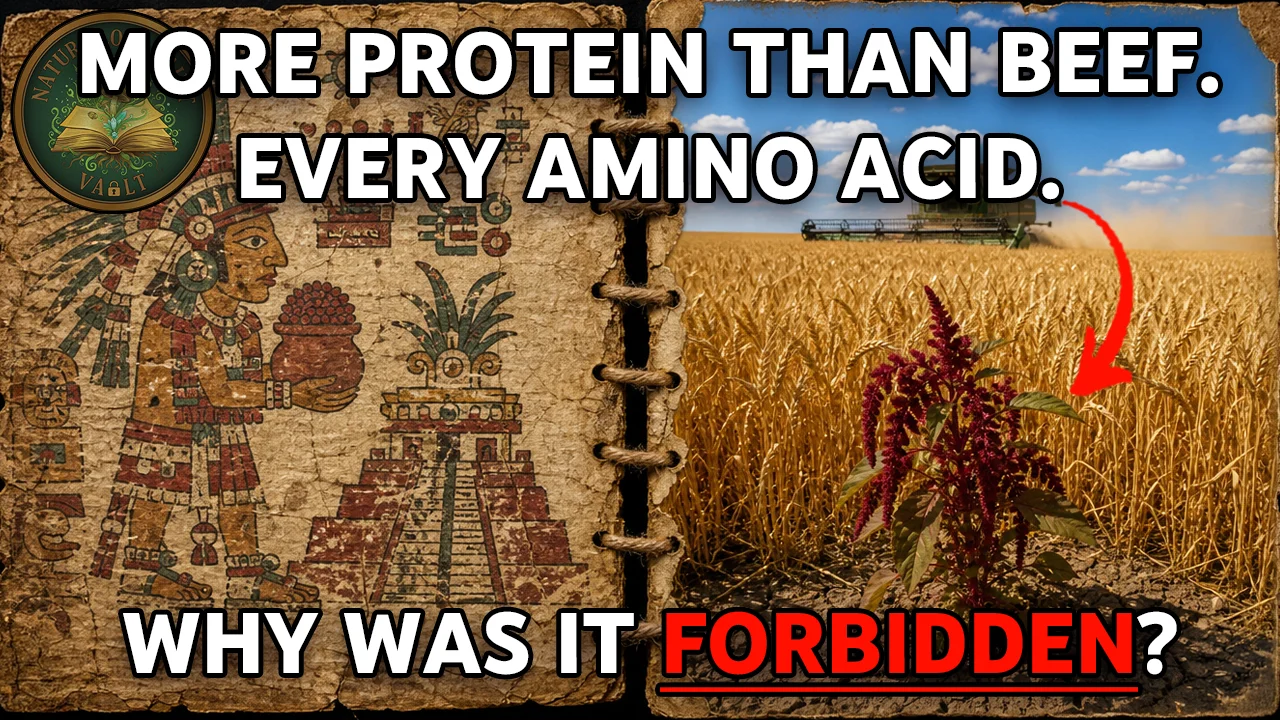
Table of Contents
Recommended Products:
Red Amaranth Seeds Green Garnet Amaranth Seeds
Affiliate links - support our channel
What is Amaranth?
On August 13, 1521, the city of Tenochtitlan fell to the Spanish. Nearly every article on amaranth says that Hernán Cortés then decreed death, or the loss of a hand, for anyone caught growing the grain the Aztecs called huauhtli. No one has ever produced that decree. What the record shows is that no law was needed. The friars branded the grain the very symbol of idolatry, festivals that used it were stamped out, the Spanish pushed wheat onto the best land, and the tribute system that moved amaranth into the capital was dismantled. Then epidemics killed the farmers who knew how to grow it.
For roughly four centuries, an imperial crop was reduced to household plots. It survived in highland villages of Mexico, Guatemala and the Andes, where Indigenous families kept sowing small plots and passing the knowledge to their children, and in the Mexican street sweet alegría. Growing this grain became an act of cultural continuity. Saving its seeds became an act of survival.
This is amaranth, genus Amaranthus, a pseudo-cereal in the family Amaranthaceae. The cultivated grain species are Amaranthus cruentus, A. hypochondriacus, and the Andean A. caudatus. The plant grows 4 to 8 feet tall, produces tall plumes of crimson, gold, or green flowers, and yields between 50,000 and 100,000 seeds per plant in a season. The seeds are smaller than poppy seeds. The leaves are edible like spinach. The grain contains 14 to 19 percent protein by weight, higher than wheat or rice, and is the only common cereal that contains all nine essential amino acids in significant concentrations. Its lysine content, about 5.5 grams per 100 grams of protein, is roughly twice the lysine of wheat (USDA). Its wild cousin, Amaranthus palmeri, is now the most herbicide-resistant weed in American agriculture and a prime target of the herbicide industry. The grain the conquerors condemned for being too sacred is the same plant industrial agriculture now fights for being too uncontrollable.
| Metric | Value |
|---|---|
| Botanical genus | Amaranthus (~75 species; main cultivated grains: A. cruentus, A. hypochondriacus, A. caudatus) |
| Family | Amaranthaceae (same family as quinoa, beet, spinach) |
| Common names | Amaranth, huauhtli (Nahuatl), kiwicha (Quechua), pigweed, love-lies-bleeding, prince's feather |
| Photosynthesis pathway | C4 (highly water- and nitrogen-efficient) |
| Mature height | 4–8 feet (1.2–2.4 m); Palmer amaranth up to 10 ft |
| Seeds per plant | 50,000–100,000 (cultivated); up to 500,000 (Palmer amaranth) |
| Earliest documented use | ~6,000–8,000 years ago in Mesoamerica |
| Aztec tribute (Montezuma's reign) | ~20,000 tons / year from 17 tribute provinces |
| After the conquest | Condemned as idolatry by friars after August 13, 1521 (no Cortés death-penalty decree has been found) |
| Total protein content | 14–19% by weight (higher than wheat or rice) |
| Essential amino acids | All 9 present in significant concentrations |
| Lysine content | ~5.5 g per 100 g protein (~2× wheat, USDA) |
| Calcium (per 100 g grain) | 159 mg (wheat: 29 mg, USDA) |
| Notable bioactive | Squalene (once harvested mainly from shark liver) |
| Gluten | None (naturally gluten-free) |
| Photosynthesis | C4 (heat and drought efficient) |
| First glyphosate-resistant Palmer amaranth | Macon County, Georgia, 2004 |
| Most troublesome weed ranking | WSSA survey, 2016 (U.S. broadleaf crops) |
| Cooking ratio | 3 parts water : 1 part grain, simmer 20–25 min |
Tenochtitlan, the Florentine Codex & the 1521 Conquest
The archive opens in 1325. The Mexica people, who would become known as the Aztecs, are building a city on an island in the middle of Lake Texcoco. They call it Tenochtitlan. Within two centuries it will hold around 300,000 inhabitants, larger than any contemporary European city. Feeding that many people on an island required agricultural genius. The Aztecs answered with chinampas: floating gardens woven from reeds, packed with lake sediment, anchored to the lakebed by willows, and irrigated by capillary action through their own walls. On these artificial islands they grew the trinity that sustained the empire: corn, beans, and huauhtli.
Huauhtli: A Foundation, Not a Side Crop
The Matrícula de Tributos, the Aztec tax codex compiled before the conquest, lists huauhtli alongside corn, beans, cacao, and gold as essential tribute. Under Montezuma II, around 20,000 tons of amaranth grain flowed into Tenochtitlan every year from 17 tribute provinces, a figure preserved in the tribute lists of the Codex Mendoza (c. 1541). The Florentine Codex, compiled by the Spanish friar Bernardino de Sahagún in the 1500s with Indigenous informants and illustrators, contains detailed images of Aztec farmers harvesting amaranth, threshing the seed, and storing it in clay vessels. The grain appears in tamales mixed with corn, in everyday porridge, and popped like miniature popcorn and bound with honey or agave, the original form of the modern Mexican sweet alegría.
The Communion of Huitzilopochtli
Amaranth's role went beyond calories. During festivals of Huitzilopochtli, the Aztec god of sun and war, priests shaped a dough of amaranth seed into statues of the deity. Some chroniclers wrote that the dough was bound with sacrificial blood; Sahagún describes honey and maguey syrup. The figures were worshipped, then broken into pieces and distributed to the people for eating. A communion. A sacred act. A way to literally consume divinity. To the Catholic Church arriving with the conquistadors, this was unforgivable. It looked like an inversion of the Eucharist, the body and blood of Christ, performed by people the Spanish had already declared demonic. Amaranth was no longer just a food; it had become a theological enemy.
August 13, 1521: The Story of the Ban
Tenochtitlan fell on August 13, 1521. A widely repeated story says Cortés then decreed death, or the loss of a hand, for anyone caught growing amaranth. No primary document containing such a decree has ever been found. The documented mechanisms were enough: the friars condemned tzoalli as idolatry, the Spanish discouraged amaranth and favored wheat, the tribute system that moved 20,000 tons a year collapsed, and smallpox and other epidemics killed the communities that knew how to sow, thresh and store the grain.
Survival in the Mountains: Four Centuries on the Margins
Amaranth survived because Indigenous farmers refused to let it die. In remote highland villages of Mexico, Guatemala, and the Peruvian Andes, families kept sowing small plots and taught their children the cultivation. By the time researchers in the 1970s went looking for the lost grain, they did not find it in gene banks or research stations. They found it in the hands of farming communities who had been growing it continuously for centuries while the rest of the world forgot it existed. In Pennsylvania, the Rodale Research Center gathered those seeds and tested them, and in 1984 the National Research Council published Amaranth: Modern Prospects for an Ancient Crop. That is not a footnote. That is the entire story.
Modern Science: Lysine, Squalene & C4 Photosynthesis
Modern nutritional analysis has confirmed, in laboratory terms, what Aztec mothers knew when they weaned children on amaranth porridge. The grain is a near-complete human food.
14 to 19 Percent Protein With All Nine Essential Amino Acids
Most plant proteins are incomplete. Wheat is deficient in lysine. Corn is deficient in lysine and tryptophan. Rice is deficient in lysine. To build complete protein from grains, traditional cuisines pair them with legumes: rice and beans, corn and beans, wheat and lentils. Amaranth removes the requirement. It contains all nine essential amino acids the human body cannot synthesize on its own: histidine, isoleucine, leucine, lysine, methionine, phenylalanine, threonine, tryptophan, and valine. USDA data show 13.6 grams of protein per 100 grams of uncooked grain, with a lysine level that puts its protein quality close to the reference proteins of milk and egg.
The Lysine Advantage
Lysine is the limiting amino acid in nearly every cereal grain: the one in shortest supply, and therefore the one that caps how much of the rest your body can use. Per 100 grams of protein, hard red wheat carries about 2.7 grams of lysine. Amaranth carries about 5.5 grams (USDA), roughly twice the wheat figure. Lysine is essential for calcium absorption, collagen synthesis, antibody formation, and growth-hormone regulation. A diet adequate in calories but deficient in lysine produces malnutrition even on a full stomach, the silent form of hunger that has shaped public-health outcomes across cereal-dependent populations for centuries. Amaranth eliminates that deficiency from a single grain.
Squalene, Iron and the Antioxidant Profile
Beyond protein, amaranth is unusually rich in iron, calcium, magnesium, and phosphorus, and contains a measurable concentration of squalene, an antioxidant lipid once harvested mainly from shark liver. Studies led by Harold Corke at the University of Hong Kong found amaranth oil to be one of the richest plant sources of it. Squalene is used in cosmetic and pharmaceutical formulations. Amaranth produces it from a seed. The grain is naturally gluten-free, which matters both for the rising population of celiac and gluten-sensitive eaters and for any food-security context where wheat is unavailable.
A Plant Built for Heat
Amaranth runs on C4 photosynthesis, the high-efficiency carbon engine of corn and sugarcane. C4 plants keep working in heat and glare that slow other crops, and lose less water for every gram of growth. That is exactly why Palmer amaranth crushes cotton fields, and why grain amaranth is built for a hotter, drier century. (A popular claim that NASA selected amaranth for Space Shuttle flights is not documented in primary sources; amaranth appeared in 1980s research literature on life-support crops, but no shuttle selection is on record.)
Why It Stays Buried: Palmer Amaranth and the Herbicide War
The conquest is the historical reason amaranth disappeared. The reason it is still not a staple in supermarkets, school lunches, or food-aid programs is more recent and more economic. It comes down to a single feature the plant could not be designed out of: it does not need help.
The Superweed: Amaranthus palmeri
Palmer amaranth (Amaranthus palmeri) is the wild cousin of the cultivated grain. Same genus. Same family. Different breeding history. Where Indigenous farmers selected cultivated amaranth for high seed yield and pale grain, natural selection bred Palmer amaranth for raw survival. In a 2016 survey the Weed Science Society of America ranked it the most troublesome weed in U.S. broadleaf crops. It grows up to 3 inches in a single day, reaches 10 feet tall, produces 500,000 seeds per plant, thrives in heat and drought, and outcompetes corn, soybeans, and cotton for nutrients and water. Fields infested with Palmer amaranth report yield losses of up to 90 percent. In the worst cases, farmers abandon crops entirely.
2004: The First Glyphosate Resistance
In 2004, the first glyphosate-resistant Palmer amaranth was confirmed in Macon County, Georgia. Glyphosate is the active ingredient in Roundup, the most widely used herbicide on Earth. Within a decade, glyphosate-resistant Palmer amaranth had spread across the Southeast cotton belt. Farmers switched to alternative chemistries: 2,4-D, dicamba, glufosinate. Palmer amaranth evolved resistance to all of them. In 2019, glufosinate-resistant populations were confirmed in Arkansas. In 2018, Dal-Hoe Koo and Mithila Jugulam of Kansas State University showed in PNAS something unprecedented: glyphosate-resistant Palmer amaranth carries extra copies of the gene the herbicide attacks on extrachromosomal circular DNA (eccDNA), producing so much of the target enzyme that the herbicide cannot overwhelm the plant. The mechanism had never previously been documented in plants.
The Herbicide Market
An entire industry now lives off killing it. Universities run whole programs against it, extension offices publish eradication bulletins every season, and many herbicide products list Amaranthus species, sold under the agricultural label of pigweeds, among their key targets. Bayer (which now owns Monsanto), Syngenta, Corteva, and BASF all manufacture chemistries designed to kill plants in this genus. The pattern is a closed loop: superweed develops resistance, manufacturer releases new chemistry, superweed develops new resistance, manufacturer releases the next.
The Real Threat: A Crop That Needs Nothing
The conquerors condemned cultivated amaranth because it was too sacred. Modern industrial agriculture fights wild amaranth because it is too successful. The reason Palmer amaranth is unkillable is the same reason cultivated amaranth fed empires: it is adapted to survive. It produces absurd amounts of seed (so farmers can replant from one plant). It thrives in poor soil (so it does not need synthetic nitrogen). It tolerates drought (so it does not need irrigation). It defends itself against pests (so it does not need pesticides). A crop that needs little fertilizer, irrigation or spray is not a product anyone can sell inputs to. That is not a flaw of the plant. That is the business case against it.
How to Grow, Harvest & Cook Amaranth
Planting and Identification
Amaranth is one of the easiest grains to grow at the home scale. Direct-sow after the last frost in any sunny spot with reasonably drained soil. The seeds are tiny, so scatter them lightly and rake in. Germination takes 7 to 14 days. The seedlings are recognizable by paired smooth oval leaves, often with a faint reddish tint at the stem base. Mature plants reach 4 to 8 feet tall depending on variety, with Amaranthus cruentus producing crimson-red plumes, Amaranthus hypochondriacus producing dense gold-to-burgundy panicles, and green-grain varieties producing pale plumes that are easier to thresh. The plant tolerates drought, heat, and poor soil. It needs no fertilizer.
Harvesting the Grain
Wait until the plumes feel dry and shed seed when you rub them between your hands, usually 90 to 110 days from sowing. Cut the seed heads into a clean bucket or onto a tarp and rub them between gloved hands or against a screen to release the grain. Winnow in front of a fan or in a steady breeze: the chaff blows away while the heavier seed drops. A single mature plant yields between 50,000 and 100,000 seeds, around half a pound to a full pound of clean grain. Save the largest, cleanest seed from your best plants for next year's planting. No annual seed purchase. No patent. No corporation between you and the next harvest.
Cooking the Grain
The basic ratio is 3 parts water to 1 part amaranth. Bring to a boil, reduce to a simmer, cover, and cook for 20 to 25 minutes until the seeds are tender and the water is absorbed. The texture is similar to porridge, the flavor nutty with a slight pepper note. For breakfast: cook with milk or plant milk, cinnamon, and honey. For a savory side: salt, butter or olive oil, a clove of garlic. For a thicker grain, toast the dry seeds in a hot dry pan for two minutes before adding the water.
Popped Amaranth and Alegría
Heat a dry skillet on medium-high until a single drop of water dances and evaporates. Add a single tablespoon of dry amaranth at a time. Swirl. The seeds will pop within seconds, expanding into miniature white kernels. Larger batches will burn before they pop, so work small. Popped amaranth is the basis of alegría, the traditional Mexican sweet made from popped amaranth bound with honey, agave, or melted piloncillo, pressed into bars, and cut. The same recipe Aztec children ate in Tenochtitlan is still sold in markets across central Mexico today.
The Leaves
Cultivated amaranth produces edible leaves throughout the growing season. Harvest the young leaves and tender shoot tips and cook like spinach. The leaves of weedy Amaranthus retroflexus (redroot pigweed) and Amaranthus blitum are also edible cooked, and have been a famine food and a deliberate vegetable across India, Africa, and the Caribbean for centuries. Like spinach and chard, amaranth leaves contain oxalates and nitrates; cook them rather than eating raw in large quantities, and pour off the cooking water if you are sensitive.
Safety
Amaranth grain is one of the safest staple foods known and has been consumed continuously across the Americas for thousands of years. The leaves contain oxalates and nitrates and should be cooked, not eaten in large raw quantities. Livestock fed unlimited Palmer amaranth foliage can develop nitrate toxicity, which is why farmers eradicate it in pasture; this is not a concern at human dietary scale. Amaranth grain is naturally gluten-free, suitable for people with celiac disease and gluten sensitivity, and has no documented major drug interactions. As with any food crop, harvest from soil you know, away from roadsides, industrial sites, and recently sprayed fields.
Frequently Asked Questions
What is amaranth and why did it disappear?
Amaranth (genus Amaranthus) is a pseudo-cereal grain and leafy vegetable that the Aztecs called huauhtli and cultivated as one of the three pillars of Tenochtitlan's food system, alongside corn and beans. Tribute records from Montezuma's reign show 20,000 tons of amaranth flowing into the capital every year from 17 provinces. Aztec priests shaped amaranth dough into statues of the sun god Huitzilopochtli, which were then broken and shared as a communion; some chroniclers wrote that the dough was bound with sacrificial blood, while Sahagún describes honey and maguey syrup. To the friars arriving with Hernán Cortés, this looked like a mockery of the Eucharist. A widely repeated story says that after Tenochtitlan fell on August 13, 1521, Cortés decreed death or the loss of a hand for growing amaranth, but no such decree has ever been found. What is documented is that friars condemned it as idolatry, the Spanish pushed wheat, the tribute system was dismantled and epidemics killed the farmers who grew it. It survived in small highland plots and in the Mexican sweet alegría.
Is amaranth a complete protein?
Yes. Amaranth contains all nine essential amino acids in significant concentrations: histidine, isoleucine, leucine, lysine, methionine, phenylalanine, threonine, tryptophan, and valine. Total protein is 14 to 19 percent by weight, higher than wheat or rice. The standout is lysine, the limiting amino acid in almost all cereal grains: amaranth contains about 5.5 grams of lysine per 100 grams of protein, roughly twice the level in wheat (about 2.7), according to USDA data. That puts its protein quality close to that of milk and egg, unusually high for a plant.
How do you cook amaranth grain?
Use roughly 3 parts water to 1 part amaranth grain. Bring to a boil, reduce to a simmer, cover, and cook for 20 to 25 minutes until the seeds are tender and the water is absorbed. The texture is similar to porridge, and the natural flavor is nutty with a slight pepper note. For a savory side, add salt and a knob of butter. For breakfast, cook with milk or plant milk, cinnamon, and honey. Amaranth can also be popped like miniature popcorn: heat a dry skillet on medium-high, add a single tablespoon of dry seed at a time, swirl, and the seeds will pop within seconds. Popped amaranth is the basis of alegría, the traditional Mexican sweet made from popped amaranth bound with honey, agave, or piloncillo. The leaves of cultivated amaranth (and of weedy species like Amaranthus retroflexus) are edible cooked like spinach.
What is the difference between cultivated amaranth and Palmer amaranth?
Cultivated amaranth species (Amaranthus cruentus, A. hypochondriacus, A. caudatus) are the grain crops Indigenous farmers in Mesoamerica and the Andes domesticated over thousands of years for high seed yield, large pale or white grain, and tall ornamental flower plumes. Palmer amaranth (Amaranthus palmeri) is a wild cousin native to the southwestern United States and Mexico. A 2016 Weed Science Society of America survey ranked it the most troublesome weed in U.S. broadleaf crops. It grows up to 3 inches in a single day, reaches 10 feet tall, produces 500,000 seeds per plant, and has evolved resistance to glyphosate (2004 in Georgia), 2,4-D, dicamba, and glufosinate (2019 in Arkansas). In 2018, Kansas State researchers showed that glyphosate-resistant Palmer amaranth amplifies the herbicide's target gene on extrachromosomal circular DNA, a resistance mechanism never seen before in plants. Both forms share the same biological strengths: extreme seed production, drought tolerance, and the ability to thrive without inputs.
Did NASA select amaranth for space missions?
The often repeated claim that NASA selected amaranth for Space Shuttle flights is not documented in primary sources. Amaranth was discussed in the 1980s literature on crops for closed life-support systems, but no record shows it was chosen for shuttle missions. Its documented strengths are on the ground: high-quality protein with about twice the lysine of wheat, high calcium, iron and magnesium, oil rich in squalene (once harvested mainly from shark liver), no gluten, and C4 photosynthesis that keeps it productive in heat and drought.
Explore More Survival Foods
Discover the staple plants that fed civilizations through drought, famine, and conquest.
Browse Survival Foods Collection →