
Hawthorn (Crataegus): The 2,000-Year Heart Tree Germany Still Prescribes That American Medicine Abandoned in the 1930s
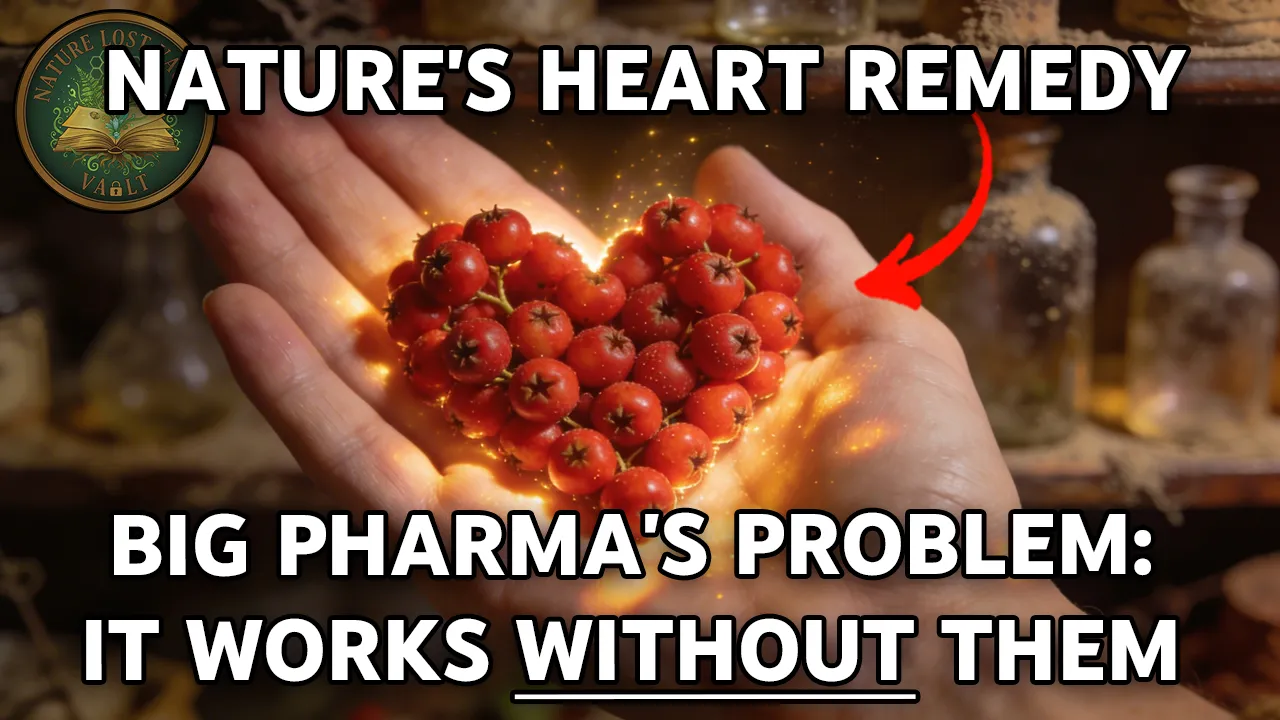
Table of Contents
- What is Hawthorn?
- Tang Dynasty 659, the Hedgerow & Dr. Greene's Secret Formula
- Epicatechin, OPCs & the 2008 Cochrane Review the 2009 Trial Buried
- Why It Stays Buried: The Flexner Report, Digoxin & the HERB-CHF Add-On Study
- How to Consume Hawthorn (Tea, Tincture, Standardized Extract & Berry Foods)
- How to Source Hawthorn (Forage, Grow & Buy)
- Frequently Asked Questions
What is Hawthorn?
If you are diagnosed with heart failure, your doctor will hand you prescriptions - beta blockers, ACE inhibitors, diuretics, statins, maybe digoxin (a drug with such a narrow safety margin that it requires blood level monitoring). Four, five, sometimes six pills every day, doctor visits every few months for the rest of your life - because those drugs do not heal. They manage.
What if there was something else? Something that worked gently, over time. Something you could grow yourself. There was. An Irish doctor kept it as a secret heart cure. American Eclectic physicians took it up after a medical journal article in 1896. Then, within a few decades, it vanished from American medicine. Not because a study proved it useless. Because the schools that taught it were closed, and because it could not be patented.
This is hawthorn (Crataegus spp.). A dense thorny tree in the rose family (Rosaceae), crowned with clusters of white flowers in spring and bright red berries by autumn. For centuries it was called Mayflower, Whitethorn, Maybush, the tree of the heart.
| Metric | Value |
|---|---|
| Scientific name (genus) | Crataegus spp. (200+ species worldwide) |
| Family | Rosaceae (rose family) |
| European pharmacopoeia species | Crataegus monogyna & Crataegus laevigata |
| North American native species | C. mollis, C. crus-galli, C. phaenopyrum, others |
| Common names | Hawthorn, Mayflower, Whitethorn, Maybush, Quickthorn, Heart Tree, haw |
| Etymology - genus | Greek kratos, "strength" - referring to the wood's hardness |
| Parts used | Dried flowering tops, leaves, ripe red berries (haws) |
| Identifying features | Dense thorny 15-30 ft tree; small lobed leaves; clusters of 5-petal white flowers in May; bright red 1 cm berries in autumn |
| Native range | Temperate Northern Hemisphere - N. America, Europe, N. Africa, Asia |
| European folklore | The May tree of spring festivals; little documented heart use before the 1890s |
| Tang Dynasty (China) | 659 CE - Chinese hawthorn (shanzha) recorded in the Xinxiu Bencao, used mainly for digestion |
| British hedges | Enclosure Acts made hawthorn the most common hedge in Britain |
| Indigenous N. American use | Cherokee (bark for circulation), Iroquois (berries baked into bread) |
| Dr. Greene's secret formula | Physician of Ennis, County Clare; after his death in 1894 his daughter revealed the remedy was hawthorn-berry tincture |
| American adoption | 1896 - J. C. Jennings, New York Medical Journal; taken up by Eclectic physicians for weak, irregular and racing hearts |
| Active compounds | Epicatechin, quercetin, oligomeric proanthocyanidins (OPCs), vitexin, hyperoside |
| Mechanism | Coronary vasodilation, positive inotropy, lower peripheral resistance, antioxidant cardioprotection |
| 2008 Cochrane review | 14 trials, 855 patients - better exercise capacity, less shortness of breath and fatigue |
| 2008 SPICE trial | 2,681 patients - no reduction in main cardiac endpoint; safe alongside modern drugs |
| 2009 HERB-CHF trial (add-on design) | Hawthorn added on top of full conventional therapy in 120 patients - no added benefit at six months, used as headline that "hawthorn doesn't work" |
| 2006 University of Reading trial | 1,200 mg/day in 79 people with type 2 diabetes - diastolic pressure fell significantly more than placebo |
| Germany Commission E status | Hawthorn leaf with flower approved for mild heart failure (1980s) |
| Status in Germany | Licensed medicine; WS 1442 (Schwabe) is the most studied extract |
| Digoxin (contrast) | Narrow safety margin; requires blood level monitoring |
| Standardized extract dose (clinical) | 160-900 mg/day standardized to 1.8% vitexin or 18.75% OPCs |
| Modern American status | Disappeared from medical textbooks by the 1950s; available only as supplement |
Tang Dynasty 659, the Hedgerow & Dr. Greene's Secret Formula
The Tang Dynasty & the May Tree
In the year 659 CE, Chinese hawthorn, Crataegus pinnatifida or shanzha, entered the Tang Dynasty Xinxiu Bencao, often called the world's first state pharmacopoeia. Chinese physicians prized it for digestion, especially after rich, fatty meals. In Europe, hawthorn lived in folklore: it was the May tree, whose blossom crowned spring festivals.
The Most Common Hedge in Britain
As Britain's Enclosure Acts fenced the old open fields, landowners planted hawthorn by the million, because no cow could push through its thorns. Hawthorn became the most common hedge in Britain. It was everywhere, so it was worth nothing. Documented European use of hawthorn for the heart before the 1890s is thin.
1894: Dr. Greene's Secret Formula Revealed
In the market town of Ennis, County Clare, an Irish physician named Greene uses hawthorn so successfully that he keeps his formula a secret his entire life. Only after his death in 1894 does his daughter reveal the cure: a tincture of ripe hawthorn berries. In 1896, Chicago physician J. C. Jennings publishes on hawthorn for heart disease in the New York Medical Journal, and the American Eclectic physicians take it up for weak, irregular and racing hearts. Unlike digitalis - the toxic foxglove extract that requires precise dosing to avoid poisoning - hawthorn's side effects are mild and rare. It was used as a slow tonic, taken for months.
Indigenous North American Use
In North America, Cherokee healers use the bark to improve circulation. The Iroquois bake the berries into bread. Both nations understand that this plant works slowly and gently, building strength over months rather than forcing change in hours. It is a true cardiotonic - a remedy that nourishes the heart rather than whipping it into submission.
Epicatechin, OPCs & the 2008 Cochrane Review the 2009 Trial Buried
The Chemistry: Why It Works
Modern analysis reveals why hawthorn worked across so many traditions. The berries, leaves, and flowering tops contain epicatechin, quercetin, and oligomeric proanthocyanidins (OPCs) - along with vitexin, hyperoside, and a family of related flavonoids. These compounds work together to:
- Dilate coronary arteries - improving oxygen flow to the heart muscle.
- Strengthen cardiac contractions (positive inotropy) without the narrow toxicity window of digitalis.
- Lower peripheral resistance - the cardiac afterload that strains a failing heart.
- Act as powerful antioxidants - protecting heart tissue from the oxidative stress that accelerates cardiac aging.
The 1980s-1990s Clinical Evidence
In 2008, a Cochrane review by Ruoling Guo, Max Pittler and Edzard Ernst, a well-known skeptic of alternative medicine, pooled 14 randomized trials with 855 patients with chronic heart failure. Patients taking hawthorn alongside their usual treatment showed better maximal exercise capacity, lower cardiac oxygen demand, and less shortness of breath and fatigue. Side effects were rare and mild. The verdict: a significant benefit in symptom control.
Hawthorn vs Digoxin: The Toxicity Contrast
Compare hawthorn to digoxin, the pharmaceutical standard derived from foxglove. Digoxin has a narrow therapeutic index, meaning the difference between an effective dose and a toxic dose is small. Patients require regular blood tests to check their levels. Too little, it does not work. Too much, and you experience nausea, vision changes (the famous yellow-green sight), confusion, dangerous arrhythmias, potentially death. The drug interacts with dozens of common medications.
Hawthorn, by contrast, is gentle; side effects are usually mild, such as dizziness, nausea or digestive upset. In the 1980s Germany's Commission E approved hawthorn leaf with flower for mild heart failure. Standardized extracts, above all WS 1442 from the family firm Schwabe, became licensed medicines and the most studied hawthorn preparations on Earth.
2019: Confirmed for Mild Hypertension
Blood pressure tells a similar story. In 2006, Ann Walker at the University of Reading gave 1,200 mg of hawthorn extract daily to 79 people with type 2 diabetes, most already on blood pressure drugs. After 16 weeks, diastolic pressure fell significantly more than with placebo, and no drug interactions were found. The large SPICE trial of 2008 (2,681 patients) did not reduce its main measure of cardiac events, but it showed hawthorn was safe alongside modern drugs. The honest summary: real, modest relief of symptoms, a small drop in blood pressure, and no proven effect on survival.
Why It Stays Buried: The Flexner Report, Digoxin & the HERB-CHF Add-On Study
1920-1950: The Pharmaceutical Golden Era
So why did American medicine abandon hawthorn? The answer starts in 1910, when the Carnegie-funded Flexner Report condemned the botanical medical schools. The Eclectic colleges that had adopted hawthorn lost students, funding and accreditation; the last, the Eclectic Medical Institute in Cincinnati, closed in 1939. Then came the pharmaceutical revolution. Between 1920 and 1950, medicine transformed. Companies that started as apothecaries became research powerhouses. They were not interested in plant remedies you could grow in your backyard. They wanted patentable molecules - drugs that could be owned, controlled, and sold at premium prices.
In 1930, chemist Sydney Smith at Burroughs Wellcome isolated digoxin from woolly foxglove: one purified molecule that could be branded, patented, and sold. It required doctor visits, blood tests, and dose adjustments - an entire infrastructure of profitable management. Hawthorn required none of that. You could harvest berries from wild trees. You could brew a tincture at home. There was no way to patent a plant that had been used for two thousand years.
The 1950s: Erased from American Medical Textbooks
As pharmaceutical companies expanded after World War II - producing more than half the world's medicines by the late 1940s - they transformed drug salesmanship into professional medical education. Representatives visited physicians' offices. They advertised in medical journals. They funded research on their own drugs. Slowly, medical schools began teaching pharmaceutical solutions as first-line treatments. Plant medicines, even those with centuries of success, were dismissed as folk remedies - primitive, unreliable, unscientific. By the 1950s, hawthorn had disappeared from American medical textbooks. An entire generation of physicians graduated believing that heart disease required exclusively pharmaceutical intervention. The knowledge did not die in Germany, France, or China - but in America, it was erased.
2009: The Add-On Study (HERB-CHF)
Then came 2009. After decades of European success, American researchers decided to test it. The study was called HERB-CHF. Here is how it was designed.
They took 120 patients with heart failure who were already on full conventional therapy. Most were on beta blockers and ACE inhibitors. Then researchers added hawthorn on top of everything and measured whether it provided additional benefit. After six months, the result: no improvement in walking distance or quality of life. The headline read: "Hawthorn provides no benefit."
But examine the design. It would be like testing whether a wooden wheel works by bolting it onto a Ferrari already driving at 200 mph and then concluding wooden wheels are useless because the car did not go faster. The study was not testing whether hawthorn works. It was testing whether hawthorn adds benefit when stacked on top of a chemical cocktail designed for a completely different mechanism.
Traditional healers never used hawthorn as the sixth pill in a crowded regimen. They used it early, alone, for a tiring heart, and that question was never tested in America. The counter-argument is fair too: an add-on trial tests what real patients actually take. And the HERB-CHF team's 2008 report even noted a non-significant trend toward faster progression in the hawthorn group, without an established cause. But the negative HERB-CHF conclusion became the official story: hawthorn does not work, case closed. Except in Germany, where doctors kept prescribing it. Except in France, where it remained in the national pharmacopoeia. Except in China, where traditional medicine never abandoned it.
Follow the Money
Standard heart-failure drugs - beta blockers, ACE inhibitors, diuretics, digoxin - represent a multi-billion-dollar global market. They require lifelong prescriptions and constant monitoring. You cannot patent a tree. No company stood to profit from testing hawthorn early and alone, so the one large American trial asked a different question, and its answer was cited as proof that science had debunked traditional medicine.
How to Consume Hawthorn (Tea, Tincture, Standardized Extract & Berry Foods)
The medicinal parts are the dried flowering tops (flowers + young leaves, harvested May-June), the young leaves, and the ripe red berries (haws, harvested autumn). Below are the four standard preparations. Critical caveat: hawthorn is a gentle, cumulative remedy. Meaningful effects build over 6-12 weeks of daily use - not after a single dose. This is a maintenance tonic, not an acute treatment.
1. Tea / Infusion (the traditional approach)
Place 1-2 teaspoons of dried hawthorn berries (or a mix of berries, leaves, and flowering tops) into a cup. Pour over just-boiled water. Cover and steep 15 minutes (the longer steep matters - the flavonoids need time to release). Strain. The tea is mild, slightly tart, and gently fruity from the berries.
Dose: 2-3 cups daily, taken between meals, for at least 6-12 weeks before judging effects.
2. Tincture (Dr. Greene's form, strongest and most reliable)
A tincture is an alcohol extract that pulls more of the active flavonoids than water and stores for years. This is the form Dr. Greene used to such success in 19th-century Ireland.
Typical adult dose: 2-5 ml of a 1:5 tincture, 2-3 times daily, dropped into a small glass of water or juice. Start at the low end for the first week, then adjust upward if needed.
3. Standardized Extract Capsules (the form Germany prescribes)
This is the form most modern clinical trials use and the form physicians in Germany write on prescriptions. Look for capsules standardized to 1.8% vitexin or 18.75% oligomeric proanthocyanidins (OPCs). Standard clinical dose range: 160-900 mg daily, divided into 2-3 doses.
4. Berry Foods (the traditional folk approach)
Across Europe and East Asia, hawthorn has been folded into daily food for centuries: hawthorn jelly (the berries plus sugar and pectin make a tart, ruby-colored spread), hawthorn syrup, hawthorn fruit leather, or simply dried berries chewed daily as a "cardiac fruit." Chinese herbalism has long included shan zha (sliced dried hawthorn berry) as a daily digestive and cardiovascular snack. These food forms deliver lower doses than tincture or capsule, but consistent daily exposure over months builds the same gentle cardioprotection.
Honest Safety Notes - Read This Section
- Coordinate with a clinician if you take any heart medication. Hawthorn directly affects cardiovascular function. Possible additive effects with: digoxin, beta blockers, calcium channel blockers, nitrates, blood-pressure drugs, and erectile dysfunction drugs such as sildenafil. A 2003 study found no change in digoxin blood levels, but the combined effect on the heart has not been ruled out. Do not self-add hawthorn to an existing cardiac drug regimen.
- Hawthorn is not emergency medicine. If you have acute chest pain, sudden shortness of breath, or signs of heart attack: call emergency services. Hawthorn is for gentle long-term cardiovascular maintenance, not crisis treatment.
- Hawthorn is not a substitute for diagnosed heart-failure treatment without physician guidance. Do not stop prescribed medications.
- Avoid during pregnancy and breastfeeding without medical supervision.
- Allergic potential is low but possible - hawthorn is in the rose family (Rosaceae); people with severe rose-family allergies should patch-test.
- It works slowly. Give it 6-12 weeks of consistent daily use before judging effects. Build habit, not hope.
How to Source Hawthorn (Forage, Grow & Buy)
1. Forage (free, abundant, and the most traditional route)
Hawthorn is one of the most common wild trees of the temperate Northern Hemisphere. It grows in hedgerows, along woodland edges, in parks, on field boundaries, and beside country lanes across nearly all of temperate North America, Europe, and much of Asia. The Mayflower of British folksong is hawthorn; the Whitethorn of Irish hedge-lore is hawthorn; the Maybush of European May Day is hawthorn.
Identify by: dense thorny branches with sharp 1-inch spines; small, deeply lobed (3-7 lobes) glossy green leaves on alternate stems; clusters of small white five-petal flowers in May; clusters of bright red 1 cm berries (haws) in autumn. The wood is dense, the tree is small (rarely more than 30 ft), and the thorns are unmistakable.
Harvest the berries in autumn (September-November depending on region) when they are deep red and slightly soft. Mid-morning after dew has dried. Harvest flowering tops in May at full bloom. Dry on screens in a dark, well-ventilated place for 1-2 weeks until shriveled but not crisp; store in glass jars out of light.
Three rules: identify confidently (rule out toxic look-alikes), do not forage from chemically-sprayed roadsides or hedges, and take only a small share - hawthorn is a critical late-season food for songbirds and the autumn berries feed migrating thrushes, waxwings, and field-fares.
2. Grow Your Own (low-care small tree)
Hawthorn is a tough, low-care, drought-tolerant small tree, hardy in USDA zones 4-8. It tolerates poor soil, urban pollution, salt spray, and partial shade. Choose the species to match your purpose:
- For European pharmacopoeia use: Crataegus monogyna (common hawthorn) or Crataegus laevigata (Midland hawthorn) - the species named on the German Commission E monograph. Available from specialty native-plant nurseries and European seed suppliers.
- For North American native landscaping: Crataegus mollis (downy hawthorn), Crataegus crus-galli (cockspur hawthorn), Crataegus phaenopyrum (Washington hawthorn) - all widely available, all medicinal.
Plant in autumn or early spring, full sun, well-drained soil. Space 8-12 feet apart for a hedgerow, 15-20 feet for a specimen tree. First berries usually appear in year 3-4. Once established, the tree lives 50-300 years (some English hawthorn hedgerows are over 700 years old).
3. Buy Online (the practical route for most people)
For anyone without forage access or a garden, reputable herb suppliers and Amazon stock dried hawthorn berries, alcohol tinctures, standardized capsules, and seeds. What to look for on a label:
- The Latin name spelled out: Crataegus monogyna (European common hawthorn) or Crataegus laevigata (Midland hawthorn) - both are the pharmacopoeia species.
- The plant part used - berries, leaf and flower, or combined aerial parts.
- For tinctures: the herb-to-alcohol ratio (typically 1:5) and alcohol percentage (typically 40-60%).
- For capsules: the milligram dose per capsule (typically 250-500 mg) AND the standardization (1.8% vitexin or 18.75% OPCs).
- Organic or wildcrafted certification where available.
Look for organic certification, the Latin name on the label (Crataegus monogyna or laevigata), and a clear standardization percentage. This is the form German physicians prescribe and the form clinical trials use.
Hawthorn worked for 2,000 years. It worked for Greek physicians, Chinese herbalists, European doctors, and American clinicians. Then, in a single generation, it was erased from American medicine. Not because it failed - because it could not be owned.
Frequently Asked Questions
What is hawthorn and what is it used for?
Hawthorn (Crataegus spp.) is a dense thorny tree in the rose family (Rosaceae), 15-30 feet tall, native across temperate North America, Europe, and Asia. It is recognizable by clusters of white spring flowers and bright red autumn berries on branches lined with sharp spines. The dried flowering tops, leaves, and berries have been used for more than two thousand years as a cardiac tonic.
Documented history:
- In Europe, hawthorn was mainly folklore and hedging; documented heart use before the 1890s is thin.
- Chinese hawthorn (shanzha) was recorded in the Tang Dynasty Xinxiu Bencao in 659 CE, used mainly for digestion.
- Dr. Greene of Ennis, Ireland, kept a hawthorn-berry tincture as his secret heart cure; his daughter revealed it after his death in 1894.
- Cherokee healers used the bark to improve circulation; the Iroquois baked the berries into bread.
- In 1896 J. C. Jennings published on hawthorn in the New York Medical Journal and American Eclectic physicians adopted it.
Modern use focuses on mild congestive heart failure, mild hypertension, angina, and palpitations of nervous (non-organic) origin. Germany's Commission E approved hawthorn leaf with flower for mild heart failure, and standardized extracts such as WS 1442 are licensed medicines there.
Does hawthorn actually work? What does the science say?
Yes, when tested honestly.
The mechanism. Hawthorn contains epicatechin-based oligomeric procyanidins (OPCs) and flavonoids such as vitexin-rhamnoside and hyperoside that relax blood vessels, modestly strengthen cardiac contractions, and protect heart tissue against oxidative stress.
The positive trials:
- 2008 Cochrane review: 14 trials, 855 patients; better exercise capacity, less shortness of breath and fatigue.
- 2006 University of Reading trial: 1,200 mg daily in 79 people with type 2 diabetes lowered diastolic blood pressure more than placebo.
- 2008 SPICE trial: 2,681 patients; no reduction in the main cardiac endpoint, but safe alongside modern drugs.
The negative headline: the 2009 HERB-CHF trial. That study reported no benefit, but it added hawthorn on top of full conventional therapy in 120 patients, most on beta blockers and ACE inhibitors. It tested whether hawthorn adds benefit to an existing drug regimen, not whether it works early or alone, as traditional healers used it.
The honest summary: real, modest relief of symptoms in milder heart failure, a small drop in blood pressure, and no proven effect on survival.
Why isn't hawthorn prescribed by American doctors?
Because you cannot patent a wild tree.
In 1910 the Carnegie-funded Flexner Report condemned the botanical medical schools, and the last Eclectic college, which had taught hawthorn, closed in Cincinnati in 1939. In 1930 Sydney Smith at Burroughs Wellcome isolated digoxin from woolly foxglove: one purified molecule that could be branded, patented, and sold inside an entire infrastructure of doctor visits, blood tests, and dose adjustments.
Hawthorn could not. You could harvest the berries from a wild tree in your hedgerow. You could brew a tincture at home. There was no proprietary molecule, no exclusive supply chain, no recurring revenue.
Plant remedies were quietly written out of American medical school curricula. By the 1950s hawthorn had disappeared from American medical textbooks. The 2009 HERB-CHF trial (which added hawthorn on top of a full pharmaceutical regimen and found no added benefit) provided the headline that "science had debunked" hawthorn.
Germany, France, and China never stopped prescribing it. But in America, the knowledge was erased in a single generation.
How do you consume hawthorn?
Four standard preparations:
- Tea / infusion - 1-2 teaspoons of dried hawthorn berries (or a mix of berries, leaves, and flowering tops) per cup of just-boiled water, covered and steeped 15 minutes; 2-3 cups daily. The berries make a mild fruity tea; the flowers add a gentle floral note.
- Tincture (alcohol extract) - the traditional Dr.-Greene form. 2-5 ml of a 1:5 tincture, 2-3 times daily in water. Most concentrated, long shelf life, dose precision.
- Standardized extract capsules - the form Germany prescribes. Typically standardized to 1.8% vitexin or 18.75% oligomeric proanthocyanidins; usual dose is 160-900 mg daily, divided. This is the form most clinical trials used.
- Berry food preparations - hawthorn jelly, syrup, fruit leather, or dried berries chewed as a daily "cardiac fruit." This is the traditional folk-medicine approach across Europe and East Asia.
Hawthorn is a slow, cumulative remedy. Meaningful effects build over 6-12 weeks of consistent daily use, not after a single dose. Drink, take, or eat it daily, give it weeks. This is a maintenance tonic, not an acute treatment.
Where can you source hawthorn, and what about safety?
Three reliable routes:
- Forage. Hawthorn grows wild in hedgerows, woodland edges, parks, and roadside thickets across temperate North America and Europe. Identify by its dense thorny branches, small lobed leaves, clusters of white five-petaled flowers in spring (May, hence "Mayflower"), and bright red berries (haws) in autumn. Harvest the berries when they are fully ripe red, mid-morning after dew. Dry on screens in a shaded place for 1-2 weeks until shriveled but not crisp. Store in glass jars out of light.
- Grow your own. Hawthorn is a tough, low-care small tree, USDA zones 4-8, tolerant of poor soil, drought, and pollution. Native species Crataegus mollis (downy hawthorn) and Crataegus crus-galli (cockspur) are widely sold; European Crataegus monogyna and Crataegus laevigata (the pharmacopoeia species) are also available from nurseries. Plant in autumn or early spring, full sun, well-drained soil. First berries usually in year 3-4.
- Buy. Reputable herb suppliers and Amazon stock dried berries, alcohol tinctures, and standardized capsules.
Safety notes - read this section carefully:
- Hawthorn has a long traditional safety record; side effects are usually mild (dizziness, nausea, digestive upset).
- Because it directly affects cardiovascular function, it MUST be coordinated with a clinician if you take prescription heart medication - digoxin, beta blockers, calcium channel blockers, nitrates, or blood-pressure drugs. Hawthorn may add to their effects; a 2003 study found no change in digoxin blood levels, but the combined effect on the heart has not been ruled out.
- Do not self-add hawthorn to an existing cardiac drug regimen.
- Hawthorn is not a substitute for emergency treatment of acute heart failure or chest pain. It is gentle preventative/maintenance therapy.
- Avoid in pregnancy and breastfeeding without medical guidance.
Explore More Medicinal Plants
Discover ancient healing plants backed by centuries of traditional use and modern science.
Browse Medicinal Plants Collection →