
This Plant Fuels ANY Diesel Engine. The Navy Flew Supersonic On It. Big Oil Buried The Knowledge.
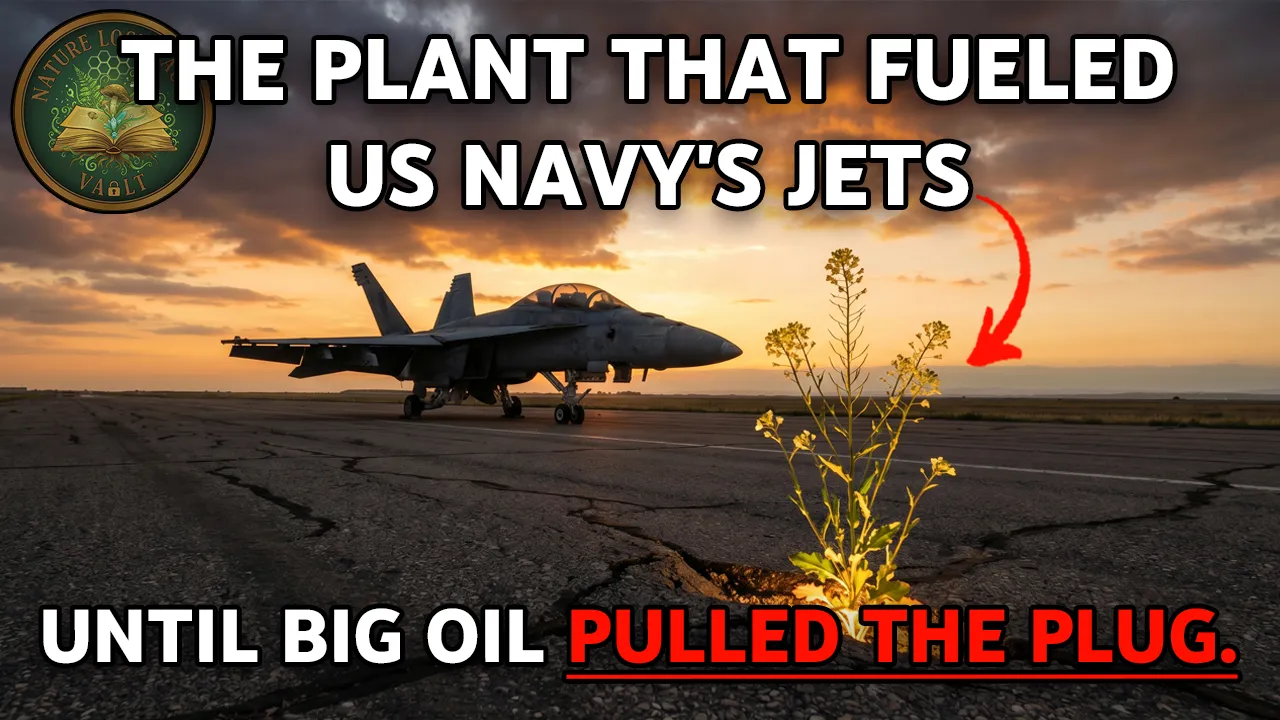
Table of Contents
What is Camelina?
On Earth Day, April 22, 2010, a United States Navy F/A-18F Super Hornet took off from Naval Air Station Patuxent River, Maryland. Half the fuel in its tanks was ordinary jet fuel. The other half was refined from the seeds of a plant that farmers in Iron Age Europe had grown to light their lamps. Over the Chesapeake Bay, it broke the sound barrier.
This is camelina (Camelina sativa), historically called Gold-of-Pleasure. A small plant, 3 feet tall, pale yellow flowers, and a 90-day growing season. It needs no irrigation, no fertilizer, and grows on soil too thin and cold for wheat. Its seeds contain up to 42% oil by weight, and that oil is about 35 to 40% omega-3 (alpha-linolenic acid), roughly four times canola.
The Navy proved it could fly on it. Then oil prices fell, and the knowledge was filed away in military logistics reports most Americans will never read.
| Metric | Value |
|---|---|
| Oil content by seed weight | Up to 42% |
| Carbon reduction vs petroleum | About 75% lower lifecycle emissions (Shonnard et al., 2010) |
| Growing season | 90 days, seed to harvest |
| Omega-3 (ALA) in oil | About 35-40% (canola about 9%) |
| Frost-tolerant seedlings | Yes |
| Irrigation required | None (single pass of spring rain) |
| First cultivated | c. 1600-1000 BCE (deliberate cultivation in Europe) |
| FDA status | Oil GRAS notice closed with no questions (2016); meal approved for feed (2009) |
3,000 Years as Europe's Lamp Oil
Camelina began as a stowaway. Its tiny seeds turn up mixed into prehistoric flax and grain harvests across Europe, where it rode along as a weed for millennia. A 2022 study led by Jordan Brock and Kenneth Olsen at Washington University in St. Louis, combining genetics and archaeology, traced its domestication to the Caucasus and western Asia. By the Late Bronze Age and early Iron Age, roughly 1600 to 1000 BCE, Europeans were growing it on purpose. Pressed seed cakes and camelina stores turn up at Iron Age and Viking-era sites in Scandinavia. People pressed it for cooking oil and lamp oil, and burned that oil to push back the dark.
For roughly 3,000 years, camelina was one of northern Europe's oil crops, still common in the early twentieth century. Farmers called it Gold-of-Pleasure. It needed no irrigation, no fertilizer, grew on soil too thin and cold for wheat, and matured so fast it could be harvested before midsummer and the land planted again.
Then kerosene and electricity arrived, and the lamp-oil market disappeared. As European farming modernized, breeders, processors and, after the Second World War, national and European farm policy favored a few oilseeds, above all rapeseed (later canola) and sunflower. Camelina got almost nothing: no breeding, no processing plants, no price supports. By mid-century, farmers across most of Europe had abandoned it, and much of its varietal diversity was lost.
Why It Was Buried
In 2014, global oil prices collapsed from $115 to below $50 per barrel in less than 6 months. The economics of the Navy's program instantly inverted.
The fight had started earlier, in Congress. The 2012 biofuel blend cost far more than petroleum, and both the House and Senate versions of the 2013 National Defense Authorization Act carried language barring the Pentagon from buying alternative fuels that cost more than conventional fuel. A Senate amendment stripping that language passed 62 to 37, and the program survived, but the message to every investor was unmistakable. When the oil price collapse came in 2014, the infrastructure that would have allowed camelina production to survive a low-oil environment did not exist.
The economics turned against biofuels everywhere. Camelina's moment as a strategic fuel passed, and its far older role, as a food oil, stayed buried.
But camelina never vanished completely. In parts of eastern Europe, small farms kept growing and pressing it, and in Germany, Austria and the Baltic countries cold-pressed camelina oil, Leindotteröl, kept a loyal following in the kitchen. Breeders now mine those surviving pockets of diversity, and in 2016 the FDA closed its GRAS review of camelina oil for food with no questions.
How to Grow & Press Camelina
Camelina seed is available today from small-scale suppliers in Montana and Canada. Legal in all 50 states, no permit required.
Growing
When: Plant in early spring, as soon as the soil can be worked. Seedlings tolerate frost.
Soil: Grows on fallow land, poor soil, marginal ground that would otherwise produce nothing. No irrigation. No fertilizer. No pest control required.
Harvest: Matures in less than 100 days. Standard combines harvest it without modification. Farmers slot it into wheat rotation without changing equipment.
Pressing Oil
Equipment: A small home oil press extracts camelina oil.
Yield: Seed holds about 30 to over 40% oil; yields per acre vary widely with variety, soil and rainfall.
Uses: Raw oil burns in a wick lamp designed for vegetable oils. Converted to biodiesel, it can run diesel engines. Cold-pressed, it is also a nutty, omega-3 rich food oil.
Byproduct: The meal left after pressing is FDA-approved livestock feed, dense with omega-3 fatty acids and protein.
Seed Saving
Camelina seeds are open-pollinated. Save seed from your harvest, plant it next season. The cost drops to near zero after year one. The US Navy proved it works at supersonic speed. You can prove it works on a backup generator.
Frequently Asked Questions
What is camelina and why did the Navy use it as jet fuel?
Camelina (Camelina sativa) is an oilseed crop deliberately cultivated in Europe since roughly 1600 to 1000 BCE, historically known as Gold-of-Pleasure. Its seeds contain up to 42% oil, which refiners can hydroprocess into renewable jet fuel nearly identical to petroleum fuel. On April 22, 2010, a US Navy F/A-18F Super Hornet, the Green Hornet, flew supersonic on a 50/50 camelina-based blend. A 2010 Michigan Technological University lifecycle analysis put the greenhouse gas cut at about 75% versus petroleum jet fuel. (The 2012 Great Green Fleet demonstration ran on fuel made from algae and used cooking oil, not camelina.)
How much fuel does one acre of camelina produce?
Yields vary widely with variety, soil and rainfall, and seed holds about 30 to over 40% oil, of which a small press recovers only part. Camelina is mostly self-pollinating, so you can save seed each year and the cost drops to near zero after year one.
Can you grow camelina at home for biodiesel?
Yes. Camelina seed is legal in all 50 US states with no permit required. Seedlings tolerate frost, so it can be sown as early as the soil can be worked; it matures in about 85 to 100 days, is usually rain-fed, and is harvested with a standard combine. A small home press extracts the oil. Raw oil burns in a wick lamp designed for vegetable oils; to run a diesel engine it must first be converted to biodiesel.
Why did the Great Green Fleet program end?
The 2012 Great Green Fleet demonstration ran on a blend made from algae and used cooking oil, and that fuel cost far more than petroleum. Both the House and Senate versions of the 2013 National Defense Authorization Act carried language barring the Pentagon from buying alternative fuels that cost more than conventional fuel; a Senate amendment stripping it passed 62 to 37, but the signal to investors was clear. When crude prices collapsed in 2014, the economics turned against biofuels everywhere, and camelina's moment as a strategic fuel passed.
Explore More Survival Foods
Discover ancient plants that sustained civilizations through drought, famine, and extreme conditions.
Browse Survival Foods Collection →