
Beats Cold Medicine in 33 Clinical Trials. Grows in a Pot. Why Did Big Pharma Bury It?
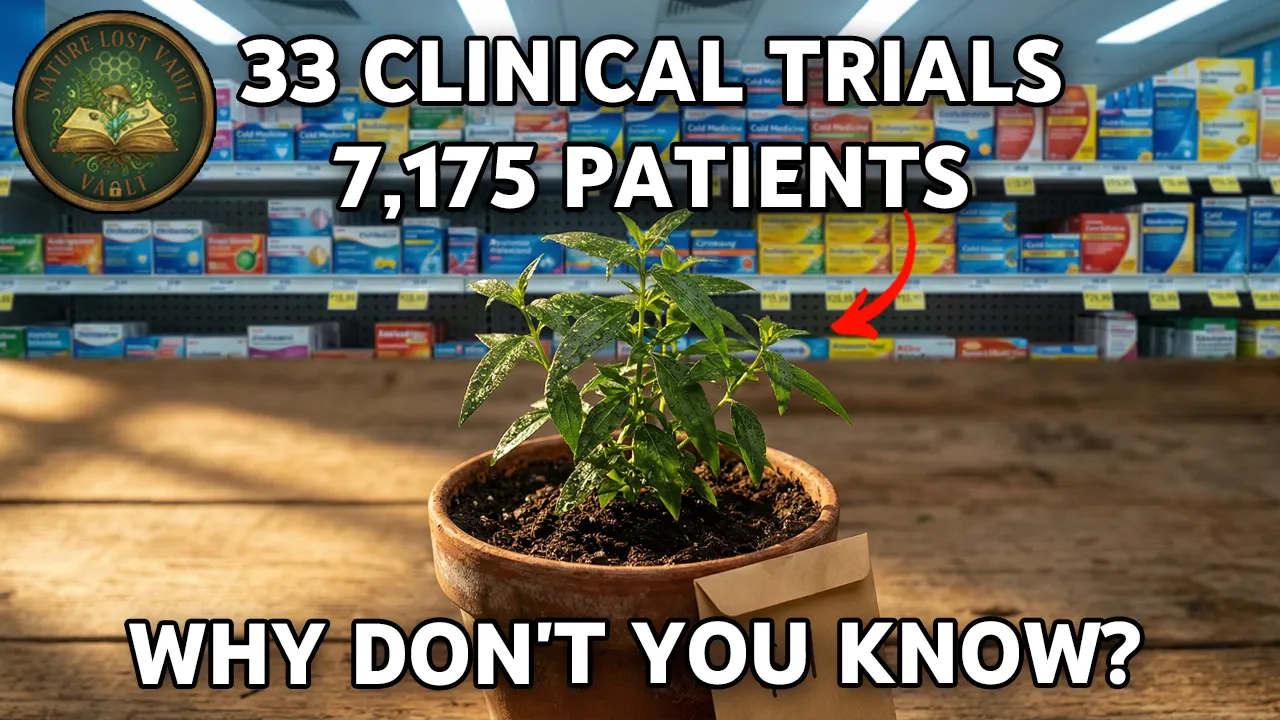
Table of Contents
Recommended Product: Andrographis Seeds & Supplements
View Andrographis OptionsAffiliate link - supports our channel
The Winter Cold Cycle
It's the fourth cold of the winter. You know the drill.
The scratchy throat. The heavy fatigue. The two weeks of misery that just won't lift. Every infection hits harder than the last.
The pharmacy shelf offers forty-seven different products. Dayquil. Nyquil. Mucinex. All promising relief. None promising a cure.
You spend hundreds of dollars a year on medications that suppress symptoms while your immune system struggles alone. The doctor shrugs. "It's normal at this age," he says. "Immune function naturally declines."
But 4,000 years ago, in the ancient medical texts of India, physicians didn't accept that answer.
They called it Kalmegh (*Andrographis paniculata*). The King of Bitters. And they didn't use it to suppress symptoms. They used it to transform the immune system itself.
How Your Immune System Ages
Your immune system is not a single thing. It's a conversation. A constant negotiation between 20 billion white blood cells, chemical messengers called cytokines, and specialized soldiers called macrophages that patrol your bloodstream looking for invaders.
When You're Young
A virus enters your nose. Macrophages detect it within minutes. They sound the alarm by releasing signaling molecules. Your body temperature rises two degrees. Your throat swells slightly. You feel tired. Within 48 hours, the invaders are destroyed.
After Age 65
The conversation fragments. Macrophages become sluggish, responding hours late instead of minutes. When they finally sound the alarm, they overcorrect, flooding your system with inflammatory signals that damage your own tissue. Your fever climbs too high. Your cough persists for weeks.
What should take 48 hours takes 14 days.
Immunologists call this immunosenescence - the aging of immunity. For decades, Western medicine treated it as inevitable.
What Modern Cold Medicines Actually Do
- Antihistamines block histamine receptors, stopping your nose from running but doing nothing for the virus
- Decongestants constrict blood vessels in your nasal passages, relieving pressure but leaving your immune system to fight alone
- Cough suppressants silence the cough reflex without clearing the infection
These are symptom managers. Not immune enhancers.
The pharmaceutical industry has built a $29 billion global market on symptom management. GlaxoSmithKline. Johnson & Johnson. Pfizer. Merck. Roche. These companies generate billions annually selling medications that make you feel better while your weakened immune system slowly, painfully, fights the infection by itself.
4,000 Years of The King of Bitters
Ayurvedic Origins - 2000 BCE
In the river valleys of ancient India, a system of medicine was emerging that wouldn't be written down for another thousand years. Ayurveda. The science of life.
When someone suffered from repeated respiratory infections, weak constitution, or persistent fevers, physicians turned to one of the most powerful herbs in their pharmacopoeia: Andrographis paniculata.
They called it Kalmegh in Sanskrit. Kalma meaning dark or black. Megha meaning cloud. But the common name was even more direct: The King of Bitters.
When you place a leaf of Andrographis on your tongue, the bitterness is so intense that your entire mouth puckers. Your saliva production stops. The taste lingers for 30 minutes.
In Ayurvedic theory, this extreme bitterness wasn't a side effect. It was a signal. Bitter herbs were considered cooling, purifying, detoxifying. Andrographis was prescribed for exactly the conditions we now call viral respiratory infections: fever with cough, sore throat with fatigue, weakness after illness.
But Ayurvedic physicians noticed something modern doctors forgot: Patients who took Andrographis during cold season didn't just recover faster. They caught fewer colds in the first place.
Traditional Chinese Medicine
Chinese physicians discovered the same plant independently. They called it Chuan Xin Lian - "pierce-heart lotus." Not because it affected the physical heart, but because in Chinese medical philosophy, it penetrated to the core of fever-causing diseases.
For 4,000 years, this bitter plant remained a cornerstone of Eastern medicine. Physicians harvested it when the small white flowers with purple markings covered the plant, because they observed that's when its medicinal properties peaked.
Western Dismissal
When British colonizers cataloged Indian medicinal plants in the 1800s, they dismissed most as superstition. Andrographis was filed away as another example of "primitive herbalism."
That dismissal lasted until 1992.
33 Clinical Trials, 7,175 Patients
The Swedish Discovery - 1997
In a health center in Gothenburg, Sweden, Dr. Jurgen Melchior faced a problem. His waiting room was filled with patients suffering from colds, most requesting antibiotics that were useless against viral infections.
He tested a standardized Andrographis extract called Kan Jang in a double-blind, placebo-controlled study. 50 patients. Random assignment. Five days of treatment.
The results, published in Phytomedicine in 1997, were striking:
- Significant reduction in symptom severity and duration
- Headache, nasal symptoms, throat symptoms, and general malaise all improved
- The difference was measurable within days
The 2004 Systematic Review
Researchers at Mahidol University in Bangkok reviewed every double-blind controlled trial on Andrographis. Seven high-quality studies. 896 patients total.
Andrographis reduced symptom severity scores by 10.85 points compared to placebo, with a P-value less than 0.0001 - meaning the probability this occurred by chance is less than 1 in 10,000.
The 2017 Oxford Meta-Analysis
Researchers from Oxford University and several Chinese institutions conducted the most comprehensive review ever, published in PLOS ONE. They searched every database - English and Chinese - from inception to 2016.
They found 33 randomized controlled trials involving 7,175 patients.
The conclusion was unequivocal:
- Cough symptoms improved (SMD: -0.39)
- Sore throat improved significantly (SMD: -1.13)
- Time to symptom resolution decreased
- Sick leave shortened
These weren't marginal improvements. They were clinically significant changes.
The Molecular Mechanism
Andrographolide: The Immune Conductor
In 2010, researchers at Peking University isolated the primary active compound: a diterpenoid lactone called andrographolide.
What they discovered was a molecule that could do something most drugs cannot: it modulates the immune response in both directions.
Bidirectional Immune Modulation
- When macrophages became overactive (flooding the system with inflammatory cytokines like TNF-alpha, IL-1-beta, and IL-6), andrographolide reduced that inflammatory cascade by inhibiting the NF-kappa-B signaling pathway - the master switch of inflammation
- When the same macrophages were exposed to anti-inflammatory signals that normally suppress immune function, andrographolide prevented that suppression, keeping macrophages alert and responsive
Andrographolide didn't just reduce inflammation. It balanced it. It pushed overactive immune responses down and sluggish responses up - maintaining what immunologists call immune homeostasis.
Multiple Pathways Simultaneously
Andrographolide works through multiple molecular pathways:
- Inhibits the JAK-STAT pathway (cytokine signaling)
- Suppresses COX-2 and iNOS (inflammatory enzymes)
- Activates MAPK and PI3K pathways (macrophage regulation)
- Enhances interferon-gamma production (antiviral immunity)
Most pharmaceutical cold medicines target one receptor or one enzyme. But respiratory infections trigger dozens of immune pathways simultaneously.
Andrographolide acts on the immune system the way a skilled conductor leads an orchestra. It doesn't silence individual instruments. It brings them into harmony.
You Cannot Patent a Molecule From Nature
The Supreme Court Ruling
In 1952, the U.S. Supreme Court ruled that products of nature are not patentable subject matter. You can patent a new drug you synthesize in a laboratory. You can patent a novel manufacturing process. But you cannot patent a molecule that exists in a plant that's been growing wild for millions of years.
The Failed Attempts to Own It
In 2018, pharmaceutical researchers synthesized andrographolide sulfonate - a modified version slightly more water-soluble. They filed for a patent.
In 2013, another team created AL-1, an andrographolide analog for insulin resistance. They filed for a patent.
These weren't attempts to improve andrographolide. They were attempts to own it.
The $2.6 Billion Problem
Bringing a new drug to market costs an estimated $2.6 billion and takes 10 to 15 years. That investment is only rational with 20 years of patent-protected market exclusivity.
But if the active ingredient already exists in nature, anyone can extract it, standardize it, and sell it as a supplement. No patent. No exclusivity. No premium pricing. No return on investment.
The $29 Billion Symptom Machine
The global cold and flu drug market is projected to reach $29.14 billion by 2032, growing at 7.2% annually. In the United States alone, consumers spend $12.35 billion per year on over-the-counter cold and cough remedies.
None of these drugs modulate immune function the way andrographolide does. They can't. Because the pharmaceutical business model requires molecules that can be patented - which means molecules that don't exist in nature - which means molecules that weren't shaped by millions of years of evolutionary pressure to interact harmoniously with human biochemistry.
This explains why, despite overwhelming evidence from 33 randomized controlled trials involving over 7,000 patients, you've probably never heard your doctor mention Andrographis:
- It isn't taught in medical schools
- Health insurance doesn't cover it
- No pharmaceutical rep promotes it
It's not because the science is weak. It's because the profit margin is zero.
Grow Your Own: Seeds to Medicine
The supplement companies don't advertise this: you can grow Andrographis yourself.
What You Need
- A packet of 20 organic Andrographis paniculata seeds costs $11
- A single potted plant costs $30
- The plant is an annual in most climates, perennial in frost-free zones 9-11
- Grows 2-3 feet tall in a single season
- Thrives in full sun with regular watering, tolerates poor soil
- Requires no special care beyond what you'd give a tomato plant
The Cultivation Process
- Soak seeds in 120-degree water for 5 minutes to speed germination
- Sow on the surface of moist, well-draining soil - do not cover (they need light to germinate)
- Keep the soil warm (70-80 degrees). Germination occurs in 7-21 days
- Once seedlings develop two sets of true leaves, transplant into larger pots or garden soil, spacing 12-18 inches apart
- Water consistently but avoid waterlogging
- Harvest when the plant flowers (3-4 months) - that's when andrographolide concentration peaks
- Cut stems 6-8 inches from the top
- Dry in a dark, well-ventilated space until brittle
- Store in airtight containers away from light and moisture - retains potency for at least one year
Yield & Dosage
A single mature plant yields approximately 100-200 grams of dried material per harvest. At a typical therapeutic dose of 1.2 grams per day during acute infection, that's enough to treat 80-160 days of illness.
For a household, two or three plants grown annually provide a complete year's supply of immune-supporting medicine.
Compare the Economics
- Growing your own (5 years): $100-$150 total
- Andrographis supplements (5 years): $600
- Conventional cold medicines (5 years): $1,500
You're not just saving money. You're reclaiming autonomy over your immune health.
The Choice
The same choice you face when you stand in the pharmacy aisle staring at 47 different cold medicines, all promising symptom relief, none promising immune enhancement, all costing money you'll spend every winter for the rest of your life.
You can continue buying products designed by companies that profit from your recurring illness. Products that suppress your symptoms while your weakened immune system fights alone. Products that cost $300-$500 per year, every year, because they don't address the underlying problem of immunosenescence.
Or you can plant seeds that cost $11.
Seeds that grow into a plant traditional physicians have relied on for 4,000 years. A plant that modern science has validated in 33 randomized controlled trials involving over 7,000 patients. A plant that modulates your immune system through multiple molecular pathways simultaneously.
The pharmaceutical industry spent decades trying to recreate andrographolide in laboratories because they couldn't patent the original. They created sulfonates and analogs and derivatives.
They failed.
Because you cannot improve on 4,000 years of traditional use validated by modern molecular biology. You cannot patent a molecule that evolution designed to interact harmoniously with human immune pathways. And you cannot profit from a plant that anyone can grow in their backyard.
The doctor says immune decline is inevitable with age. But Ayurvedic physicians didn't accept that answer 4,000 years ago. And you don't have to accept it now.
The King of Bitters grows easily. Harvests generously. Costs almost nothing. And works exactly as ancient physicians said it would.
The question is whether you'll choose to plant it.
Explore More Medicinal Plants
Discover ancient healing plants backed by centuries of traditional use and modern science.
Browse Medicinal Plants Collection →