
The Forever Vegetable. One Planting, 20 Years of Food. Why Is This Not in Your Garden?
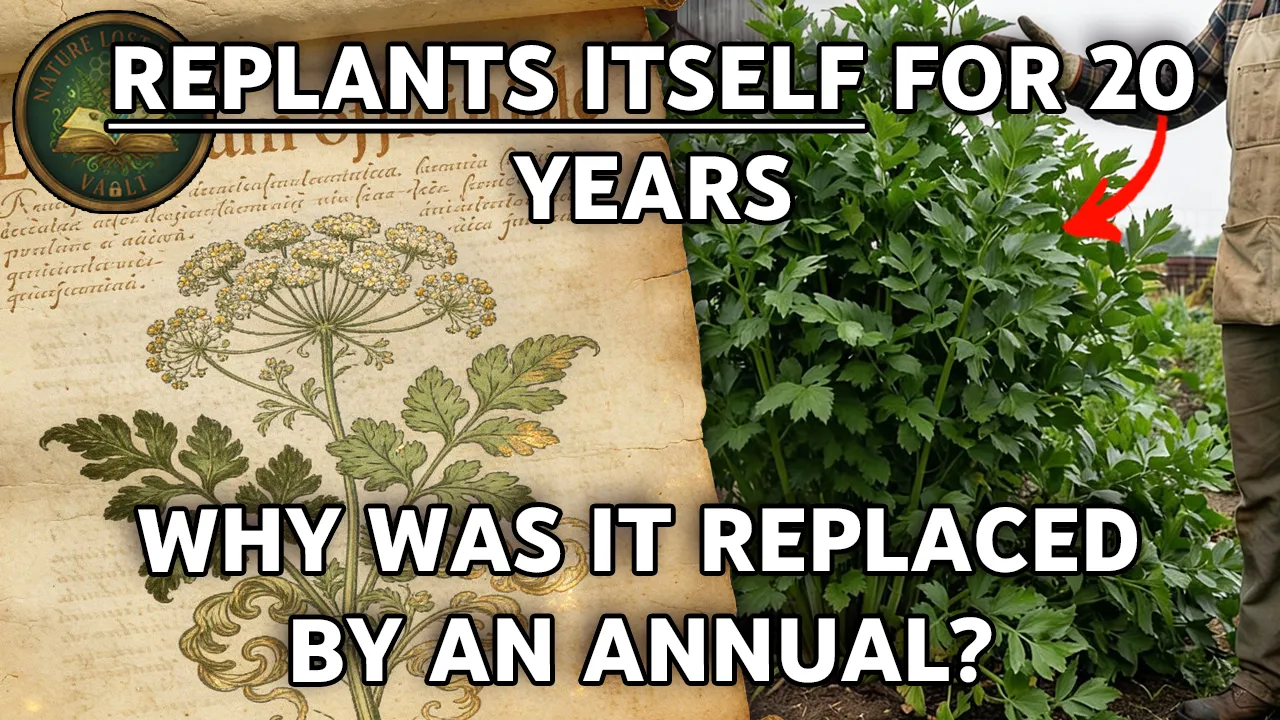
Table of Contents
Recommended Product: Lovage seeds and growing supplies
View Lovage OptionsAffiliate link - supports our channel
What is Lovage?
In the year 800 AD, Charlemagne issued an edict that would shape European agriculture for a thousand years. The Capitulare de Villis listed 94 plants that every imperial garden was required to grow. Wheat appeared on the list. Onions, garlic, the usual suspects. But one plant appeared on a different list.
Not in chapter 43 with the vegetables, not in chapter 62 with the medicinals, but in chapter 70—the compulsory section reserved for plants without which an estate was considered incomplete. There, between fennel and parsley, stood a single word: Levisticum.
The Romans called it the foundation of every meal. Medieval monks grew it in every monastery from Ireland to Jerusalem. The Apicius cookbook, the oldest surviving recipe collection from antiquity, lists it more than any other herb—more than garlic, more than onion, more than salt.
For 1,500 years, this plant defined what food tasted like across the Western world. Then in the 1950s, it vanished from American gardens. Not from disease, not from blight. It was replaced systematically by an inferior annual vegetable that required purchasing seeds every single year.
This is lovage (*Levisticum officinale*), the perennial celery that grows for 15 years from a single planting. And this is the story of how an industry worth $2.7 billion needed you to forget it existed.
Historical Context & Charlemagne's Edict
The archive opens in 1919 when botanist Ulysses Prentice Hedrick published Sturtevant's Edible Plants of the World, a 600-page tome documenting every food plant known to civilization. On page 347, he wrote about lovage with the precision reserved for plants of genuine significance.
Levisticum officinale, he noted, was native to the Mediterranean, cultivated in European gardens since before written records existed. All parts edible: leaves, stems, roots, and seeds. The flavor, he wrote, was stronger than celery with notes of parsley and anise.
Then came the qualifier that would define lovage's future: "The flavor was too pronounced for modern American tastes." Not poisonous, not inferior, just too flavorful for what was coming. The year was 1919, and American food was about to be redesigned for industrial production.
What Makes Lovage Remarkable
Lovage is a member of the Apiaceae family, sharing ancestry with celery, carrots, and parsley. But structurally it operates on a completely different scale. It grows from a massive deep taproot that, once established, requires almost no maintenance for the next 15 to 20 years.
The plant reaches 6 feet tall—a tower of hollow stems as thick as your thumb, crowned with dark green glossy leaves that smell like concentrated celery when you crush them.
What makes it remarkable from a food security perspective is longevity:
- You plant it once and it returns every spring for 15 to 20 years
- It survives in USDA zones 3 through 9, tolerating winter temperatures down to -30°F
- The plant breaks dormancy in April and produces continuously through October
- Every single part of the plant is usable
All Parts Are Edible
Young leaves: Go fresh in salads, adding that sharp celery-parsley kick
Mature leaves: Dry beautifully for winter soups
Hollow stems: Can be candied like ginger or used as aromatic straws for tomato-based drinks
Seeds: Work as a spice in bread and pickles (what you often buy labeled as "celery seed" in grocery stores frequently contains lovage seed)
Roots: Edible, traditionally boiled like a vegetable
Superior Nutrition
Nutritionally, lovage makes commercial celery look like bottled water pretending to be a vegetable:
- Significantly more vitamin A (for vision and immune function)
- Dominates in vitamin K (for bone health)
- More calcium, more vitamin B6
- Substantial amounts of quercetin (an anti-inflammatory flavonoid that celery possesses in only trace amounts)
Roman and Medieval Use
And the taste itself reveals why lovage disappeared. If you have only eaten grocery store celery—that watery crunch designed to offend absolutely no one—lovage is what celery tastes like when it has something to say. Stronger, spicier, more complex. One leaf of lovage flavors an entire pot of soup. One stem seasons a gallon of stock.
The Romans understood this power completely. The Apicius cookbook compiled around 400 AD references lovage in recipe after recipe. They called it Ligusticum, named for Liguria, the Italian region where it grew wild. It was the foundational flavor of Roman cuisine.
Medieval monasteries grew it in every physic garden from Ireland to Jerusalem. Benedictine monks documented its uses as a digestive aid and respiratory tonic. But mostly they grew it because food cooked without lovage tasted fundamentally empty.
Colonial America
When European colonists crossed the Atlantic in the 1600s, lovage came with them. By 1806, American agricultural surveys documented four distinct cultivated varieties. The Shakers grew it extensively through the 1800s, drying leaves for medicinal sales and shipping lovage cordials across the expanding country.
Even as late as 1979, Mother Earth News published growing guides calling lovage "the easy-to-cultivate perennial herb that tastes like the real thing." Notice the language shift. By 1979, lovage was already being positioned as a celery substitute. The perennial original had been linguistically demoted to a copy of the annual replacement.
That semantic reversal tells you everything about what happened in the decades between.
Why Industrial Agriculture Replaced It
In the mid-1800s, Italian farmers began breeding celery for commercial production, selecting for traits the emerging market demanded: milder flavor, thicker stalks, upright growth.
In 1889, a farmer named Pascal discovered that burying immature celery stalks in soil made them sweeter by blocking sunlight. Pascal celery became the industry standard—trenched and blanched and significantly less bitter than wild types.
By 1900, American farms were scaling up celery production in Colorado and Michigan. The crop required massive amounts of labor: trenching, blanching, and constant watering. But commercial celery had one feature that lovage would never possess: predictable uniformity.
The Mechanization Problem
Commercial celery grows in neat, predictable stalks measuring 10 to 12 inches long. The entire field matures within days of each other, allowing for single-pass mechanical harvesting. Machines can top the plants. Machines can sort by size. Machines can pack for shipping.
Lovage refuses to cooperate:
- It grows 6 feet tall with stems that vary in thickness
- You harvest continuously as you need it, cutting outer leaves while leaving the center
- The plant does not mature on a schedule—it just keeps growing
- Those deep tap roots make mechanical harvesting impossible
- The flavor varies by leaf age and season, which means lovage can never deliver the identical taste industrial food processing demands
Industrial agriculture is built on standardization. Lovage offers variety.
The Business Model Problem
By the 1930s, the celery industry was worth millions. Growers formed powerful cooperatives, sharing mechanization equipment and developing new varieties optimized for shipping. Then came World War II. Farm labor vanished. When the men returned, mechanization accelerated.
Supermarkets demanded uniform produce, predictable supply, and identical appearance week after week. Lovage offered none of that. But there was a problem far deeper than flavor preferences or mechanization challenges: Lovage didn't require a subscription.
Here's How the Agricultural Business Model Works:
Annual Celery: A farmer plants celery seeds in spring. The crop grows, gets harvested, and dies with the first frost. Next spring, that farmer needs new seeds every single year. Repeat customers generating recurring revenue.
Perennial Lovage: A farmer plants lovage once and it produces for 15 years. No seed purchases for a decade and a half. The plant divides itself naturally. Neighbors share root divisions over the fence. Seeds fall to the ground and germinate on their own.
From a seed company's perspective, lovage eliminates the need to buy seeds. That is a business model failure.
The Numbers
The global celery market was valued at $2.69 billion in 2024. Pascal celery dominates production. Every year, farmers purchase hybrid seeds that legally cannot be saved. Then there is celery oil, celery juice powder, celery salt—an entire multi-billion dollar ecosystem built on a plant that requires buying it again next year.
By the mid-1900s, lovage had essentially disappeared from mainstream American cooking. Seed catalogs still carried it barely, but the average gardener had never heard of it. Food writers in the 1970s began describing lovage as "the forgotten celery."
A 2023 academic paper explains that "lovage has largely been replaced in recipes by celery and parsley." Replaced. The original became the substitute for the substitute.
Hedrick's 1919 assessment that lovage was "too pronounced for modern American tastes" was code: Mild celery ships well. It stacks in uniform bundles. It offends no one. And most importantly, it dies every year. Lovage spoils that entire model.
How to Grow & Use Lovage
Today, lovage exists in the margins. Heirloom seed companies still carry it. Permaculture advocates grow it. But walk into any grocery store in America and ask for lovage. The produce manager will not know what you are talking about. Meanwhile, commercial celery occupies 20 feet of refrigerated shelf space. All of it annual. All of it purchased yearly.
The displacement was not accidental. It was economic selection. The food system chose the plant that required dependency, and the perennial that fed Roman legions for 1,500 years became a curiosity mentioned in seed catalogs as "forgotten."
In 2022, a food history blog noted that "lovage is the single most frequent herb in the entire collection of Apicius, but is seldom seen today." That gap between ubiquitous and forgotten is not natural. That gap was designed.
The Good News
But here is the good news: Lovage is nearly indestructible. Once you plant it, it does not need you. Medieval monasteries across Europe lie in ruins now. Their communities scattered 800 years ago. But in those ruins, lovage still grows—wild, untended, thriving without human care.
Because that is what perennials do. They outlast the systems that try to replace them.
How to Grow Lovage
Bringing lovage back is simple:
1. Get the Plant: Order seeds from heirloom suppliers online. A single packet starts dozens of plants. Or find someone who already grows it. Gardeners always have more than they need. Ask for a root division in early spring. One plant becomes 10.
2. Planting: Plant lovage in rich soil. Give it full sun in cool climates or partial shade if summers get hot. Space plants three feet apart.
3. First Year: The first year, let it establish. Harvest lightly.
4. Years 2-20: From the second year onward, it produces continuously from April through October. Use fresh leaves in soups. Dry them for winter. Candy the stems.
What You Get
One planting gives you 15 to 20 years of harvest. No annual seed purchases, no dependence on supply chains. The plant that Charlemagne mandated in every imperial garden. The herb that appeared in more Roman recipes than any other. It is available for less than $10.
It is waiting to grow for the next decade and a half.
The Choice
The industrial food system needed you to forget lovage because it could not monetize a plant that refuses to die. They replaced it with annual celery—milder, uniform, and dependent on yearly purchases. That replacement worked perfectly for them.
But the original never stopped growing in monastery ruins, in heirloom gardens, in the yards of people who remembered, and now maybe in yours.
Frequently Asked Questions
What is lovage and how does it compare to celery?
Lovage (Levisticum officinale) is a perennial herb in the celery family that produces for 15-20 years from a single planting. It has more vitamin A, vitamin K, calcium, and quercetin than commercial celery. All parts are edible: leaves, stems, roots, and seeds. It grows up to 6 feet tall and was the most-used herb in ancient Roman cooking.
How long does a lovage plant live?
A lovage plant lives and produces for 15 to 20 years from a single planting. It survives USDA zones 3 through 9, tolerating winter temperatures down to -30 degrees F. It breaks dormancy in April and produces continuously through October each year.
How do you grow lovage?
Plant lovage in rich soil with full sun in cool climates or partial shade in hot summers. Space plants 3 feet apart. Harvest lightly the first year to let it establish. From year 2 onward, it produces continuously from April through October. You can also propagate by root division in early spring.
Why was lovage replaced by celery?
Lovage was replaced because it does not fit industrial agriculture: it grows 6 feet tall with variable stem thickness, cannot be mechanically harvested, and does not require annual seed purchases. The global celery market is worth $2.69 billion, built on annual plants that must be repurchased every year. Lovage, as a perennial, eliminated recurring seed revenue.
Explore More Survival Foods
Discover ancient plants that sustained civilizations through drought, famine, and extreme conditions.
Browse Survival Foods Collection →