The Tree That Makes Multivitamins Obsolete (But We Won't Plant It)
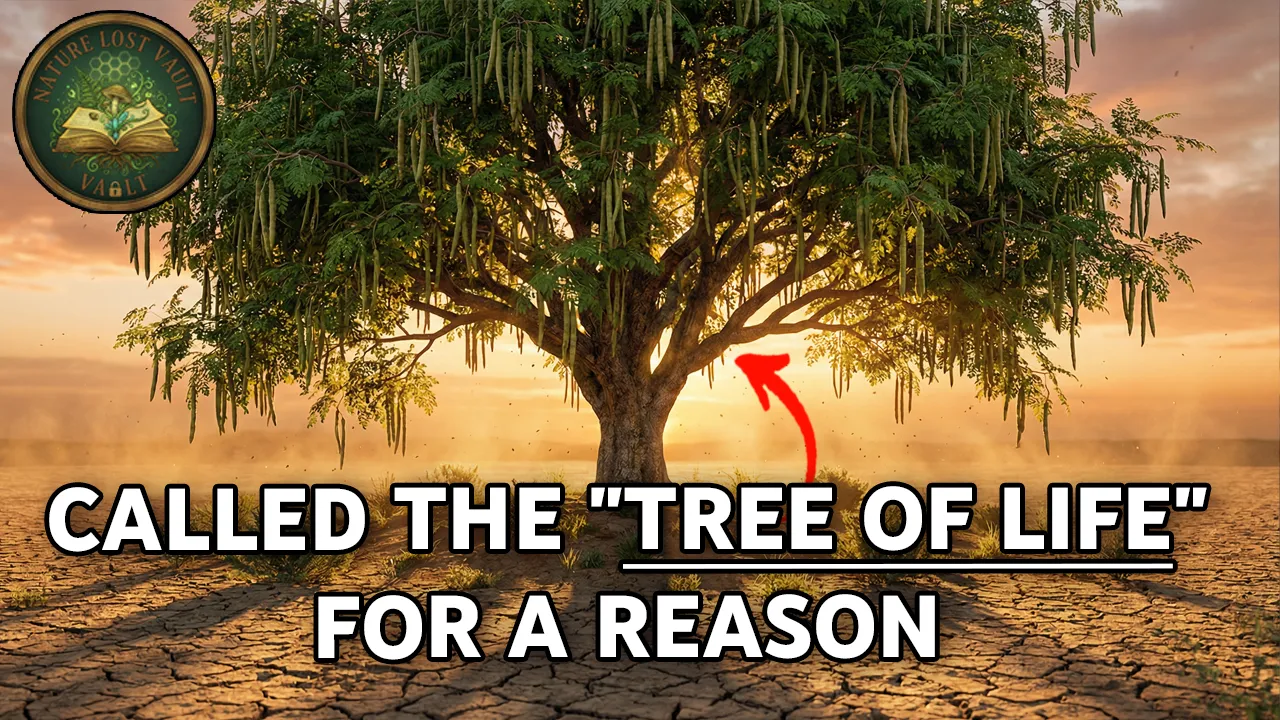
Table of Contents
What is Moringa?
| Scientific name | Moringa oleifera |
| Family | Moringaceae (monogeneric) |
| Native range | Sub-Himalayan India |
| Sanskrit name | Shigru |
| Common names | Drumstick tree, miracle tree, ben oil tree, horseradish tree |
| Growth rate | Up to 18 feet in 6 months; 30 to 40 feet mature |
| Protein (dry leaves) | Up to 29% by weight |
| Protein vs spinach | ~10x denser |
| Vitamin C / 100 g | 188 to 279 mg (oranges ~53 mg) |
| Iron / 100 g | ~4 mg (spinach ~2.7 mg) |
| Beta-carotene vs carrots | ~3x denser |
| Calcium | Denser than milk by dry weight |
| Essential amino acids | All 9 present (complete protein) |
| Drought tolerance | Thrives in poor soil, no fertilizer or pesticide required |
| Lifespan after planting | Harvestable leaves for 20+ years |
| Earliest medicinal use | ~2000 BCE (Ayurveda, India) |
| Egyptian use | Ben oil in pharaohs' tombs and royal cosmetics |
| Vitamin A isolated | 1913 (McCollum & Davis, University of Wisconsin) |
| Modern nutritional analysis | 2017 Bangladesh Agricultural University, Int. J. Biological Research |
There is a tree so nutritionally complete that Mauryan warriors drank extracts of its leaves before battle to endure pain and sustain endurance. A plant so valued by Egyptian royalty that jars of its oil were sealed in pharaohs' tombs to preserve their youth in the afterlife. For over 4,000 years, moringa (Moringa oleifera) sustained entire civilizations through famine, disease, and war. One tree could provide complete nutrition for a family. One handful of leaves contained more healing chemistry than an entire pharmacy.
Then in 1913, something changed. Western biochemists discovered they could isolate individual nutrients from food. They called them vitamins. Within 30 years, pharmaceutical companies like Roche, Merck, and Pfizer had built billion-dollar empires by selling back to humanity, pill by pill, what nature had already provided for free. But the tree was a problem. It still existed. It threatened the entire premise.
This is the story of moringa, the multivitamin tree that could have prevented the synthetic vitamin industry, and the economic forces that pushed it to the agricultural margins to protect 20-year patents. Moringa is not a vegetable. It is not a supplement. It is a biological anomaly that breaks every rule of modern nutrition science. Most plants excel at one nutrient. Spinach has iron. Oranges have vitamin C. Carrots have beta-carotene. You build a balanced diet by combining dozens of crops. Moringa refuses to play that game: a single tree produces leaves with all 9 essential amino acids, the complete protein profile nutritionists say you can only get from animal products or carefully combined plant foods.
4,000 Years From Ayurveda to Egypt
The history of moringa stretches back over 4,000 years. It originates in the sub-Himalayan regions of India, where it was cultivated and revered in Ayurvedic medicine under the Sanskrit name Shigru. Ayurvedic texts describe moringa as a treatment for more than 300 different ailments. It was not called a superfood. It was called medicine.
By 2000 BCE, moringa had spread to ancient Egypt. The Egyptians pressed oil from the seeds, a golden liquid they called ben oil, and used it to protect their skin from the brutal desert sun. It was blended into anti-aging creams and perfumes. It was so valuable that jars of moringa oil were placed in the tombs of pharaohs. Archaeologists have found these jars. This is not folklore.
The ancient Greeks and Romans imported moringa for digestive issues, fatigue, and general vitality. It was high cuisine, not peasant food. The most revealing use comes from the ancient Mauryan Empire of India: according to historical records, Mauryan warriors were fed extracts of moringa leaves before going into battle. The belief was that the plant would relieve pain, reduce stress, and provide sustained energy in combat. This was not superstition. Modern research has confirmed that moringa contains powerful anti-inflammatory compounds, antioxidants, and a complete nutritional profile that supports endurance. The warriors were biochemically correct.
For thousands of years, moringa was woven into the fabric of human survival across South Asia, the Middle East, and North Africa. It was medicine. It was food. It was economic security. And then came 1913.
That year, at the University of Wisconsin, biochemists Elmer McCollum and Marguerite Davis isolated the first vitamin (vitamin A) from butter and cod liver oil. This should have been a footnote in agricultural history, a confirmation that traditional foods like moringa contained powerful nutrients. Instead, it became the foundation of a new industry. Western science made a choice in that moment: instead of preserving the food plants that contained these nutrients naturally, it decided to isolate the nutrients and sell them back.
By 1920, Parke-Davis had launched Metagen, a capsule of concentrated vitamin extracts containing synthetic vitamins A, B, and C. It was marketed to doctors. It was expensive. It was patented. In 1927, Merck and Bayer released Vigantol, the first synthetic vitamin D product. In 1933, Swiss chemist Tadeusz Reichstein developed a four-step industrial process for Roche to synthesize vitamin C; Roche would become the world's largest vitamin producer. Pfizer joined the race. Bulk synthetic vitamin prices dropped sharply between the 1930s and early 1940s as these companies perfected industrial-scale fermentation chemistry. They had not discovered vitamins to help humanity. They had discovered how to own nutrition.
The Bangladesh Numbers: Why Moringa Breaks the Rules
In 2017, researchers at Bangladesh Agricultural University published a comprehensive nutritional analysis in the International Journal of Biological Research. They tested fresh moringa leaves from multiple regions. The numbers defy logic. Fresh moringa leaves contain up to 29% protein by dry weight. For context, spinach (the vegetable Western nutritionists most often cite for protein density) contains less than 3%. Moringa has roughly 10 times the protein density of spinach.
Vitamin C content ranges from 188 to 279 mg per 100 g of leaf. Oranges, the fruit Westerners associate with vitamin C, contain only about 53 mg per 100 g. Moringa has roughly five times more. Iron clocks in around 4 mg per 100 g; spinach, famously promoted for iron content, sits closer to 2.7 mg. Moringa wins again. Beta-carotene, the precursor to vitamin A, measures about triple the concentration of carrots. Calcium density exceeds milk. This is not a vegetable. It is a biological warehouse of nutrition compressed into a single organism.
The tree itself is just as anomalous as its chemistry. Moringa grows 18 feet in 6 months. It thrives in drought. It survives in soil too poor for almost any cultivated crop. It requires no fertilizer, no pesticides, no industrial infrastructure. You plant it once and it feeds you for decades. To the ancient world, this was not remarkable. It was simply how food worked: nutrient-dense whole plants growing where you live, harvested daily, eaten fresh. Modern industrial agriculture has spent a century engineering away this baseline by selecting for shelf life, transportability, and uniform appearance, then selling the missing nutrients back as supplements.
Moringa's protein is not just abundant, it is complete. All 9 essential amino acids - histidine, isoleucine, leucine, lysine, methionine, phenylalanine, threonine, tryptophan, valine - are present at meaningful levels. Plant nutrition researchers note that lysine and methionine are typically the limiting amino acids in cereal- and legume-based diets, and moringa supplies both. The leaves also concentrate isothiocyanates, polyphenols, and quercetin, the same compounds modern research links to anti-inflammatory and antioxidant effects, which is mechanistically consistent with the Mauryan warriors' empirical observation about pain relief and endurance.
How the Vitamin Industry Buried a Tree
The suppression of moringa was not a conspiracy. It was economics. First, the patent problem. You cannot patent a tree. You cannot claim intellectual property over a plant that has been cultivated for 4,000 years. Pharmaceutical companies built their fortunes on patents, exclusive rights to sell a molecule for 20 years at monopoly prices. Moringa offers no such opportunity.
Second, the processing problem. Moringa leaves degrade rapidly after harvest. Vitamin content drops if the leaves are not processed within hours. This makes moringa incompatible with industrial food systems that prioritize shelf life and long-distance shipping. Synthetic vitamins are chemically stable. They can sit in a warehouse for years.
Third, the taste problem. Fresh moringa leaves are bitter. Pharmaceutical companies funded research into how to make synthetic vitamins palatable, coating them in sugar, compressing them into easy-to-swallow pills. Moringa required traditional preparation methods that took time and culinary knowledge.
Fourth, the standardization problem. A pill has a standardized dose - take one tablet, get 500 mg of vitamin C. Moringa is a whole food: its nutrient content varies by soil, season, and preparation. The pharmaceutical model demands uniformity. Moringa is wild.
But the deepest reason is the business model. Moringa does not generate recurring revenue. You buy a moringa tree once, you plant it, it grows for 20 years and feeds your family. You never need to buy it again. A vitamin pill is the opposite: you take one today, tomorrow you need another, next week the bottle is empty. You go back to the pharmacy. You buy more, forever. This is not a story about health. It is a story about business models.
And so, while Roche and Merck were spending billions to synthesize individual vitamins, funding university research, and lobbying governments to fortify flour and milk with their products, moringa was left to the margins. By 1942, roughly one quarter of Americans were taking vitamin pills. By the 1950s, the vitamin industry was a fixture at the dinner table, and moringa was dismissed in Western markets as an obscure tropical plant with no commercial potential.
The deeper irony is that the vitamin industry built itself by creating the very problem it claimed to solve. In the early 1900s, industrial food processing - canned goods, white flour, polished rice - stripped nutrients from the food supply. People became deficient. The pharmaceutical industry responded not by preserving traditional whole foods but by synthesizing the missing nutrients and selling them back. Moringa could have solved this without the industry ever existing: one tree in every backyard, one handful of leaves in every meal, complete nutrition, no deficiency, no patent required. Instead we got fortified breakfast cereal and multivitamin pills. The same pattern repeats today: we are sold calcium supplements while moringa grows wild denser in calcium than milk; we are sold protein powders while moringa leaves contain a complete amino acid profile; we are prescribed iron pills while moringa outperforms spinach. The knowledge was never lost. It was simply economically inconvenient.
How to Grow and Use Moringa
The tree is still here. Moringa grows across the tropics and subtropics. India remains the largest producer. Smallholder farmers in Africa, the Philippines, and Latin America cultivate it commercially. Seeds are widely available. The knowledge is being recovered.
Climate and soil. Moringa is a tropical and subtropical tree (USDA zones 9-11 outdoors, container-only above zone 8). It tolerates drought, poor soil, and full sun. It will not survive a hard freeze, so in temperate climates grow it in a large pot that can be brought indoors for winter, or treat it as a fast-growing annual planted out after the last frost.
Planting. Soak seeds for 24 hours before sowing 1 inch deep in well-drained soil. Germination is typically 5 to 12 days at 20-30 C (68-86 F). Space mature trees 10 to 15 feet apart; for intensive leaf production, dense hedge planting at 1 to 2 feet apart is common in tropical agroforestry. Cuttings (about 1 inch thick, 3 feet long) root readily in moist soil and skip the slow seedling stage.
Harvest. First leaf harvest is possible 2 to 3 months from seed once the tree reaches 4 to 6 feet. Strip the small leaflets from the leaf stalks. The stalks themselves are too fibrous to eat. Pinch the growing tip back to encourage bushier regrowth; aggressive coppicing to 3 feet keeps leaves within reach and maximizes annual yield.
Use. Harvest leaves fresh and add at the very end of cooking (extended high heat degrades vitamin C and some antioxidants). Use them in soups, dals, stir-fries, omelets, and rice dishes. Dry leaves in shade (not direct sun) and grind to powder for smoothies, teas, or sprinkled into baked goods. The taste is earthy, somewhere between spinach and matcha. The immature seed pods (the "drumsticks") cook like green beans and are a staple of South Indian sambar. Mature seeds yield ben oil, used in cosmetics and traditional skincare.
Safety. Leaves and immature pods are food-safe in normal culinary quantities. The root and root bark contain alkaloids and should not be eaten. Pregnant women are traditionally advised to avoid root preparations. Standard culinary moringa leaf consumption is well-tolerated and has been part of daily diets across the tropics for millennia.
This is not about rejecting modern medicine. Synthetic vitamins have saved lives in contexts where whole foods are unavailable. But they were never supposed to replace plants like moringa as the daily baseline of nutrition. Growing moringa today is a reclaiming of what humanity had for 4,000 years before the vitamin industry decided to own it. The tree still grows. The knowledge still exists. Every moringa seed you plant is one less reason to buy what should have been free.
Frequently Asked Questions
What is the nutritional profile of moringa leaves?
Moringa leaves contain all 9 essential amino acids, up to 29% protein by dry weight (about 10x more than spinach), 188 to 279 mg of vitamin C per 100 g (about 5x more than oranges), roughly 4 mg of iron per 100 g (more than spinach), about 3x the beta-carotene of carrots, and calcium density greater than milk. It is one of the most nutrient-dense plants known, documented in the 2017 Bangladesh Agricultural University analysis in the International Journal of Biological Research.
Does moringa have all essential amino acids?
Yes. Moringa leaves contain all 9 essential amino acids - histidine, isoleucine, leucine, lysine, methionine, phenylalanine, threonine, tryptophan, and valine - making it a complete protein source from a single plant. This is rare in the plant kingdom and means moringa supplies the full protein profile that nutritionists typically associate with animal products.
How fast does moringa grow?
Moringa grows up to 18 feet in 6 months from seed in tropical conditions, reaching 30 to 40 feet at maturity. It thrives in drought, survives in poor soil, requires no fertilizer or pesticides, and produces harvestable leaves for 20+ years from a single planting. It grows naturally across the tropics and subtropics; in temperate climates it must be container-grown or treated as a fast-growing annual.
How do you use moringa?
Harvest the fresh leaflets and add them at the very end of cooking to preserve vitamin C: in soups, dals, stir-fries, omelets, or rice. Shade-dry and grind the leaves to powder for smoothies, teas, or baked goods. Immature seed pods (drumsticks) cook like green beans. Mature seeds yield ben oil for skincare. The taste is earthy, similar to a mix of spinach and matcha. All parts of the tree except the root are food-safe.
Why is moringa not more widely cultivated in the West?
Moringa cannot be patented, its fresh leaves degrade quickly so they do not fit shelf-stable industrial supply chains, its taste is bitter compared to flavored pills, and its nutrient content varies by soil and season rather than offering a uniform pharmaceutical dose. Most importantly, you plant one tree and it feeds a family for 20 years - there is no recurring revenue. Synthetic vitamins, by contrast, are patentable, stable, standardized, and require repeat purchase forever. The 20th-century pharmaceutical model favored the pill, not the tree.
Explore More Medicinal Plants
Discover ancient healing plants backed by centuries of traditional use and modern science.
Browse Medicinal Plants Collection →