
Drops Blood Sugar 30% After One Meal... So They Buried It
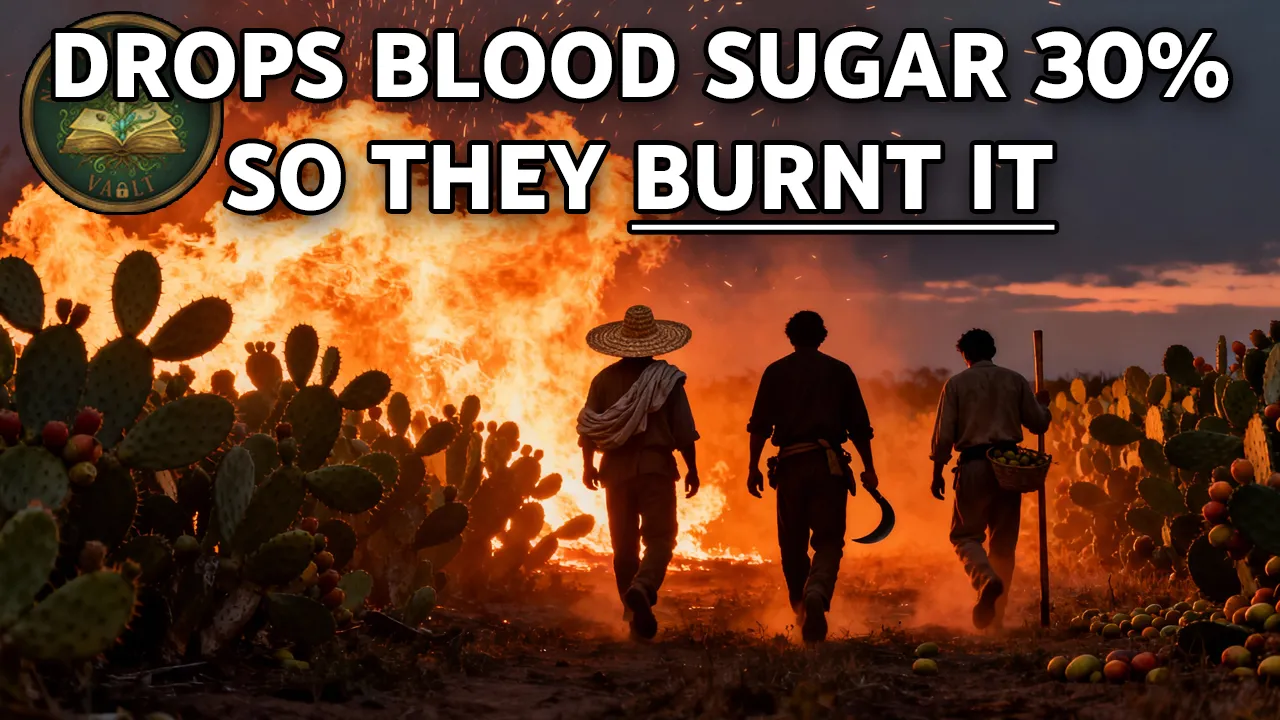
Table of Contents
Recommended Product: Prickly Pear seeds and growing supplies
View Prickly Pear OptionsAffiliate link - supports our channel
What is Prickly Pear Cactus?
There is a plant that functions like a pharmaceutical drug but grows without a single drop of rain. The prickly pear cactus (*Opuntia* spp.) drops blood sugar by 30% after a single meal. It requires no prescription, no patent, no pharmacy. You can grow it in your backyard, in pure sand, or on a concrete roof.
One pad produces medicine for a year. In 2014, researchers in Mexico tested it against diabetes medication. The plant matched the drug, but the plant cost nothing. It grew wild, and that made it dangerous, not to your health, but to profit.
This is the story of the crop that fed empires, colored kings, and healed millions until we decided to call it a weed. The archive opens in a sterile laboratory in Mexico City. The year is 2014. Researchers are facing a crisis.
14 patients with severe type 2 diabetes, all on medication, all still struggling with dangerous blood sugar spikes. The scientists decide to test a grandmother's cure. They feed half the patients a high carbohydrate breakfast designed to spike glucose. chiliqualies, tortillas, beans, the kind of meal that usually sends insulin soaring, damaging blood vessels and straining the pancreas.
Then they feed the other half the exact same meal, but with one addition, 300 g of steamed nyl, the prickly pear cactus. The results were not just a statistical improvement, they were a revelation. The group eating the cactus showed a significant reduction in blood sugar. The area under the curve, the measurement that tracks the deadly glucose peaks that destroy kidneys and eyes, dropped from 443 to 287.
The plant had a glycemic index of 32, lower than oatmeal, lower than corn. But here is what terrified the pharmaceutical industry. The noble was not acting like a drug with one specific chemical pathway. It was acting like a guardian.
And the secret was in the slime. Botonists call it mucelage. It is the thick sticky substance that oozes from the pad when you slice it. To the modern consumer, that slime is unappealing.
We try to wash it off. We try to breed it out. But that slime is the medicine. When it enters the stomach, the mucelage expands.
It coats the lining of the digestive tract, creating a physical barrier. It traps the carbohydrates from your meal, slowing their conversion into sugar. It turns a rapid glucose spike into a slow, manageable curve, a natural time release mechanism that humans had evolved with for 10,000 years. And then in a single century we walked away from it.
To understand the magnitude of what we lost, we have to go back deep into the Takan Valley 12,000 years ago. Long before the pyramids, before corn was domesticated, before the first clay pot was fired, the Nople was there. Evidence shows human consumption dating back to 10,000 BCE. It was not just food.
It was the foundation of life in the volcanic deserts. The only source of hydration during the dry season. When the rivers turned to dust, the cactus remained full of water. By 5,000 B.CE, it stood as one of the pillars of Msoamerican civilization.
Historical Context & Discovery
Maze, beans, and no pal. But unlike maze, which required human hands, irrigation, and constant care to survive, the Noal needed nothing. It was a fortress of water in a land of fire. The Aztecs did not just eat it.
They built their empire on it. Their legends tell us that their god, Witzilla Pochetti, told them to wander the earth until they saw a specific sign, an eagle perched on a prickly pear cactus devouring a snake. They found that sign on a swampy island in the middle of Lake Texoko. They built their city, Tenotitlan, right there.
The name literally translates to place of the prickly pear cactus. The cactus was the heart of the empire. It was sacred. It represented the human heart itself.
Tough and spiny on the outside, but full of life and moisture on the inside. They knew what modern science is just rediscovering. They used the cool pads to heal burns, laying the flesh over open wounds to stop infection. They drank the juice to cleanse the liver.
They fermented the sweet fruit, the tunas, into a drink called kolange, a probiotic elixir that kept their gut biomes diverse and resilient. They ate it to stay strong during famines when the corn turned to dust. Because the noble never fails. It thrives in volcanic ash.
It grows in cracks of stone. It is an engine of survival. But the noble gave them something else. Something that would reshape world history and eventually lead to the plant's erasia.
On its pads lived a tiny secret, a scale insect called the coachil. To the untrained eye, it looks like white fungus or blight. But if you crush it between your fingers, it bleeds. It produces carminic acid, a defense mechanism against ants.
But to humans, it was no chestly, the blood of the prickly pear. It took 70,000 insects for one pound of dye, but it was the most brilliant permanent red the world had ever seen. When Hernand Cortis arrived in 1519, he didn't see a pharmacy. He didn't see a superfood.
He saw a gold mine. Europe was starving for color. Their reds were dull, brownish, and faded quickly in the sun. The Aztec red was vibrant, shocking, and eternal.
Spain turned the cactus into a machine for money. By the 1570s, they were shipping 70 tons of insects to Europe every year. Billions of dead insects scraped off the pads by indigenous hands. That red dye colored the robes of Catholic cardinals.
It dyed the famous red coats of the British army. It painted the masterpieces of Van Gogh and Rembrandt. It became the second most valuable export from the New World, rivaled only by silver. Spain guarded the secret with the threat of death.
Scientific Research & Nutritional Benefits
Foreigners were banned from the plantations. They spread rumors that the dye came from berries or dirt. Anything to keep the world from knowing it came from a cactus. Think about that.
A bug that lived on a cactus was worth more than gold. But in their rush for the red gold, they ignored the green gold underneath. They stripped the knowledge of the plant's healing power. The noble was reduced to a commodity, a tool to hold a bug.
Europeans protected the insect but despised the plant. To them, it was ugly, spiny, primitive, a monster of the desert. And when synthetic dyes were invented in the 1800s, the value of the insect collapsed overnight. The empire of the cactus fell apart.
The plantations were abandoned. And that is when the erasia truly began. By the 20th century, the plant that had sustained civilizations was rebranded. Ranchers in the United States looked at its spines and saw a nuisance.
It competed with grass. It pricricked the mouths of their cattle. The USDA classified the prickly pear as a weed. They published guides on how to poison it, how to burn it, how to bulldoze it.
They spent millions developing herbicides specifically designed to kill the one plant that could survive the droughts that were coming. But the war on the cactus reached its peak in Australia. It is one of the greatest ironies in agricultural history. In the 1800s, British settlers brought the nole to Australia to use as natural fencing and to start a dye industry.
But they forgot one thing. In Mexico, the cactus has natural enemies, beetles, moths, and fungi that keep it in check. In Australia, it had no predators. The cactus realized it was free.
It exploded. By 1925, the prickly pear had conquered 100,000 square miles of Australian farmland, an area larger than the United Kingdom. It advanced at a speed of 1,000 acres per hour. Houses were crushed under the weight of the pads.
Roads were blocked. Entire towns were abandoned. They called it the green hell. The government offered rewards for anyone who could kill it.
They sprayed it with arsenic. They rolled tanks over it. Nothing worked. If you cut a pad and threw it on the ground, it just rooted and grew a new plant.
It was immortal. Finally, they had to go back to the source. They went to South America and found the cactoblastis moth, a natural predator. They released the moth in Australia and the lavi ate the cactus from the inside out.
The green hell was destroyed. But the lesson they learned was the wrong one. They learned that the cactus was a monster. They did not ask why it grew so well.
They did not ask how a plant could produce millions of tons of biomass in a land with no water. They just wanted it gone. Why did we hate it so much? Because Noel breaks every rule of modern agriculture.
You cannot patent it. You plant one pad and it clones itself forever. It needs no irrigation, destroying the business model of water rights. It needs no fertilizer, destroying the profits of chemical companies, it is food that is truly free.
And in an industrial food system, free is the enemy. So we replaced it. We replaced the Noel with wheat, corn, and processed sugar. Crops that require dependency.
And the results are written in our bodies. The Tohono odom people of the Sonoran desert were once the masters of desert survival. They didn't have hospitals but they didn't have diabetes. Their traditional diet was rich in slow burning foods nyl beans, temporary beans and chola buds.
These foods are high in soluble fiber and low on the glycemic index. They kept blood sugar steady. They kept the metabolism flexible. But in the 20th century, their water was diverted to cities and cotton farms.
Their traditional farming collapsed. The US government stepped in with commodity foods, free shipments of white flour, refined sugar, lard, and canned goods. In one generation, the diet shifted from the pharmacy of the desert to the poison of the factory. Today, the Tohono Odum have some of the highest rates of type 2 diabetes in the world.
About 50% of the trib's adults suffer from it. Scientists spent decades looking for a thrifty gene, blaming the genetics of the people. They said indigenous people were just predisposed to obesity. But the answer wasn't in their DNA.
It was on their dinner plates. When you take a body adapted to the perfect slow burning fuel of the cactus and flood it with the rocket fuel of processed sugar, the system breaks. The problem wasn't their genetics. The problem was that they were forced to trade a pharmacy for a poison.
But in the shadows, some refused to forget. In the ranch lands of northern Mexico, cattlemen kept a secret technique alive called chamoscando. During brutal droughts, when the grass turned to ash and the corn withered, they did not kill the cactus. They turned to it.
They took propane torches and burned off the spines. They fed the roasted pads to their starving cattle. The cattle did not just survive, they thrived. They produced milk in the middle of a dust bowl.
The water content in the pads kept them hydrated when the wells ran dry. The plant was saving them just as it had saved the ancestors. And now, as the world heats up, the nylle is rising again. Hotter weather is killing corn.
Wheat withers at 100° F. But the nple opens its pores only at night to save water. It uses a biological miracle called cam photosynthesis, crellacian acid metabolism. Most plants are like us.
They breathe during the day. They open their pores to take in carbon dioxide, but doing that under the hot sun means they lose huge amounts of water to evaporation. That is why corn and wheat die in a drought. They literally sweat to death.
The nole is different. It works the night shift. It keeps its pores shut tight during the blazing heat of the day. It waits for the sun to set.
Only when the air is cool does it open its pores to breathe. It stores the carbon dioxide as acid, holding it until the sun comes up to turn it into sugar. This mechanism makes the nylle one of the most water efficient plants on Earth. To produce 1 kg of dry mass, wheat needs 500 kg of water.
The noble needs only 50. It is 10 times more efficient than the crops we currently rely on. It can survive 120° F. It can go months without rain and still produce a juicy, hydrating vegetable.
Farmers in Mexico are now using it to generate bio gas, powering entire villages with the fermentation of the pads. A company called Nopale Limmex has built a bio gas plant that runs entirely on cactus. They crush the pads, mix them with manure, and let them ferment. The gas produced powers the machinery.
How to Identify, Grow & Use Prickly Pear Cactus
It fuels the trucks. Think about the elegance of that. A plant that grows on wasteland with no water can be turned into clean fuel. No drilling, no fracking, no wars over oil pipelines, just the sun, the cactus, and the gas.
Others are using it to create biodedegradable plastic. Scientists are turning the mucelage, that ancient slime, into a plastic that is non-toxic, edible, and breaks down in weeks, not centuries. We are discovering that this weed could replace the very oilbased industries destroying the climate. But its greatest power remains in the human body.
New studies are confirming that the pectin in opal lowers bad LDL cholesterol. Its antioxidants known as betalanes, the same pigments that give beets their color, fight oxidative stress in the cells. It feeds the bactaroides bacteria in the gut. the good microbes that modern diets starve.
It reduces inflammation, the silent killer behind heart disease. It is the perfect antidote to the inflammatory world we built. It is the plant that heals the damage we did to ourselves. The noble teaches us a hard lesson.
For 500 years, we chased the red gold, the profit, the extraction, the quick wealth. We ignored the green gold, the health, the resilience, the sustainability. We called the noble primitive while we ate ourselves sick. That food was never meant to be a product.
It was meant to be a relationship. The noble never stopped offering its gifts. We just stopped listening. Memory is returning.
In gardens, in markets, and in the wild, the green gold is coming back. The next time you see a prickly pear growing on the side of the road, ignored and dusty, do not look away. You are looking at a survivor. You are looking at a pharmacy.
You might be looking to the future of agriculture. If this vault opened something for you, subscribe to Nature Lost Vault and hit the bell. Every like and every share helps preserve this wisdom. The next vault opens soon.
Frequently Asked Questions
Does prickly pear lower blood sugar?
Yes. Clinical studies in Mexico (2014) showed prickly pear cactus reduces blood sugar by 30% after a single meal. The mucilage fiber in the pads slows glucose absorption. It has been used traditionally for diabetes management across Latin America for centuries.
Is prickly pear cactus edible?
Yes, both the pads (nopales) and fruits (tunas) of prickly pear are edible and nutritious. Nopales are eaten as a vegetable in Mexican cuisine. The fruits are sweet and used in juices, jams, and candies. Remove the spines and glochids before eating.
How water-efficient is prickly pear?
Prickly pear is 10x more water-efficient than wheat and produces food with zero irrigation once established. It uses CAM photosynthesis, opening its pores at night to minimize water loss. It thrived in Mesoamerica for 10,000 years in arid conditions.
Explore More Survival Foods
Discover ancient plants that sustained civilizations through drought, famine, and extreme conditions.
Browse Survival Foods Collection →